
StevenGuthmiller
-
Posts
15,071 -
Joined
-
Last visited
Content Type
Profiles
Forums
Events
Gallery
Everything posted by StevenGuthmiller
-

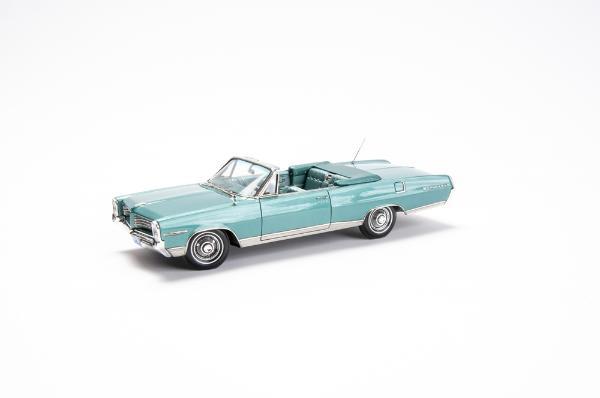
1964 Pontiac Bonneville Convertible.
StevenGuthmiller replied to StevenGuthmiller's topic in WIP: Model Cars
Getting a little weathering finished on the engine. Steve -
Wheels roll or not roll?
StevenGuthmiller replied to Biggu's topic in Model Building Questions and Answers
I’ve never seen that either. It would make absolutely no sense to make requirements such as that, unless it was some requirement for a box stock category or something. It would be like requiring all models have opening doors, or functional hood hinges. Stupid. Steve -
57 T-Bird drag racing trophy??
StevenGuthmiller replied to R. Thorne's topic in Model Building Questions and Answers
Yes, it is a trophy top, which I might add, was included in a bunch of other AMT kits back in the day. Steve -
That’s the only reason that I decided that it was worth a try. I was becoming entirely disillusioned with the performance of virtually every rattle can of black paint that I had tried. If the cans were not all but unusable, they were far too expensive. Steve
-
Recommended Clear Coat Time Frame
StevenGuthmiller replied to smoosh91's topic in Model Building Questions and Answers
Another advantage of using a clear coat over something such as Future is it’s ability to be cut and polished. I realize that polishing is often viewed as something to be avoided by many modelers, but in my opinion, it’s an essential process to a flawless and realistic finish. I don’t mind taking that extra step to achieve my objective, and I do it on every build whether it needs it or not. Clear coats are exceedingly helpful if you choose to polish your models. Not to say that there’s anything wrong with avoiding the polishing process, but achieving a perfect, flawless paint job is not particularly easy, at least in my estimation, and clear coating, followed by cutting and polishing is a way to get that perfect paint job even if you have difficulties obtaining one straight from the can or airbrush. Steve -
Recommended Clear Coat Time Frame
StevenGuthmiller replied to smoosh91's topic in Model Building Questions and Answers
Testors clear lacquer will work fine over enamel. However, Testors enamels, (and most enamels for that matter) cure very slowly. I would let the color coats cure for at least a couple of weeks before clearing with the lacquer. Avoid Testors clear enamel. It's not clear. It's more of a clear yellow. It will yellow lighter colored paint pretty badly. A couple of illustrations. I used Testors clear lacquer just in the past couple of days over several different kinds of enamel, (MCW, Testors, Rustoleum) while working on the engine for my current project. It will not harm the enamel in any fashion. I use it for over coating enamel all of the time. As far as Testors clear enamel goes, you can expect it to have a yellow tint directly from the can, and it will yellow even more as time goes by. It's for this reason that it makes a good product for doing some jobs such as aging transparent steering wheels such as manufacturers like Pontiac and Mopar offered on some of their vehicles in the 60s, but other than that, I wouldn't use it on a body, unless it's a very dark color to begin with. Steve -
Did some painting today, some of which included spraying Testors clear lacquer over this black enamel paint. It all went exactly as it would have with the little bottles of Testors enamel. Seems as if my days of wasting $3.00 on a 1/4 oz. of paint is over. At least for some colors. Steve
-
1964 Pontiac Starter Question.
StevenGuthmiller replied to StevenGuthmiller's topic in Model Building Questions and Answers
I found a starter from an MPC 1969 Olds that looks like it should work. just need to check clearances. Steve -
1964 Pontiac Starter Question.
StevenGuthmiller replied to StevenGuthmiller's topic in Model Building Questions and Answers
I'm beginning to think that there might be enough "grey area" on this to just say the heck with it and use the one I have. That's going to be the case unless I can find a decent substitute. Steve -
1964 Pontiac Starter Question.
StevenGuthmiller replied to StevenGuthmiller's topic in Model Building Questions and Answers
Maybe a 421 HO thing? Steve -
1964 Pontiac Starter Question.
StevenGuthmiller replied to StevenGuthmiller's topic in Model Building Questions and Answers
Just weird. The Moebius '61 and the AMT '62 Pontiac kits both show the solenoid down as well. Steve -
1964 Pontiac Starter Question.
StevenGuthmiller replied to StevenGuthmiller's topic in Model Building Questions and Answers
Hmmm. Looks like I may have to find a different starter. Of course I’ll want to check exhaust manifold and frame clearance first. Thanks for the photos Bill. I wasn’t having much luck. Steve -
Anybody have an answer as to which way the starter would mount on a '64 389? Got to looking at the instructions for the Revell '66 GTO, and it shows the starter mounting "upside down". At least what I consider upside down. With the solenoid on the bottom. Anybody know if this is actually a thing? Steve
-
Just a little tip that many of you might already use that I learned over the course of my modeling career. Do all of your small engine and chassis detail painting, (ie. bolt heads, attached parts of a different color, etc) and then spray a coat of appropriate clear over the top of the entire piece afterwards. This protects all of those brush painted details from wearing off from handling as you continue to detail/assemble. And of course it's beneficial to apply any decals prior to a clear coat to prevent damage as well. Steve
-
In case anyone is interested, here are a couple of parts airbrushed with the canned Rustoleum paint. Heater box painted in satin: Fan and Starter painted in gloss: I've got some flat mixed up for airbrushing, but have yet to try it. Oh, by the way. For those of us that are still somewhat addicted to Testors enamels, The stuff in these cans appears to be basically identical to the stuff in the little jars, albeit a little thicker, (it does require a little thinning to be brush painted) And it's a heck of a lot cheaper!!! Very good possibility that I'll be purchasing a few of the other colors available, like white, red and aluminum, so I'm not constantly running out. Steve
-
Well, it is an enamel paint, so using a lacquer clear over it is most likely going to be a risky proposition. Steve
-
Wheels roll or not roll?
StevenGuthmiller replied to Biggu's topic in Model Building Questions and Answers
I agree with Greg, and as he stated, if the type of tire permits, I will flat spot, or "weight" the tires to add another touch of realism. Steve -
1964 Pontiac Bonneville Convertible.
StevenGuthmiller replied to StevenGuthmiller's topic in WIP: Model Cars
Why not? Steve -
Sure, it will work. But it takes a while to dry. Steve
-
1964 Pontiac Bonneville Convertible.
StevenGuthmiller replied to StevenGuthmiller's topic in WIP: Model Cars
Dug out the fan from the Moebius '61 Ventura kit and OOF!........it's about a scale 3 inches thick!! So, out comes the Dremel, the files and some sand paper to thin them down by about 2/3! Steve -
I wouldn't even know where to start on that one. I have half finished models stuffed in boxes all over the place that were probably started before some of the members of this forum were even born! So old in fact, that I have no idea how long ago, or which ones were started first. Steve
-
Rustoleum Bright Coat Chrome
StevenGuthmiller replied to Plasticated Guy's topic in Model Building Questions and Answers
Molotow will give you a very reflective chrome like finish if applied properly. Unfortunately, it's probably the most fragile of all of the chrome substitutes, and it apparently has a less than desirable shelf life. My 2 pens turned to silver paint in less than a year. For these reasons, I stopped using it some time ago. Steve -
Yes, Testors enamels are oil based. I did a preliminary test of the Rustoleum just a short time ago, and as someone had already stated, it's pretty thick in the can, (probably a little thicker than Testors) so it requires quite a bit of thinning, which in my estimation, is a good thing as it will be more economical. The first thing that I noticed when I opened the can was that it smelled exactly like Testors enamel, which is also good, as it will be a familiar product to work with. I sprayed some of the thinned satin paint, thinned with lacquer thinner, (although it appears that thinning a little more than 50-50 would be better) directly on to a bare piece of sprue, (no primer) It sprayed pretty well and laid down very smooth. After about a half an hour of drying time, it's pretty dry to the touch, and appears to be drying much faster than the decanted paint did (although it's still a little tacky) and it has the exact satin sheen that I was hoping for. I think with just a bit more thinning, this stuff should be just the ticket for an economical satin black paint. Tests for the gloss and flat will be done at a later time. Steve
-
1964 Pontiac Bonneville Convertible.
StevenGuthmiller replied to StevenGuthmiller's topic in WIP: Model Cars
Thanks much fellas. Finally finished up the lion's share of the engine/engine bay parts and got some paint on them. Steve -
Happier! Steve