
StevenGuthmiller
-
Posts
15,071 -
Joined
-
Last visited
Content Type
Profiles
Forums
Events
Gallery
Everything posted by StevenGuthmiller
-

Cracking Paint?
StevenGuthmiller replied to StevenGuthmiller's topic in Model Building Questions and Answers
Same primer as always. Duplicolor White or gray. For color coats, mostly MCW lacquers with a few Duplicolor here & there. Funny thing is, I've had this happen 3 times in the past few years. All 3 times with MCW non-metallic colors. First time was a couple of years ago with a '60 Merc hardtop. The body was a metallic gold & was fine, but I painted the top MCW light beige & the whole top cracked. Since then, no problems, metallic or non-metallic, until recently with a '60 Imperial with MCW Dawn Mauve paint, & now the Ford with the Geranium. Funny thing is, the top is painted Geranium as well with no sign of cracking, As well as the white area, which is painted with Duplicolor paint. The whole thing just has me completely stumped! Steve -
1959 Ford Galaxie, Done! 11/16
StevenGuthmiller replied to StevenGuthmiller's topic in WIP: Model Cars
I was really hoping to be showing off this build by the weekend, but I'm having an un-forseen issue that unfortunately will side line it for a while. You can read about it & possibly offer some corrective solutions in my post in the "Model Building Questions & Answers" section under the heading "Cracking Paint?" In the mean time, I'll continue on with my '60 New Yorker build which I luckily decided to start at the same time as this one. Hopefully, given some time, the Ford will cease with it's "funny business" & I'll be able to get it polished out & finished in relatively short order. Sorry guys! Steve -
Any body have problems with the Testors "wet look" clear cracking on them over a period of time? I've had the same issue on a pair of builds now in the past couple of months. I usually put a coat or 2 of clear over the color a day or so apart. then I let it dry for maybe a week, wet sand & then finish with one last coat of clear. Then I let it cure for at least 4 or 5 days, up to a week or 2, before polishing. The funny part is, the cracking doesn't begin to show up until later. This last build began to show minor cracking, just on the sides, after polishing. A full 2 or 3 weeks after putting on the last coat of paint! I polished the cracks out & it looked fine for a day or 2, & then the cracks begin to re-appear over a wider area than before! It has me completely baffled. especially since I have 2 projects moving along at the same time, painted at the same time with the same can of clear, & only one is cracking. It seems that I only have problems with it happening on non-metallic paint, but I'm not sure that has anything to do with it either as the paint on the roof is not cracking on this build, but the sides are & they're both the same color. I had been using Testors #28139 "Ultra Gloss Clearcoat" up until a recent switch to the wet look clear which seems to coincide with the cracking issue. I think at this point, I may dump the wet look clear for the time being & return to the ultra gloss. There's nothing more frustrating than having a seemingly perfect paint job fall apart on you weeks later like some sort of leprosy! Just thought I'd pick all your brains to see if any one had an answer. Steve
-
Evidently, it is Hawaiian. I guess it's a term for "family". Kind of like becoming a made man in the Mafia. Steve
-
Model Car World. http://mcwautomotivefinishes.com
-
It shouldn't. I've been using Testors Lacquer clear for several years now with no issues. The enamel yellows almost instantly! I used it for many years & avoided painting my models light colors because of it. Steve
-
I do it like Bill said. Only I don't sand it, I use thinner to wipe it off. If you are not really careful sanding, you'll sand through the foil. This technique has been a real God send to me. I build a lot of 50s & early 60s cars & they're generally covered in scripts. Here's a couple of examples. Steve
-
1959 Ford Galaxie, Done! 11/16
StevenGuthmiller replied to StevenGuthmiller's topic in WIP: Model Cars
Lots of patience & a ton of masking tape Steve, Nothing more than that. Steve -
1959 Ford Galaxie, Done! 11/16
StevenGuthmiller replied to StevenGuthmiller's topic in WIP: Model Cars
Just the old "foil before the last color coat" technique. Foil your scripts as closely as possible just before your final color coat & then after applying that coat, carefully clean them off with one of those pointed Tamiya q-tips & the appropriate thinner. Then I just clear coat over the whole body. Steve Thanks John! Steve -
1959 Ford Galaxie, Done! 11/16
StevenGuthmiller replied to StevenGuthmiller's topic in WIP: Model Cars
Good question Carl. On this one I got lucky. All the dash detail is pretty flat so it wasn't too difficult. When the knobs are more pronounced, I just sort of go around them & finish them with a dab of silver paint. Everything else I just piece together. Sometimes it's easier to use several pieces rather than one large one. This one has three main pieces, the trim to the left & right of the instrument cluster, & the cluster itself. Steve -
1959 Ford Galaxie, Done! 11/16
StevenGuthmiller replied to StevenGuthmiller's topic in WIP: Model Cars
Thanks guys. These one piece interior tubs are the real challenge. Getting them to look half way decent without cutting them apart & re-doing them, or replacing them altogether, is an exercise in patience! Steve. -
1959 Ford Galaxie, Done! 11/16
StevenGuthmiller replied to StevenGuthmiller's topic in WIP: Model Cars
Just a few shots of the finished interior. Now, back to more foil on the body. Steve -
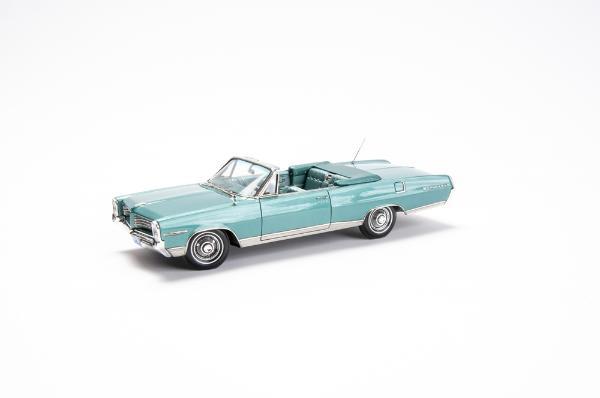
It's an old annual AMT 1959 Pontiac Bonneville that will be gracing my bench in the months to come. Steve
-
Help on Restoring Old Models
StevenGuthmiller replied to JPolli's topic in General Automotive Talk (Trucks and Cars)
If it's only 12 years old, chances are it's either still available new, or readily available some where like ebay relatively cheap. If a new one can be had, I wouldn't waste my time on stripping it & taking it apart. I only get into restorations on kits that are vintage out of production items. Just my opinion. Steve -
61 Continental Restored Update 10/31/14
StevenGuthmiller replied to Porscheman's topic in Model Cars
Or worse yet, Pooped on! Sounds a little like a bunch of 12 year olds took over the forum! Steve -
Easy off oven cleaner works nice Charlie. It won't hurt the plastic. Or you could go to your local auto parts store and get some "Super Clean". The stuff in the purple bottle. This stuff will strip your parts as clean as a whistle & it will never hurt your plastic. I've soaked parts in it for a month or more with no affect on the plastic. Mind you, some flat paints & primers can be a little tough to remove no matter what you use, but I'm confident that once you try these options, you'll never go back to finger nail polish remover. Besides, the acetone in the polish remover will damage the plastic if you're not careful. If you do decide to try either the oven cleaner or Super Clean, be sure to wear gloves & in the case of oven cleaner, a mask. The fumes in the oven cleaner can bring you to your knees in a hurry & the Super Clean is as affective at removing skin as it is paint. The Super Clean can be used over & over again & it is biodegradable. Very cost effective. I bought a gallon of it a year ago & am still using the same stuff. Here's a couple of shots of what can be done in a couple of hours in Super Clean. Steve
-
Glue Bomb/old buildup saves - BEFORE & AFTER PICS?
StevenGuthmiller replied to impcon's topic in Model Cars
Nice save Mike! Looks like the previous owner glued it together with a caulking gun!! Steve -
61 Continental Restored Update 10/31/14
StevenGuthmiller replied to Porscheman's topic in Model Cars
Hmmm.... poop brown. Was that baby poop brown, or just regular poop? Or could it be cow poop brown with a touch of green? Steve -
Tamiya Masking Tape
StevenGuthmiller replied to 1/24DragAndStreetCars's topic in General Automotive Talk (Trucks and Cars)
I've been using the stuff for a while now & I love it too! First time I saw it was @ Hobby Lobby, so I thought I'd give it a try. Now I order several re-fills of the 6mm at a time from Burbank House of Hobbies for $2.60 each. Steve -
1959 Ford Galaxie, Done! 11/16
StevenGuthmiller replied to StevenGuthmiller's topic in WIP: Model Cars
Spent a little time @ the bench today getting some foiling done. It's always exciting to me to get the foil on these '50s cars. It really starts making them come to life! Got a pretty good start on the interior too. Starting the detailing on that as well. Steve -
The only thing I'll say is one of the reasons I use a siphon feed air brush is the fact that I use a lot of MCW paints. Pop the lid onto the jar, & you're good to go. When I'm done, I don't have to clean cups or jars, just the brush. Plus any detailing paint I have left, I store in airbrush jars. Keeps forever & when I'm ready to use it again, Just screw on the lid & go. One of these days I would like to get a cheap gravity feed brush just for the small quick jobs when I don't need much paint or where I'll be doing several color changes. But for painting bodies & such, there's nothing wrong with my trusty old Badger. By the way, I run MCW "airbrush cleaner" through mine all of the time. It's some pretty wicked stuff! If it doesn't destroy the seals, nothing will! Steve
-
I use WLC the same as any other clear. between 2 & 4 fairly wet coats. A lot depends on how much polishing your going to do. If you're a little heavy handed with your polishing, like I am, more coats are better to cut down on the possibility of grinding through the clear to the color coats & beyond. But, as Bill said, every builder on the planet will most likely give you a different answer. Just like most things, trial & error will eventually get you to a system that works for you. Steve
-
Nacho Z's hobby room
StevenGuthmiller replied to Nacho Z's topic in General Automotive Talk (Trucks and Cars)
This is how they look when you're a total slob......like me! I think I better get out a little Windex! Steve -
Pretty cool! I'm a little surprised at the "Root Beer" color. It's nicer than I had guessed. More of a deep brick red than a dark brown. Steve
-
Very nice Alan!! I'm not real big into four doors, but this was the car you were much more likely to see on the road in '57. Kind of has a refreshing feel or "hominess" to it. A nice departure from all of the "blingy" top of the line cars from that era. Steve