StevenGuthmiller
-
Posts
15,071 -
Joined
-
Last visited
Content Type
Profiles
Forums
Events
Gallery
Everything posted by StevenGuthmiller
-

1964 Pontiac Bonneville Convertible.
StevenGuthmiller replied to StevenGuthmiller's topic in WIP: Model Cars
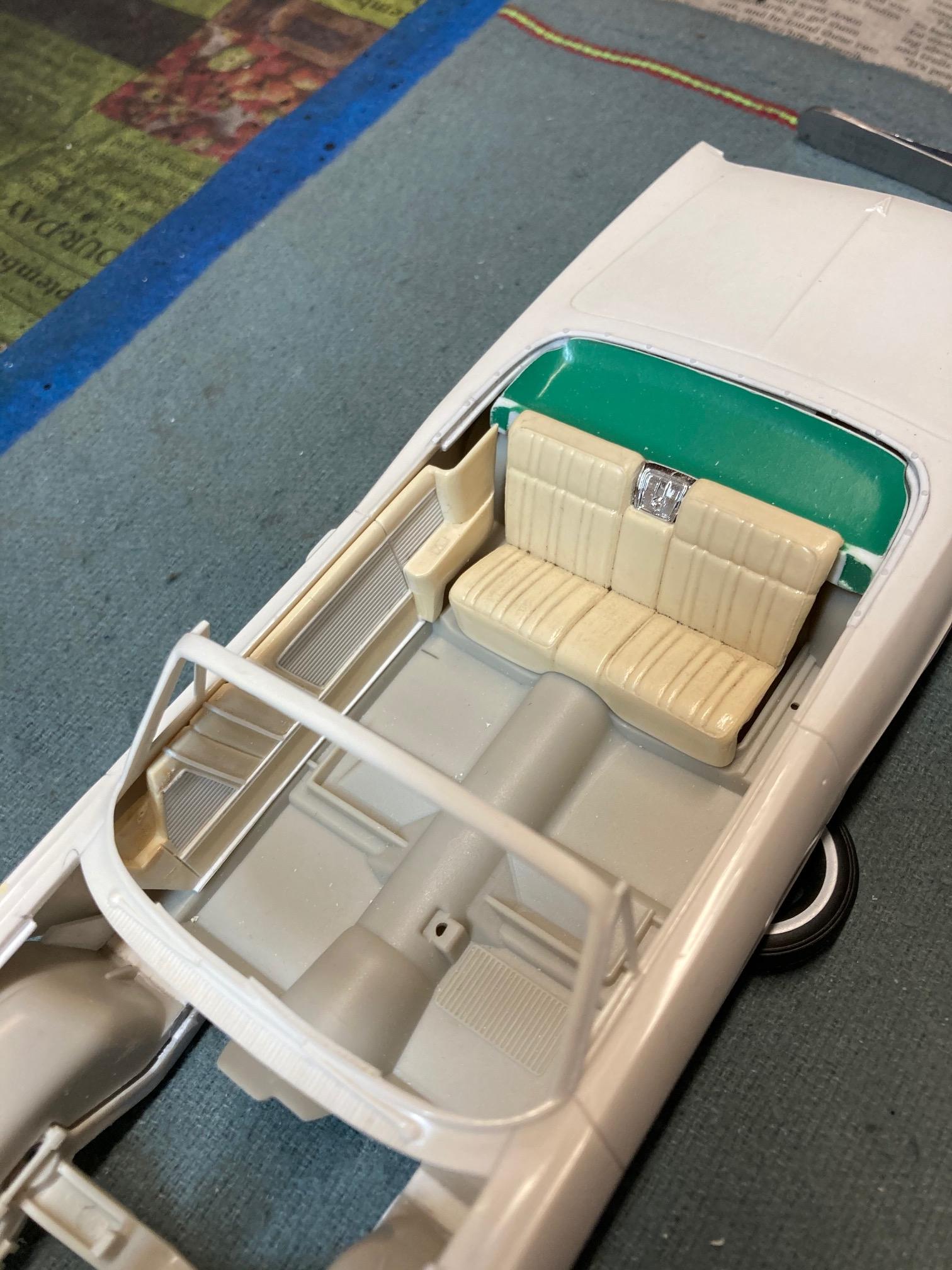
Thanks guys. I've got one front seat to finish up, a steering wheel to basically scratch build, and the interior should be about done. That is except for making some arm rests, and making or robbing some window cranks, pedals, shifter, etc. Once the interior is done, I'll have the most difficult portion finished and I can move on to more body mods, and then begin concentrating on chassis and engine stuff. Summer puts a real damper on bench time, so updates might be a little slow in coming. Steve -
Issue 212
StevenGuthmiller replied to Dave Ambrose's topic in Model Cars Magazine News and Discussions
It is, but they are doing all automotive contest editions. Indication is that their next contest issue will contain 12 pages from the NNL North show alone! Steve -
1964 Pontiac Bonneville Convertible.
StevenGuthmiller replied to StevenGuthmiller's topic in WIP: Model Cars
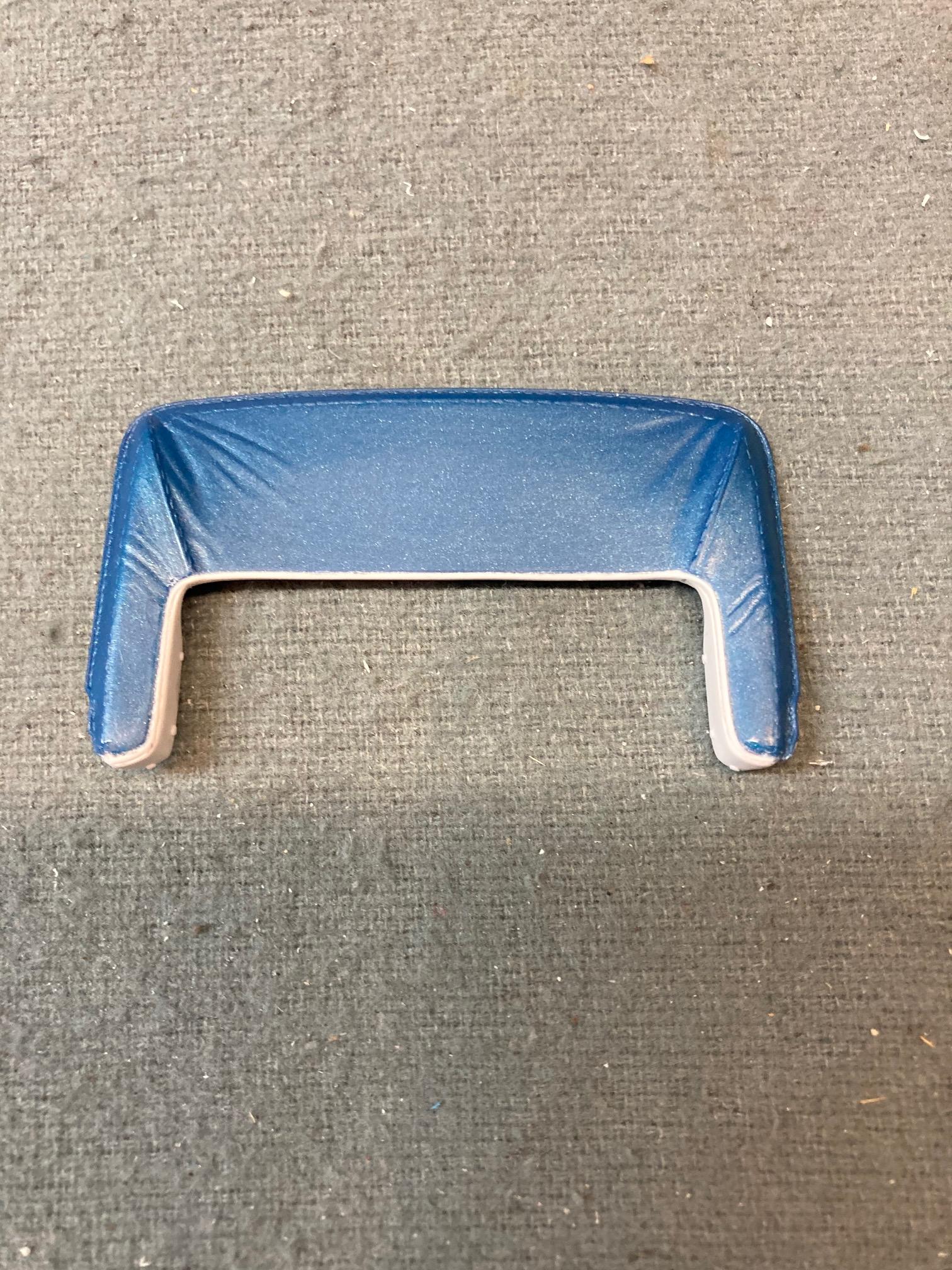
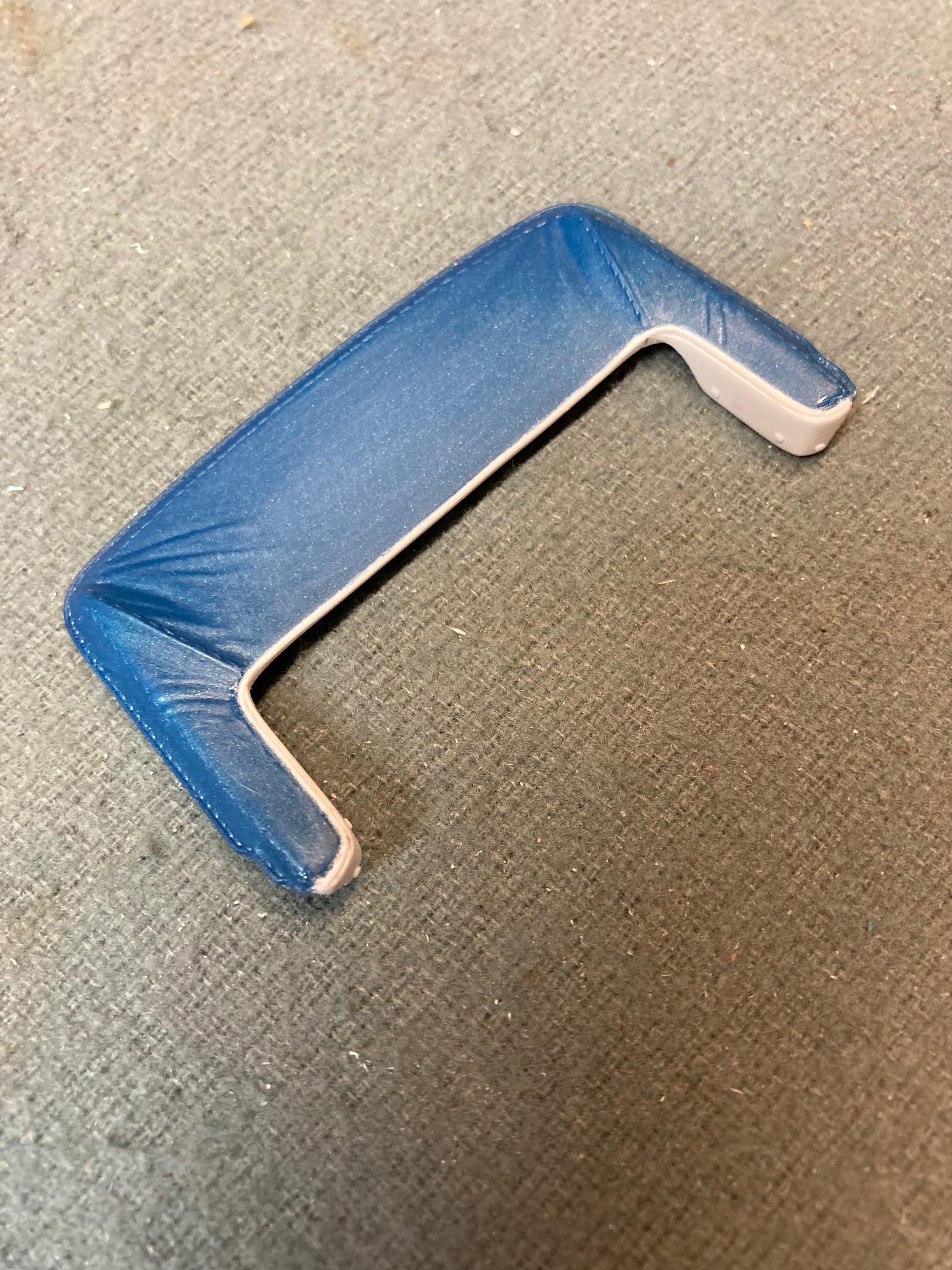
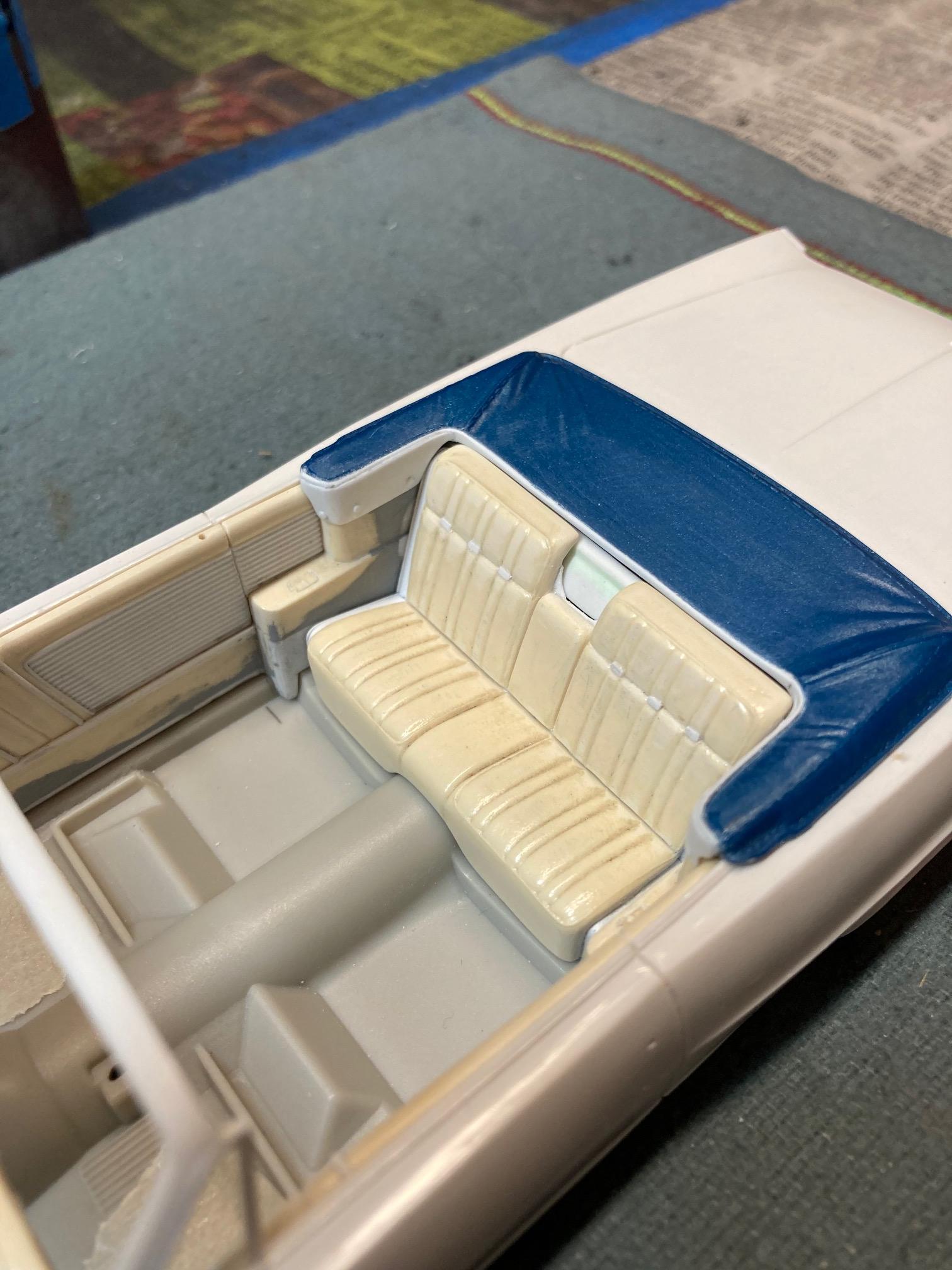
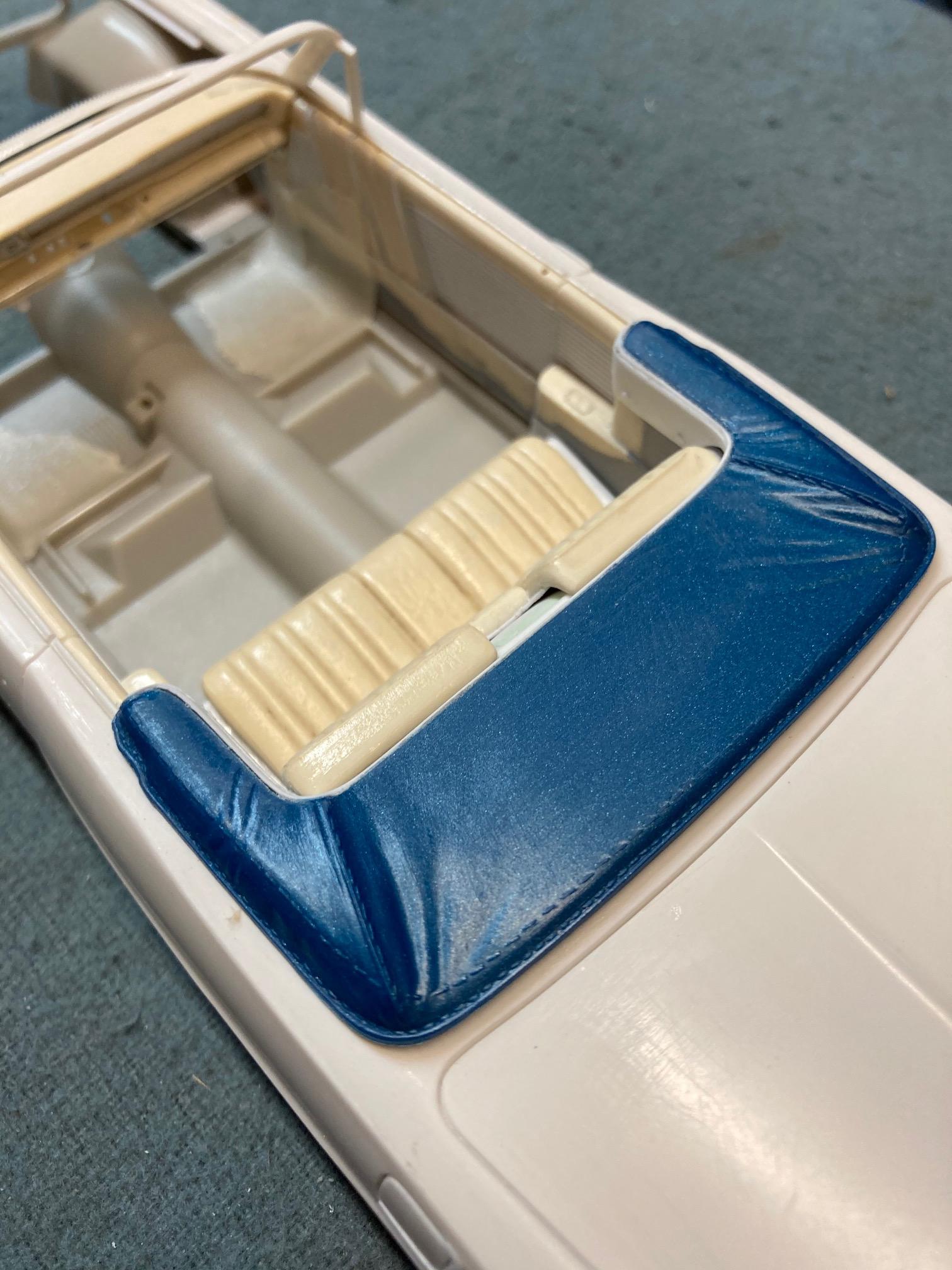
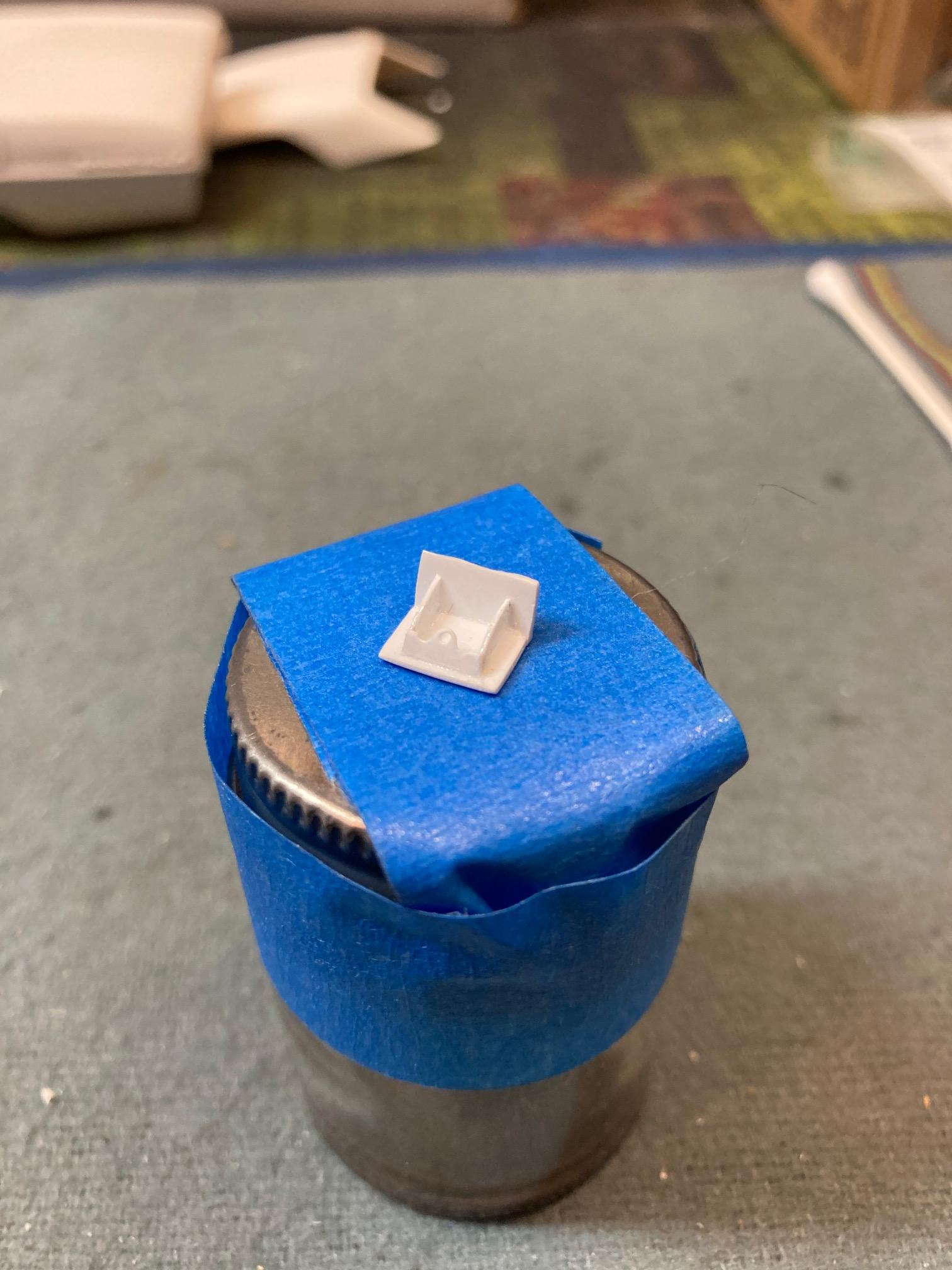
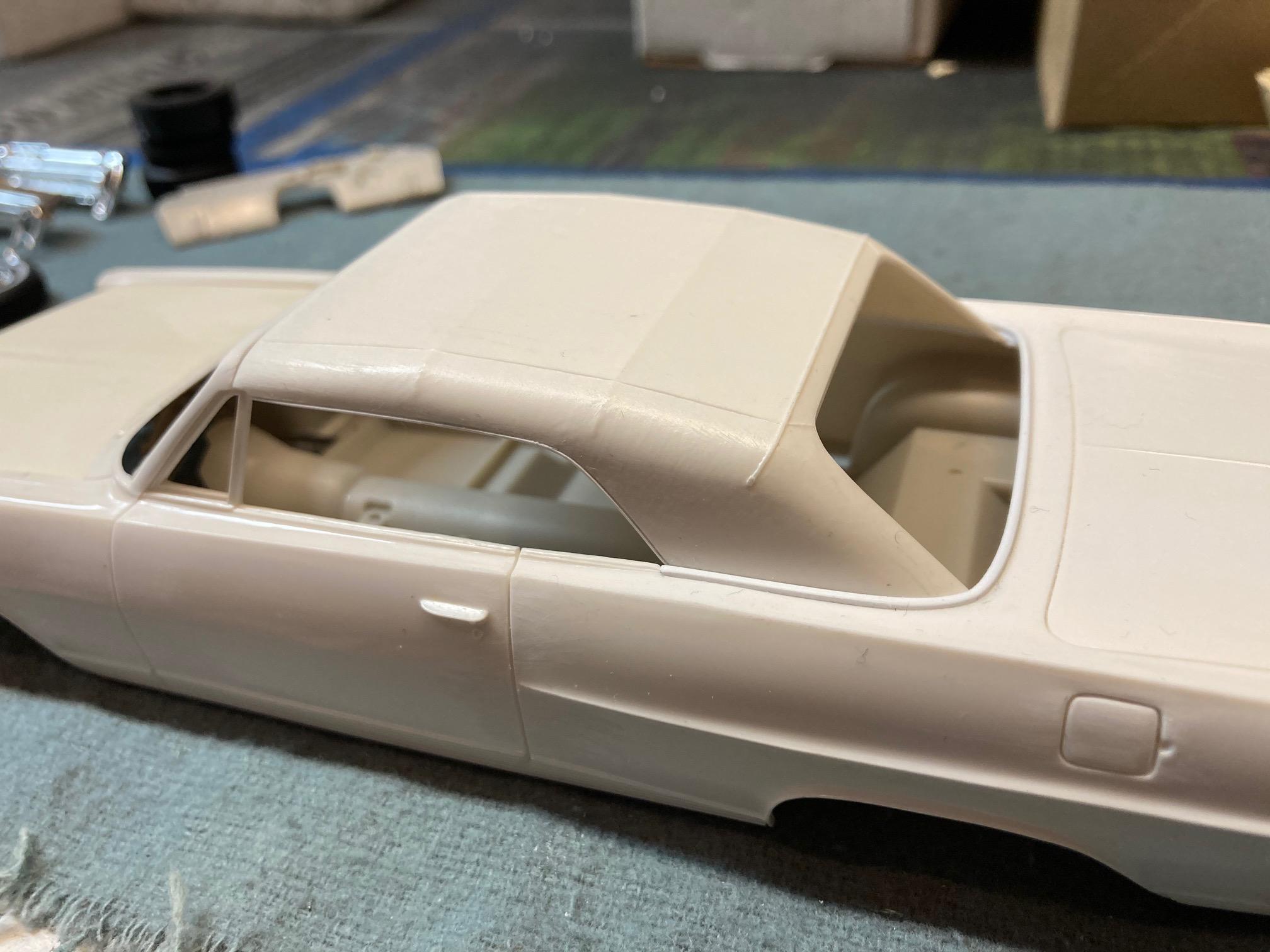
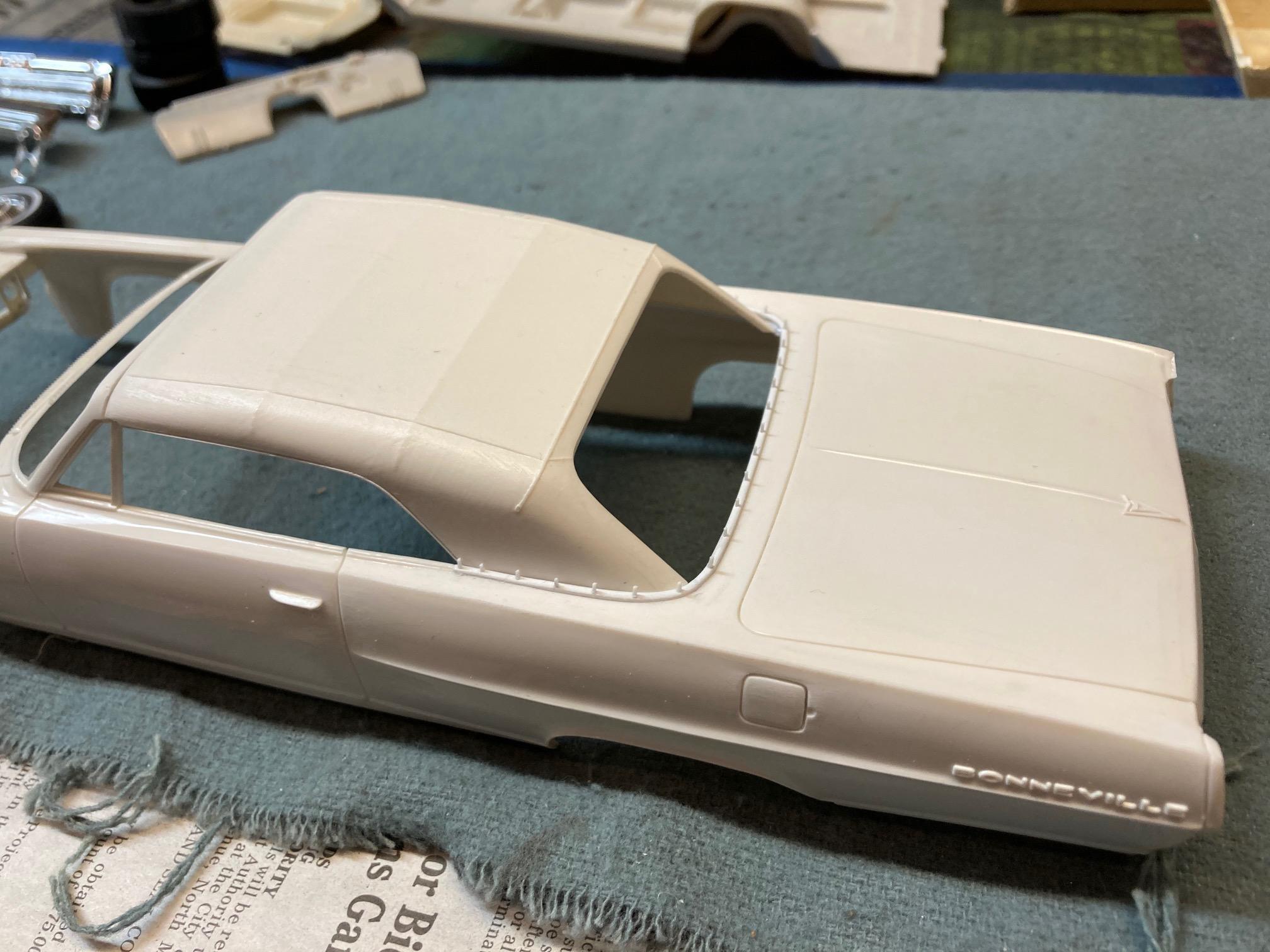
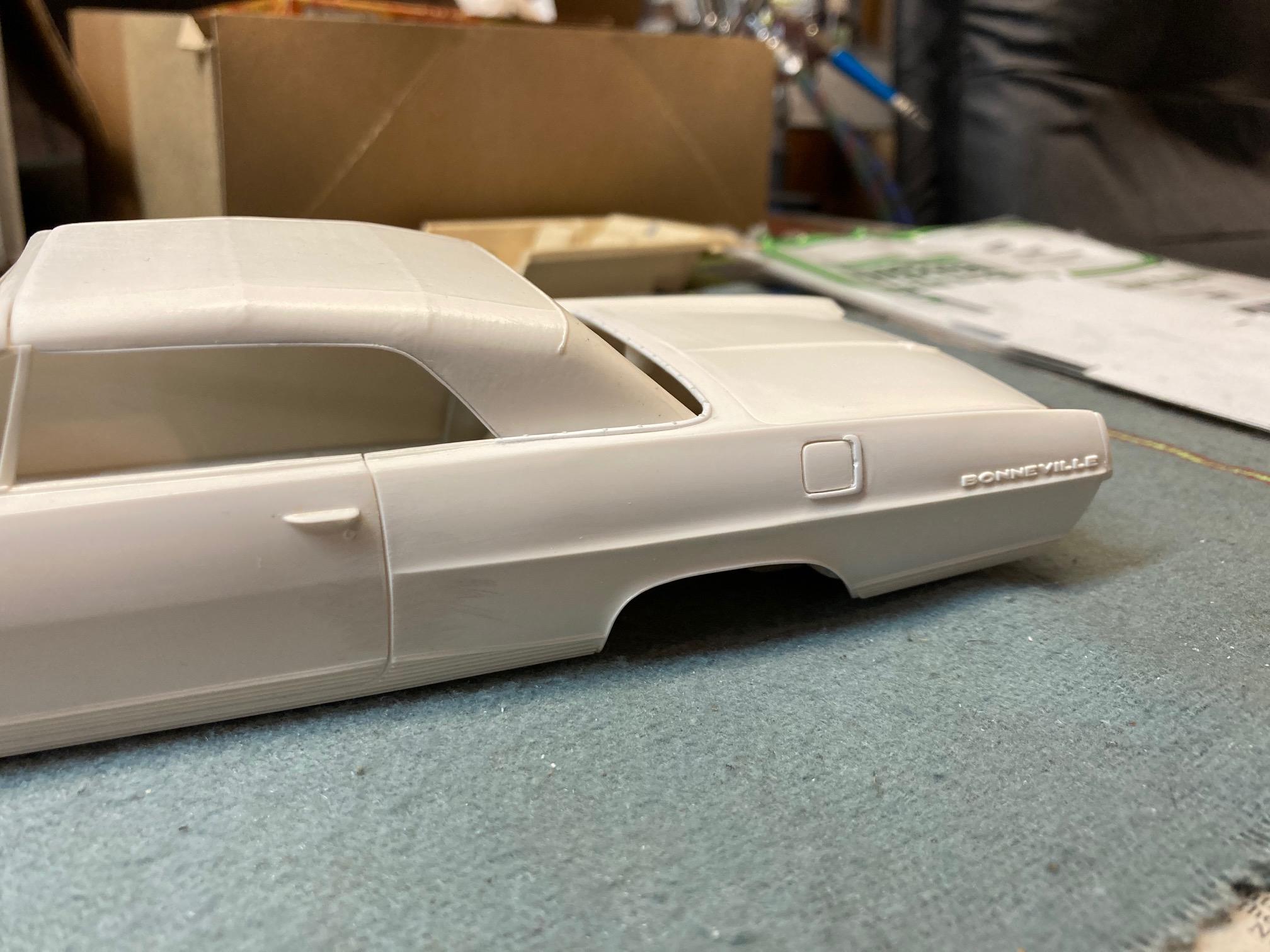
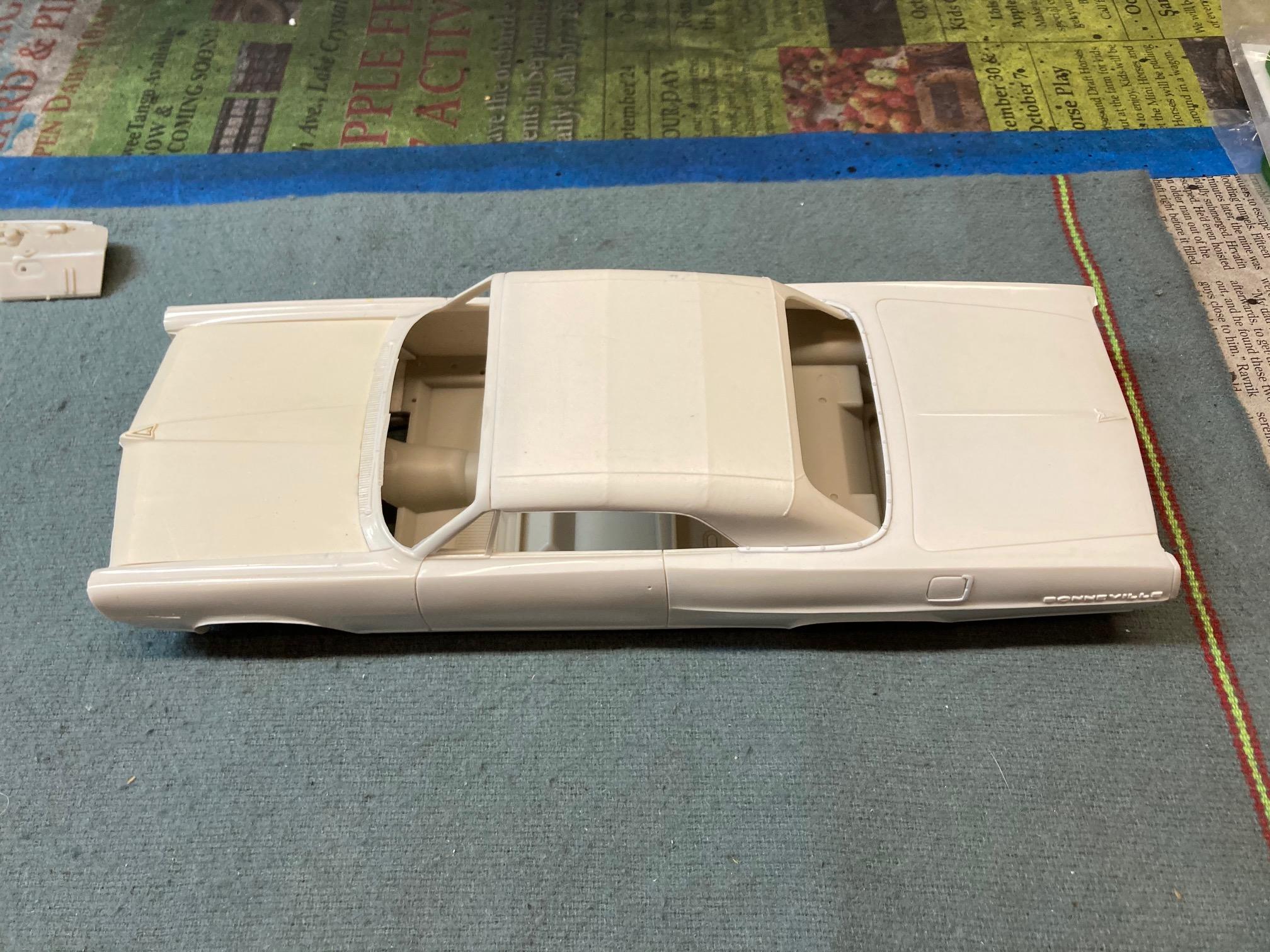
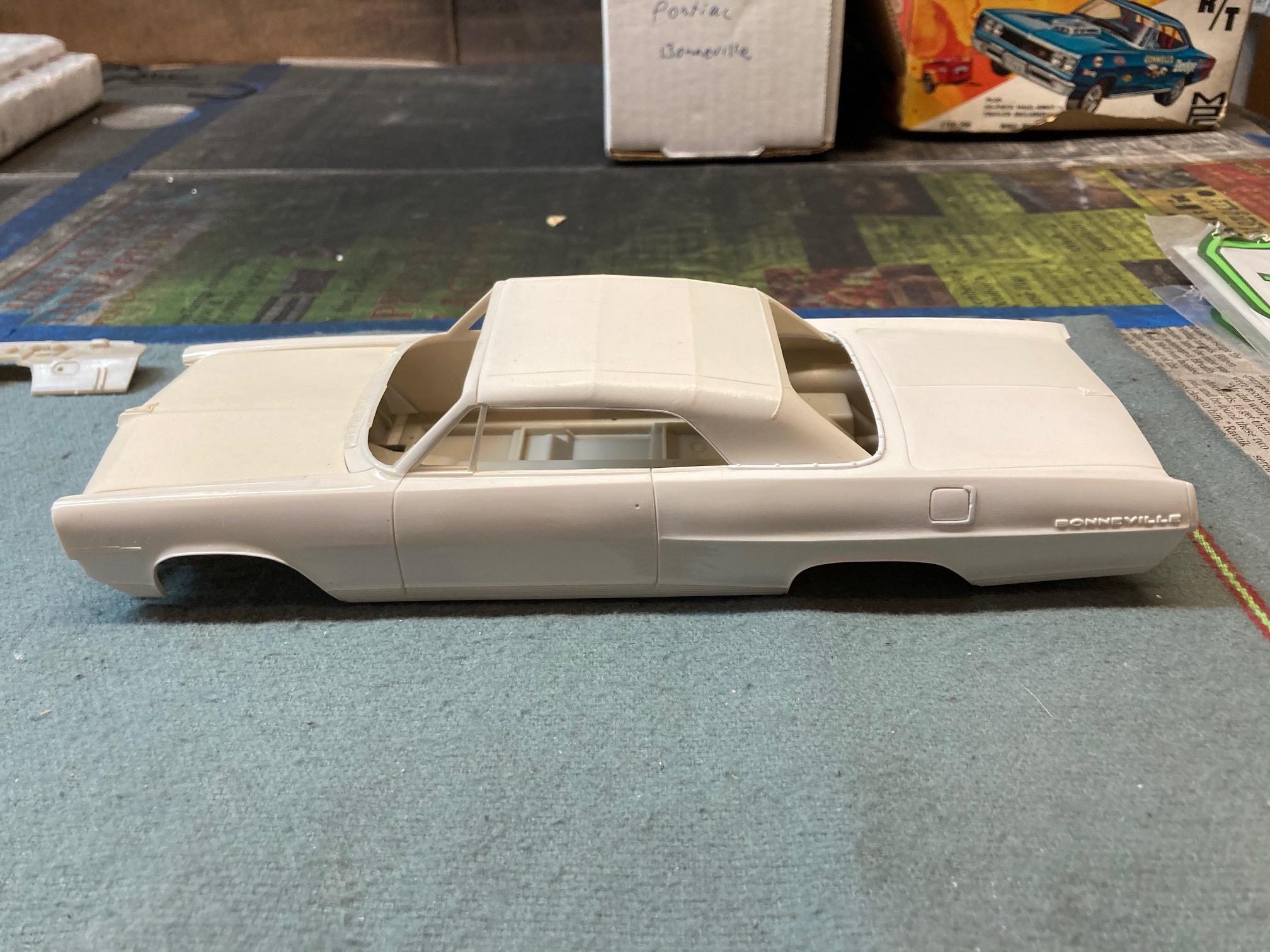
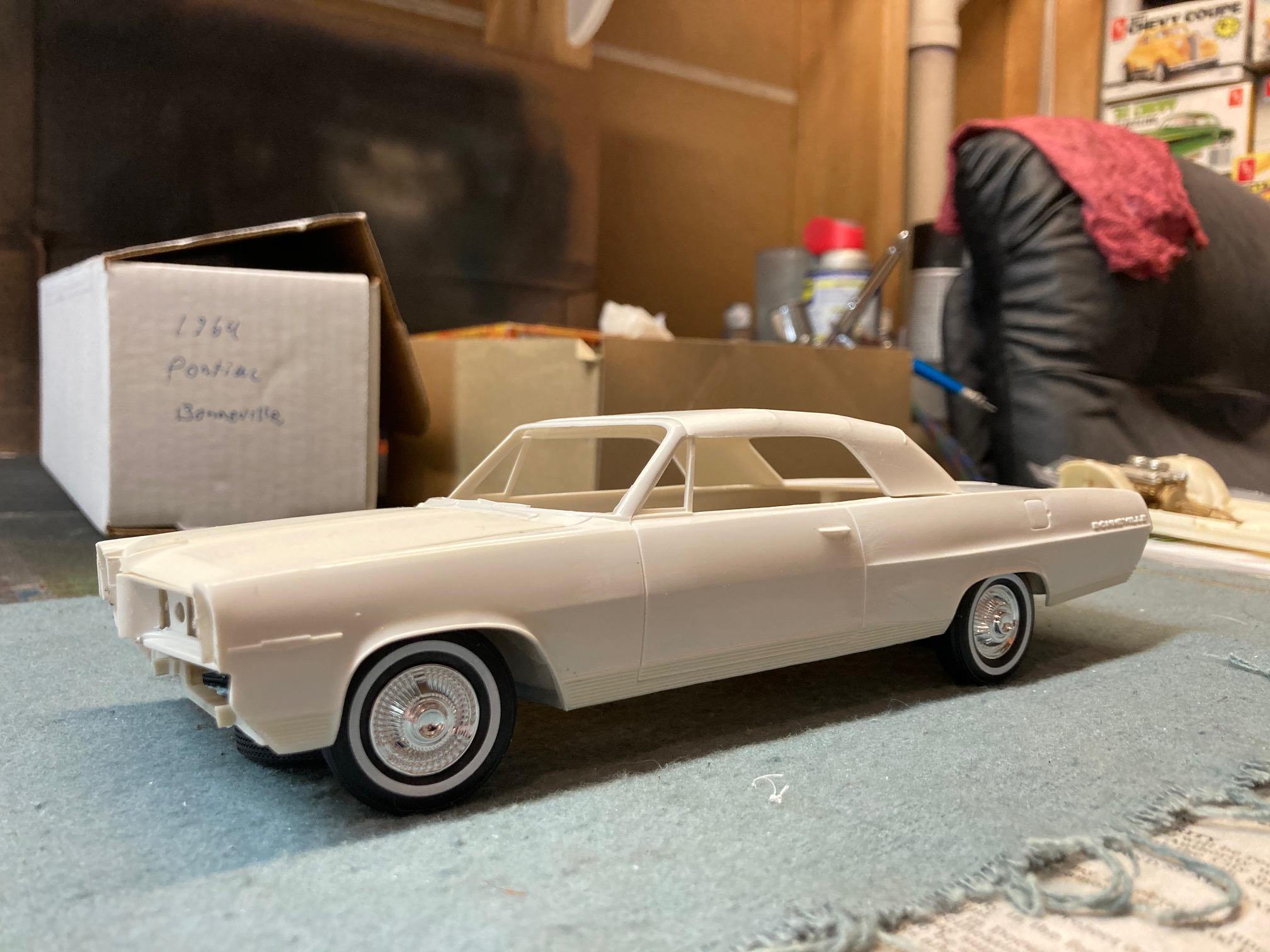
Which brings us to my current position. The top boot from the Monogram '59 Impala fits quite well in this instance, but I did want to add a little bit of material in a few places to make it look better, and to make it slip into place, and remain in place better. Steve
-
1964 Pontiac Bonneville Convertible.
StevenGuthmiller replied to StevenGuthmiller's topic in WIP: Model Cars
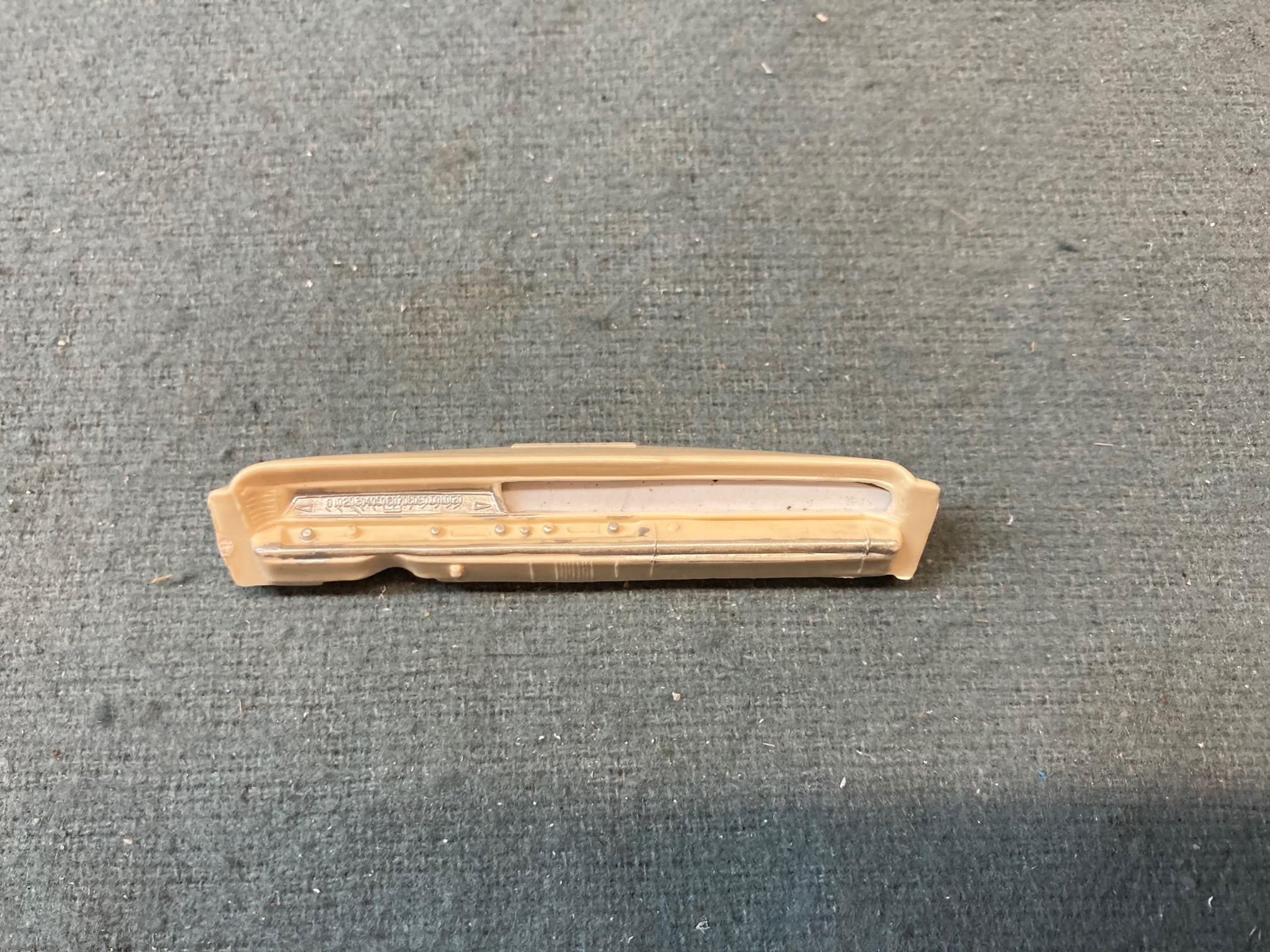
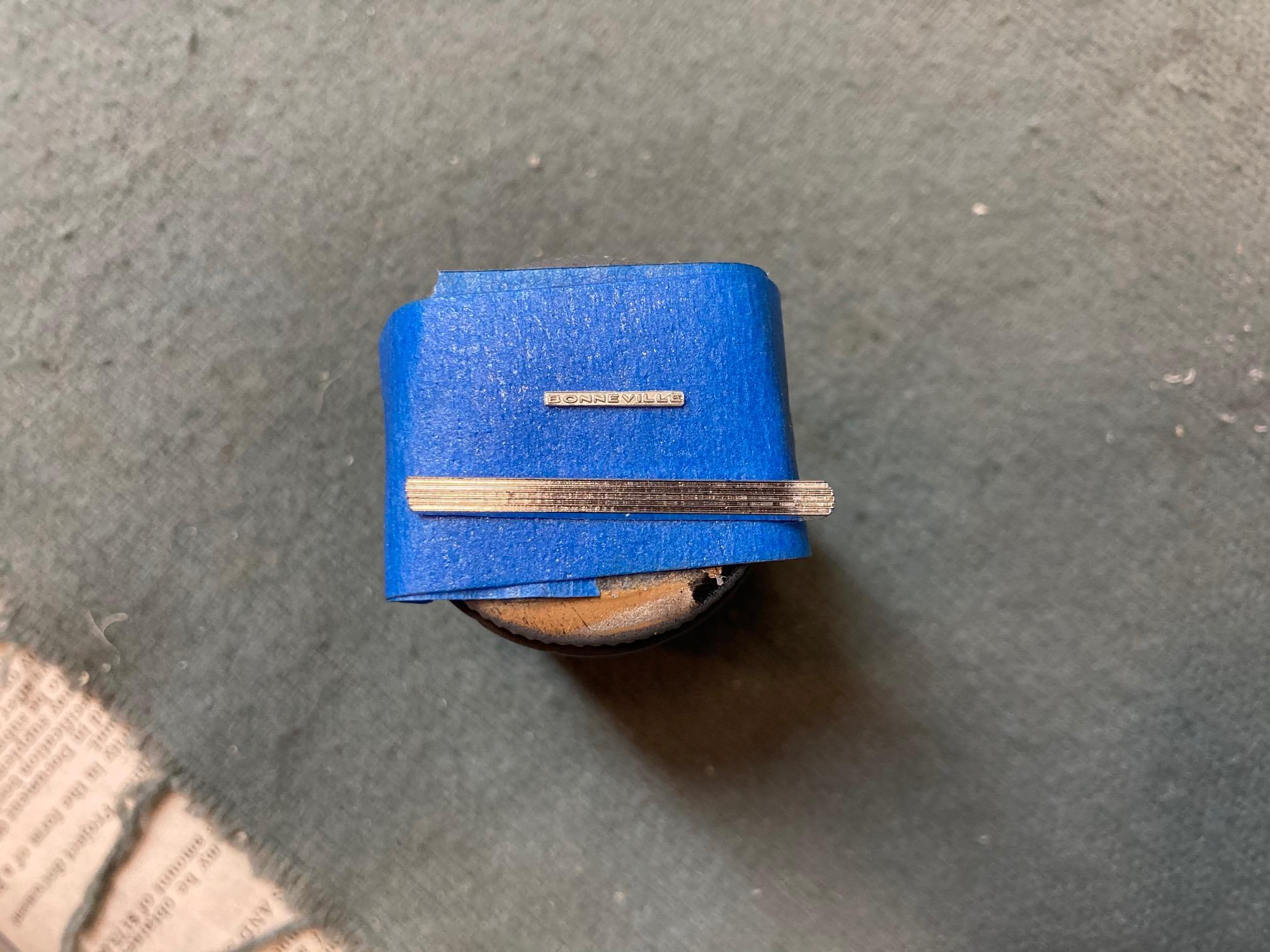
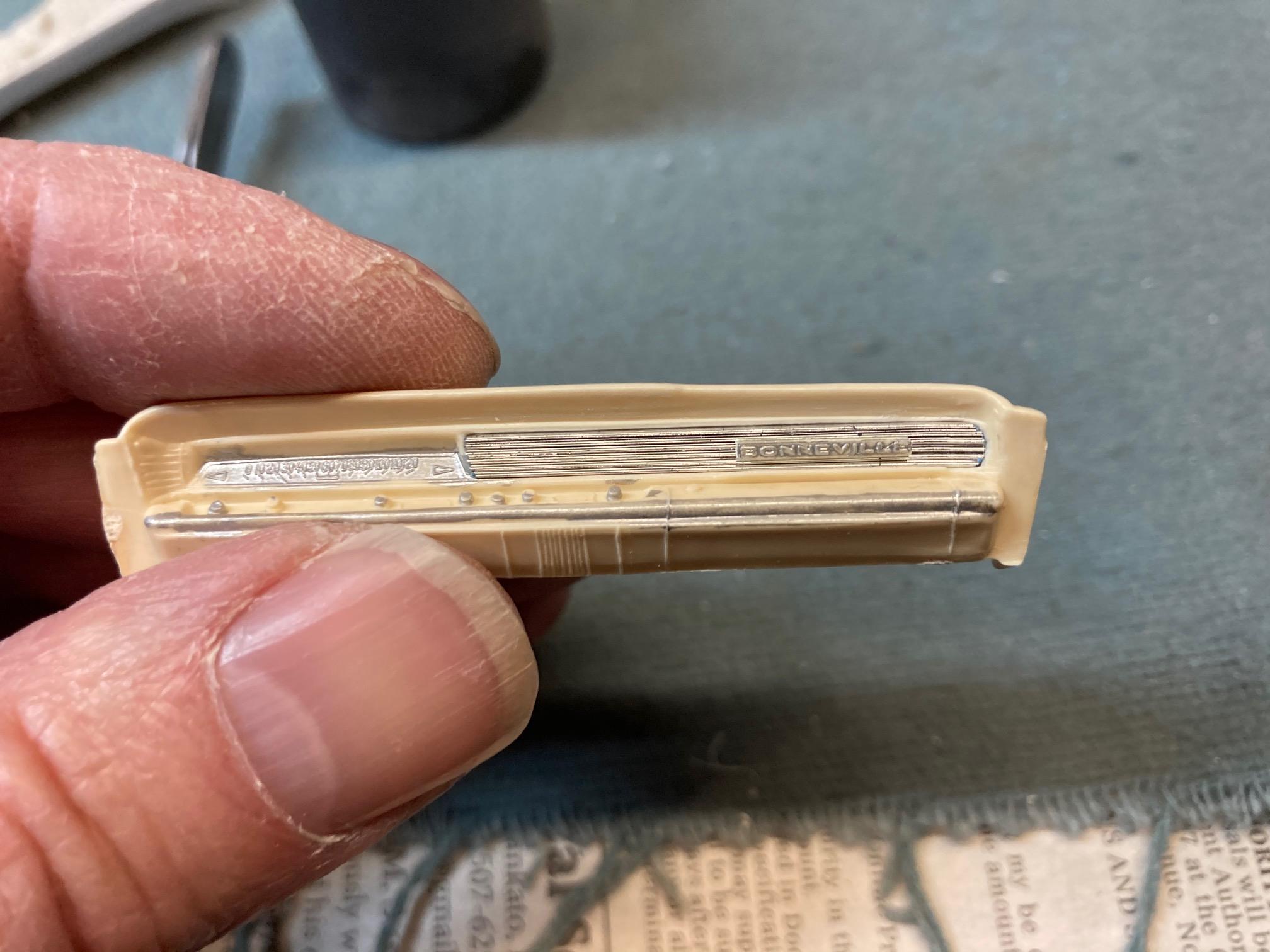
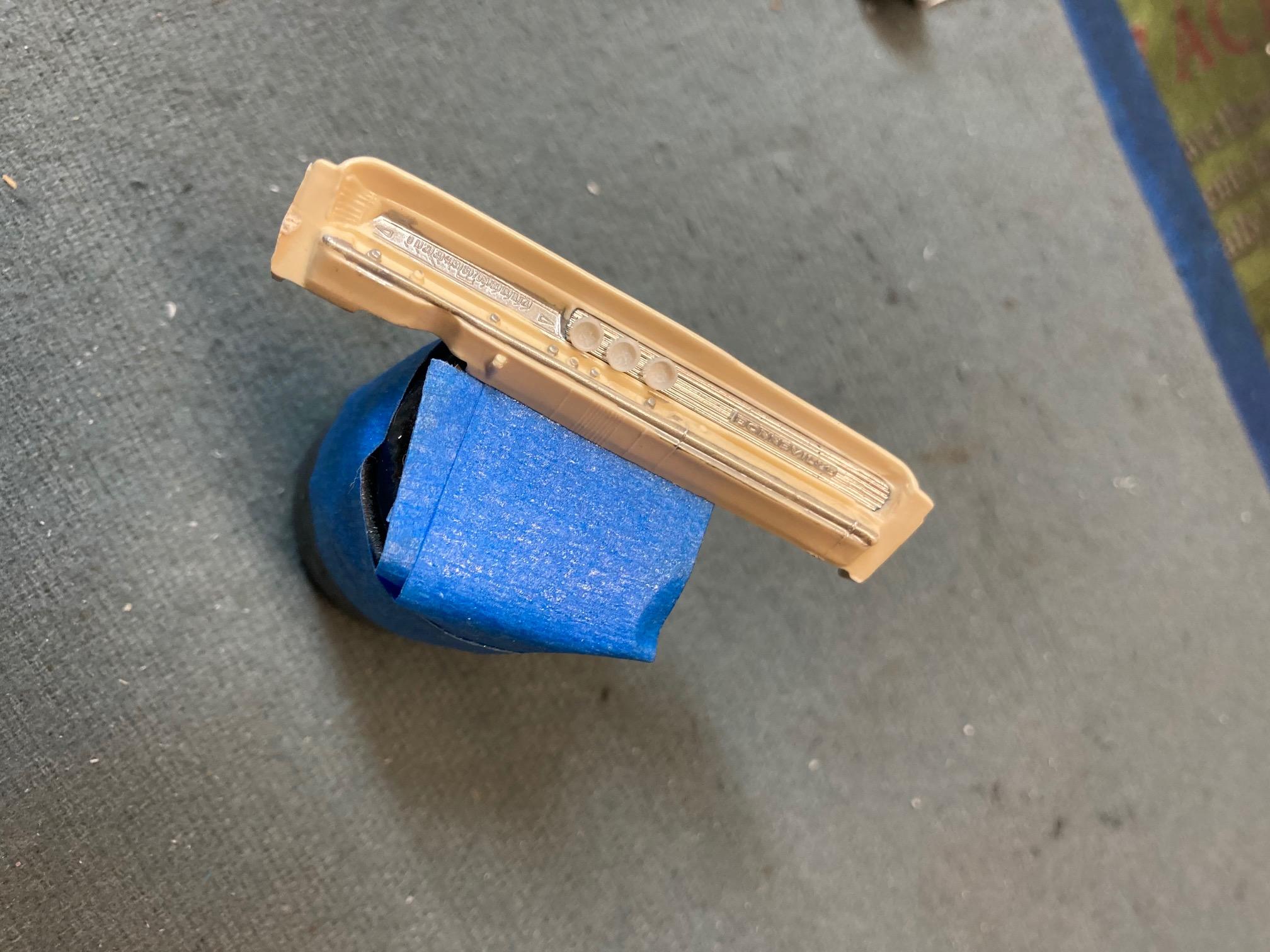
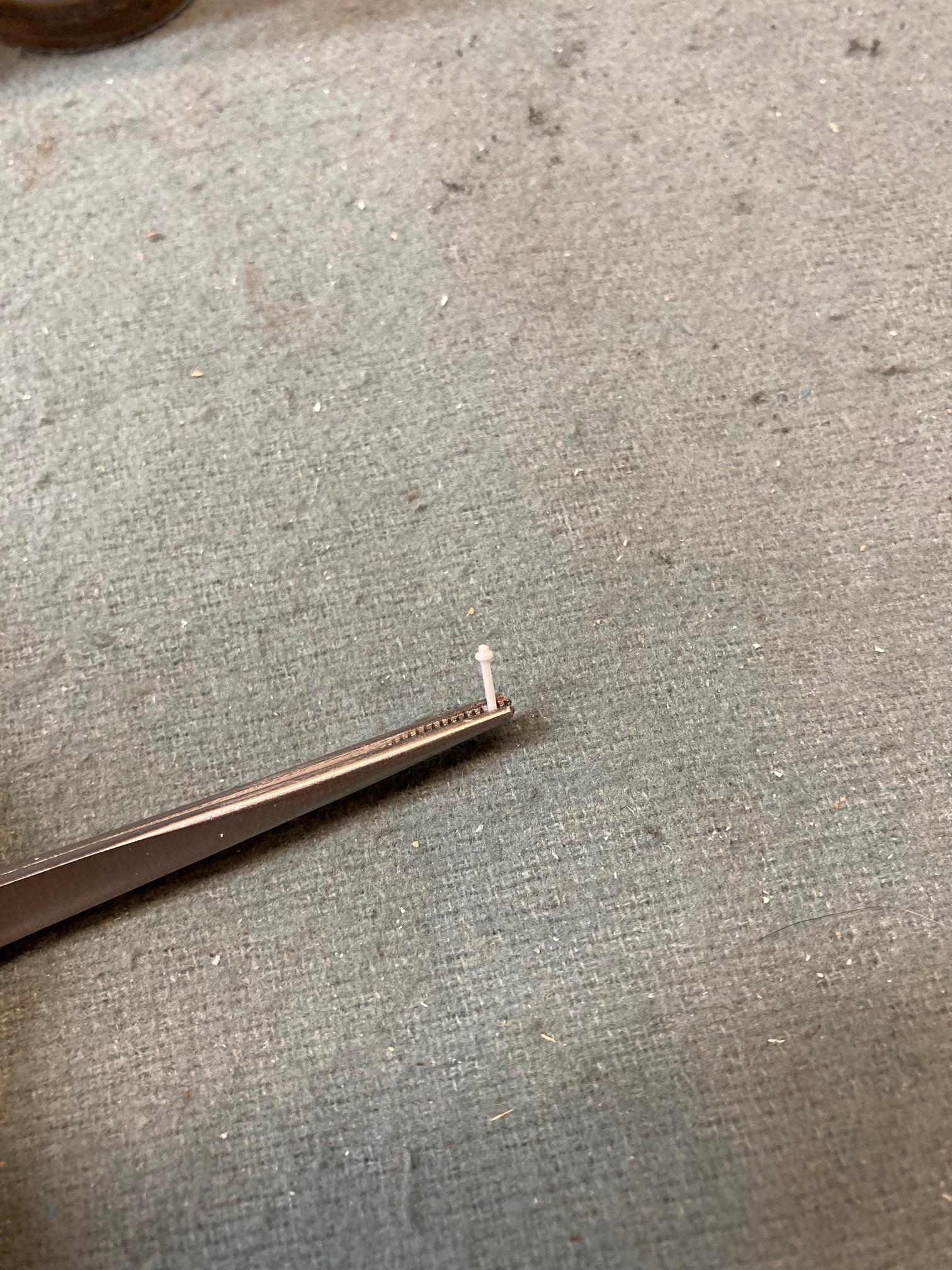
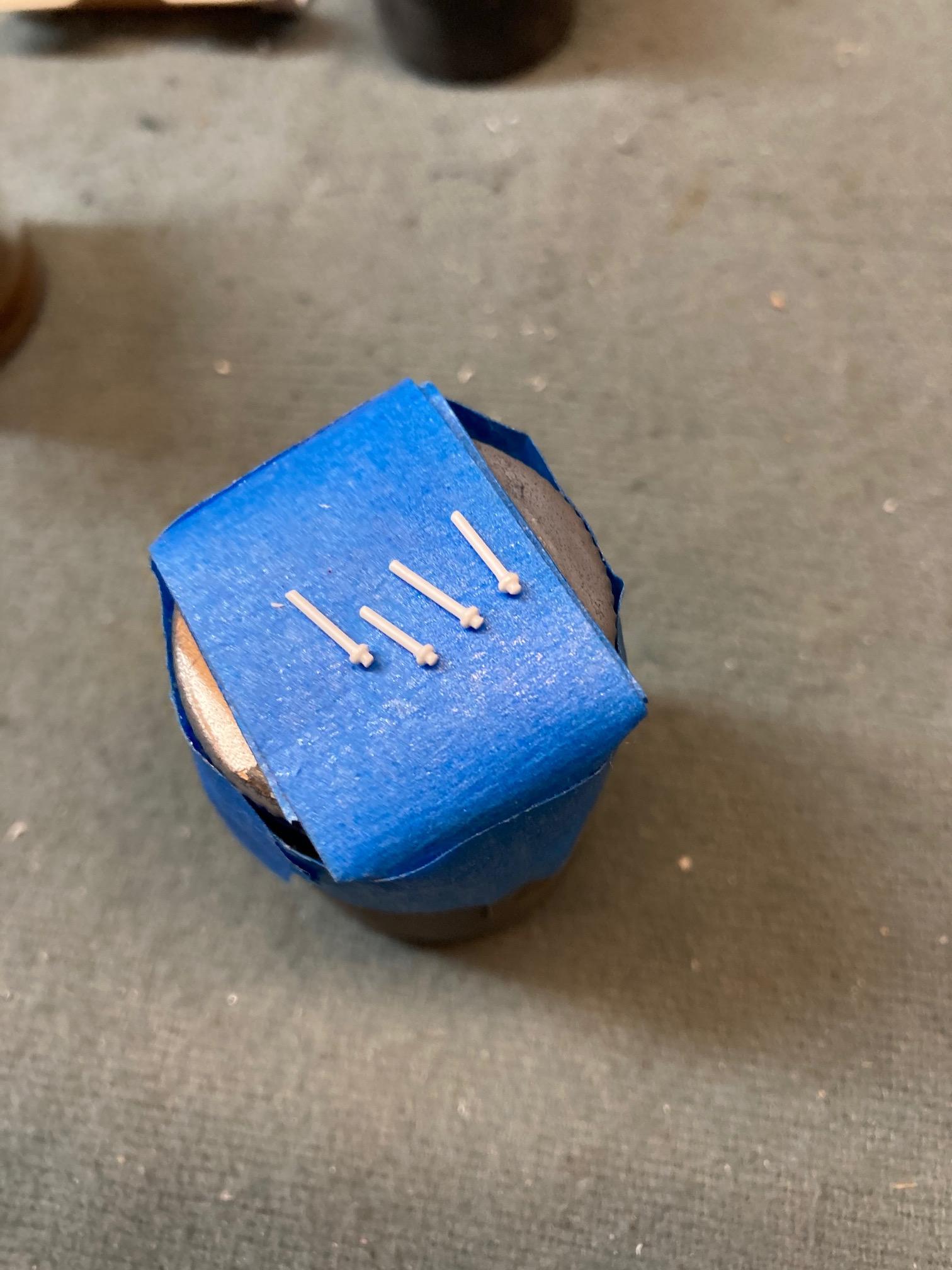
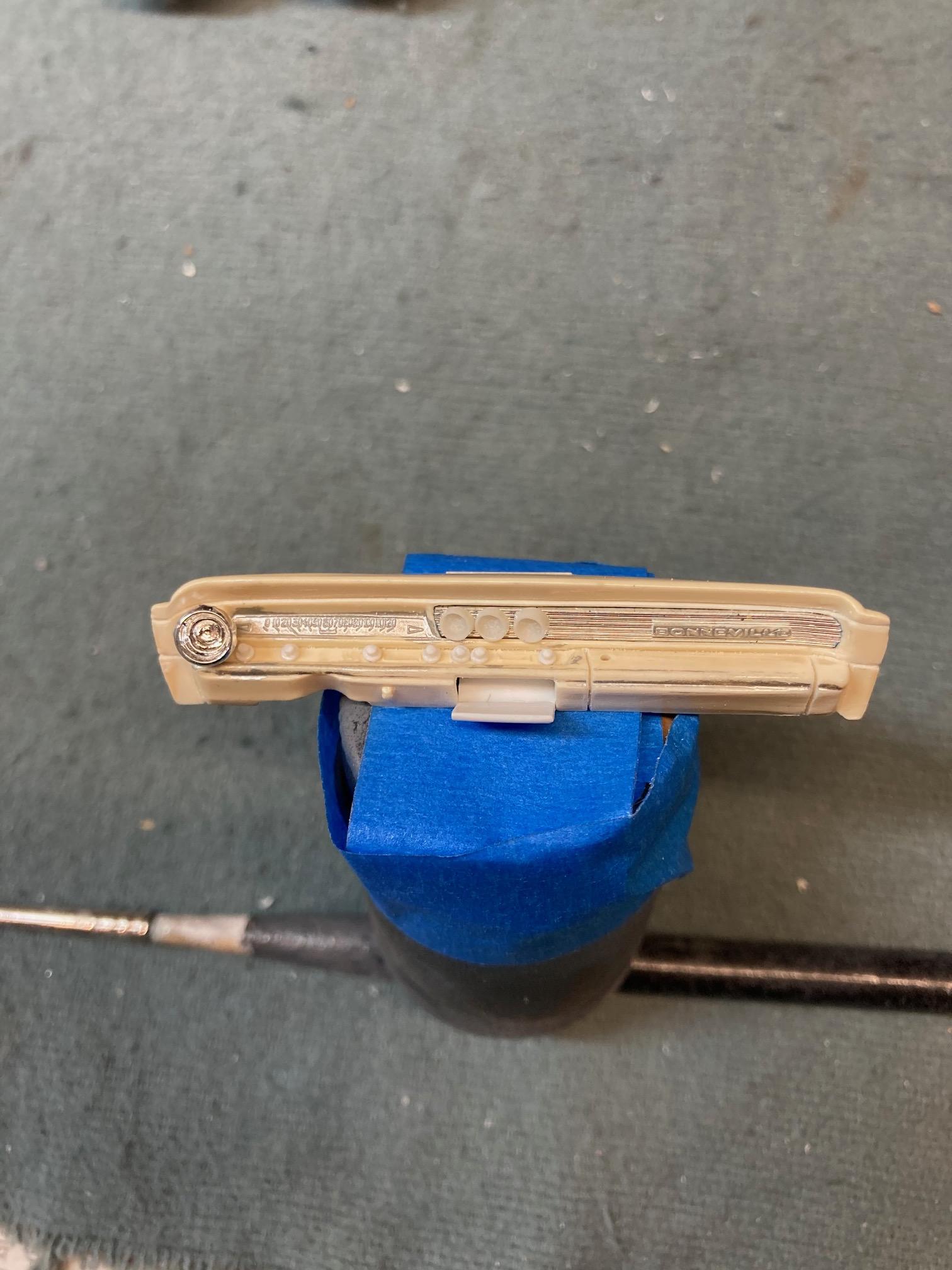
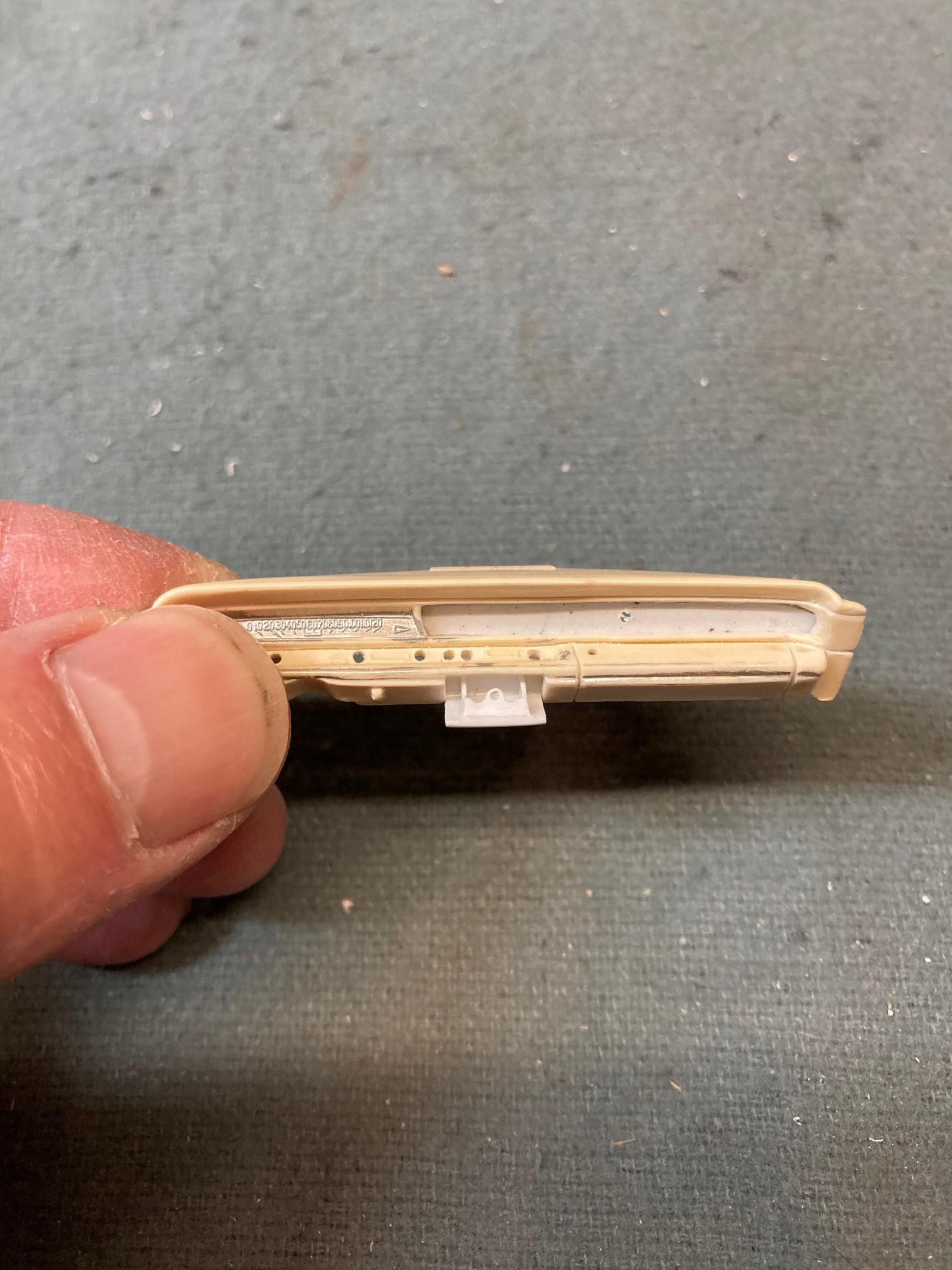
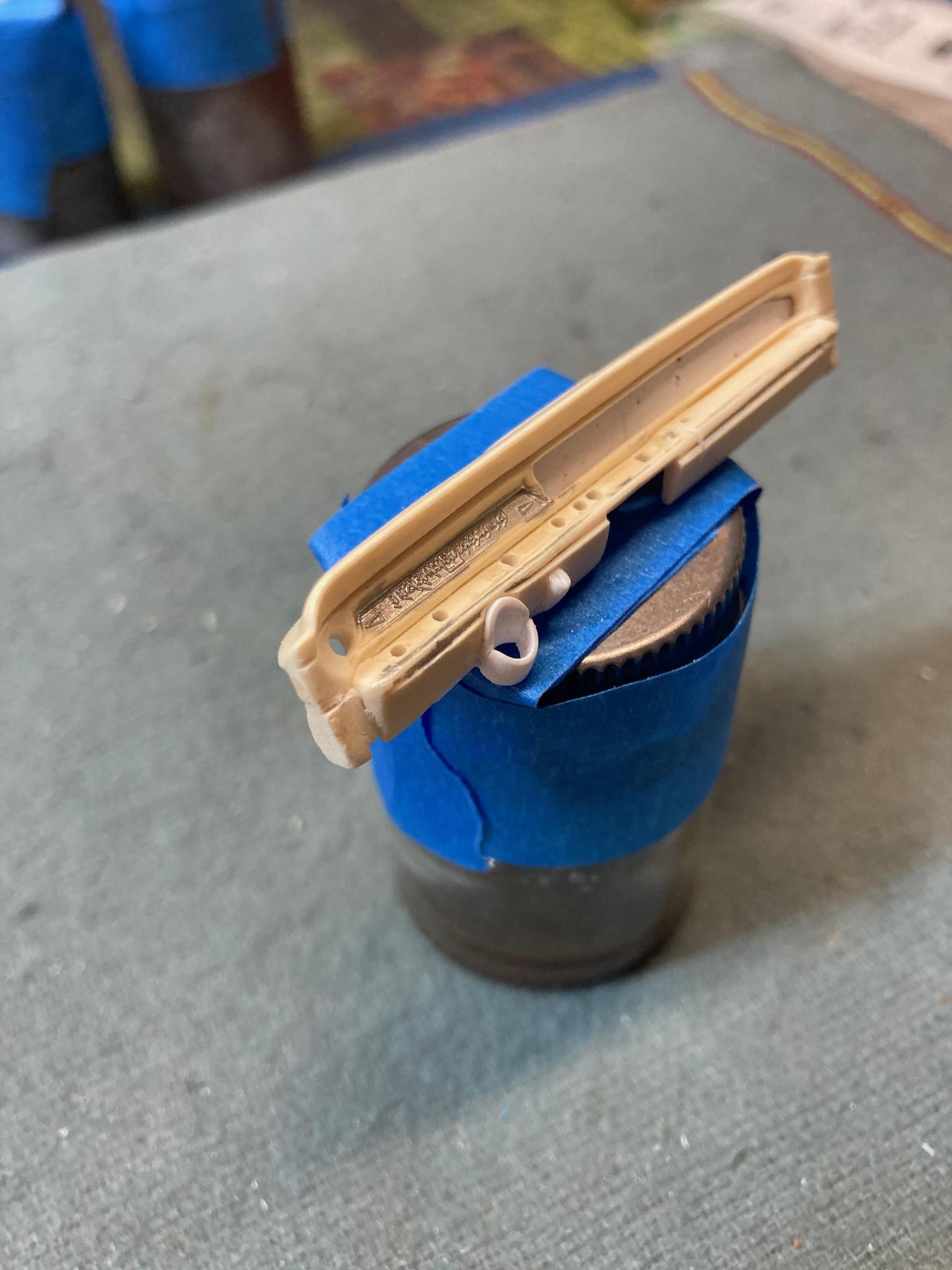
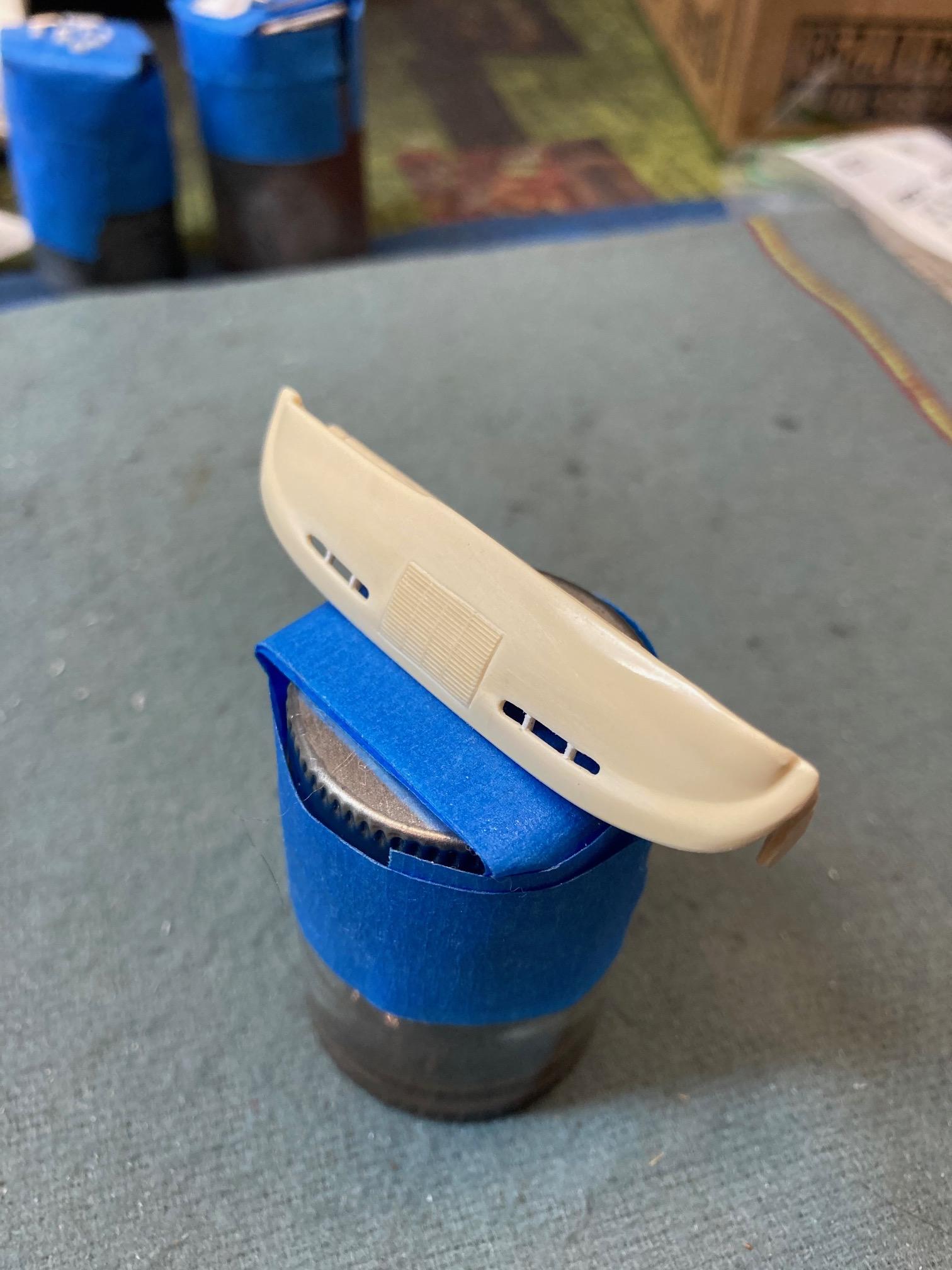
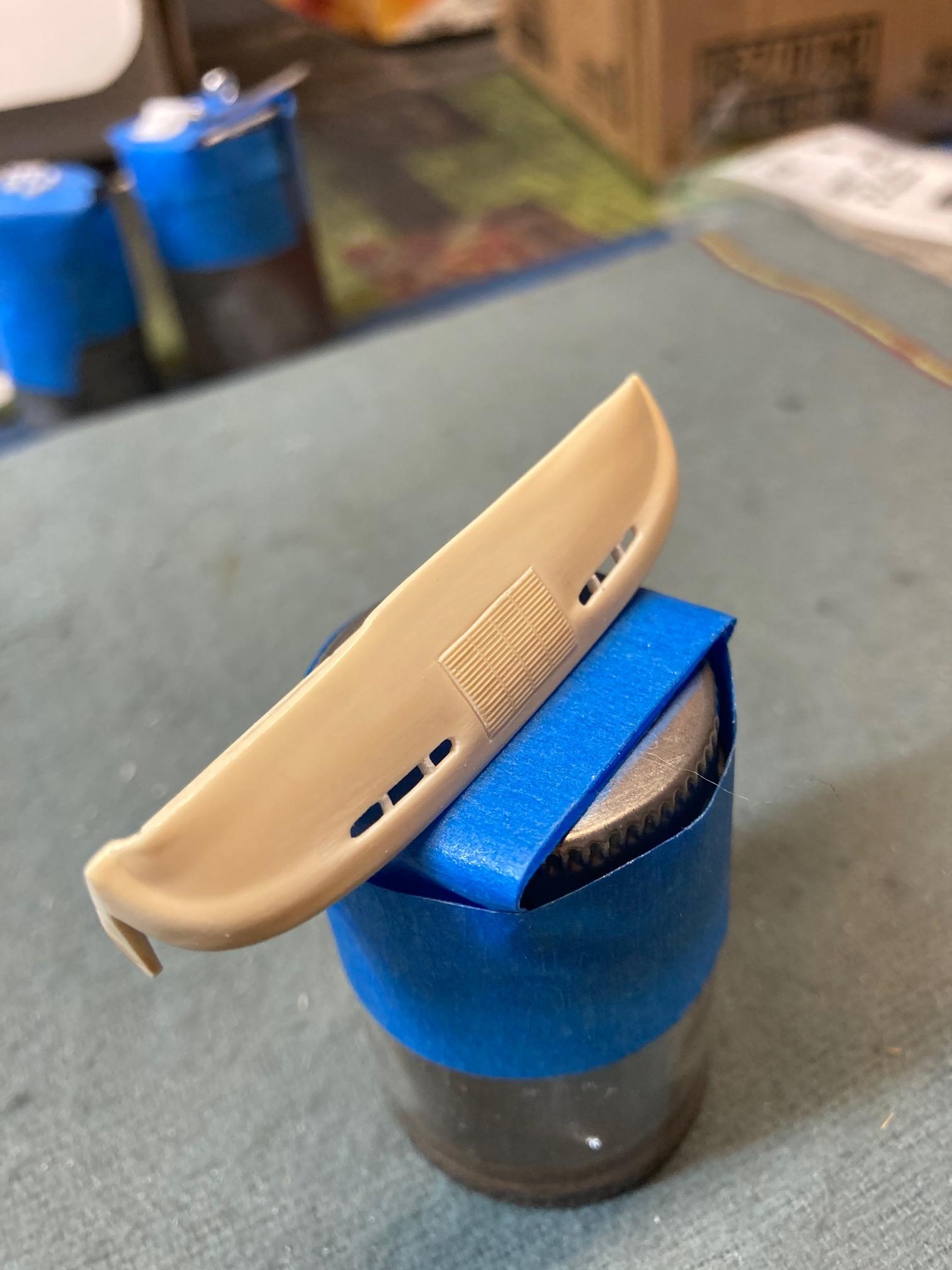
Thanks guys. Of course, the dashboard is not to be ignored. I started by first removing the Bonneville badge and then grinding out the fluted dash molding and fashioning a piece of rocker panel molding from a Revell '67 Chevelle to fill it's place. Then I removed the better defined gauge pods from an AMT '65 2+2 kit to replace the originals. A tail light bezel from the Revell '68 Charger will do nicely to replicate a dash mounted tach, and a set of new dash knobs made from plastic rod will help to make detailing the dash more precise. I was originally going to upgrade the lower dash to console molding, but being as this will be a console delete 4 speed car, I decided to add ash tray detail in it's place. Finally, a steering column collar and new ignition switch were added to the lower dash, and the defroster vents opened. Panel lines and trim was also scribed deeper for better definition. Steve
-
I would think it should. That's why I bought it. But I have yet to try it. Steve
-
Yes, it is. Steve
-
1964 Pontiac Bonneville Convertible.
StevenGuthmiller replied to StevenGuthmiller's topic in WIP: Model Cars
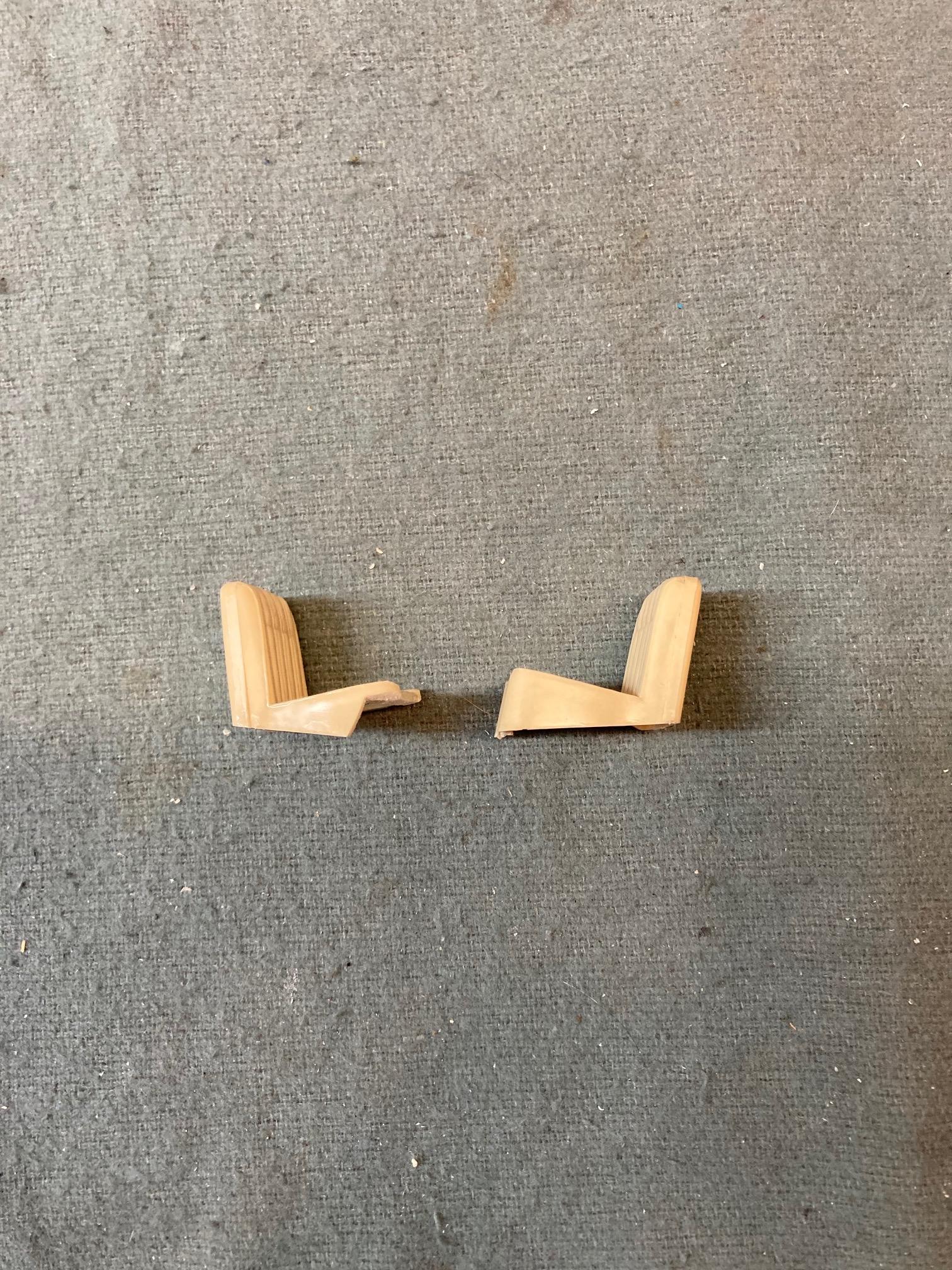
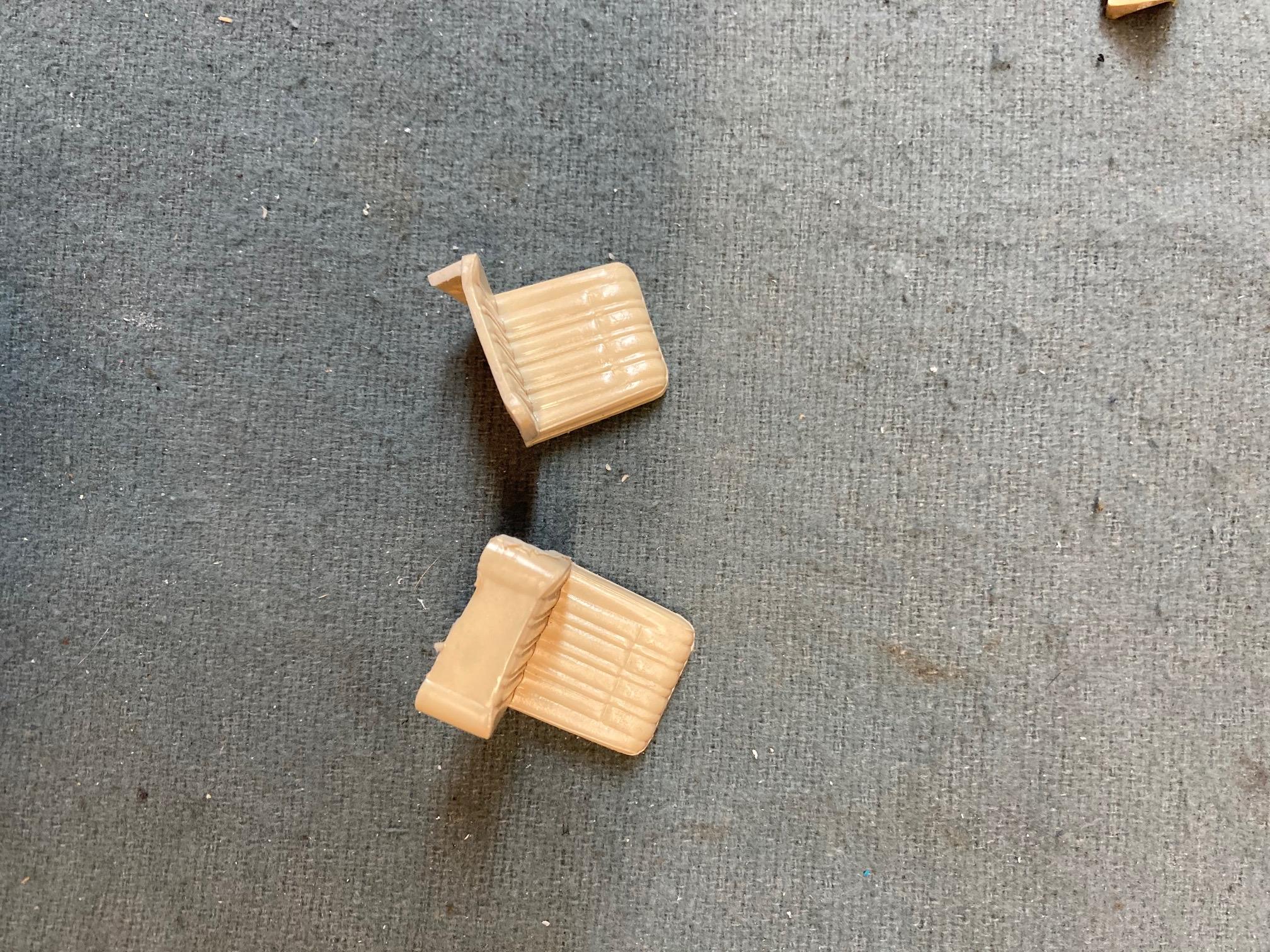
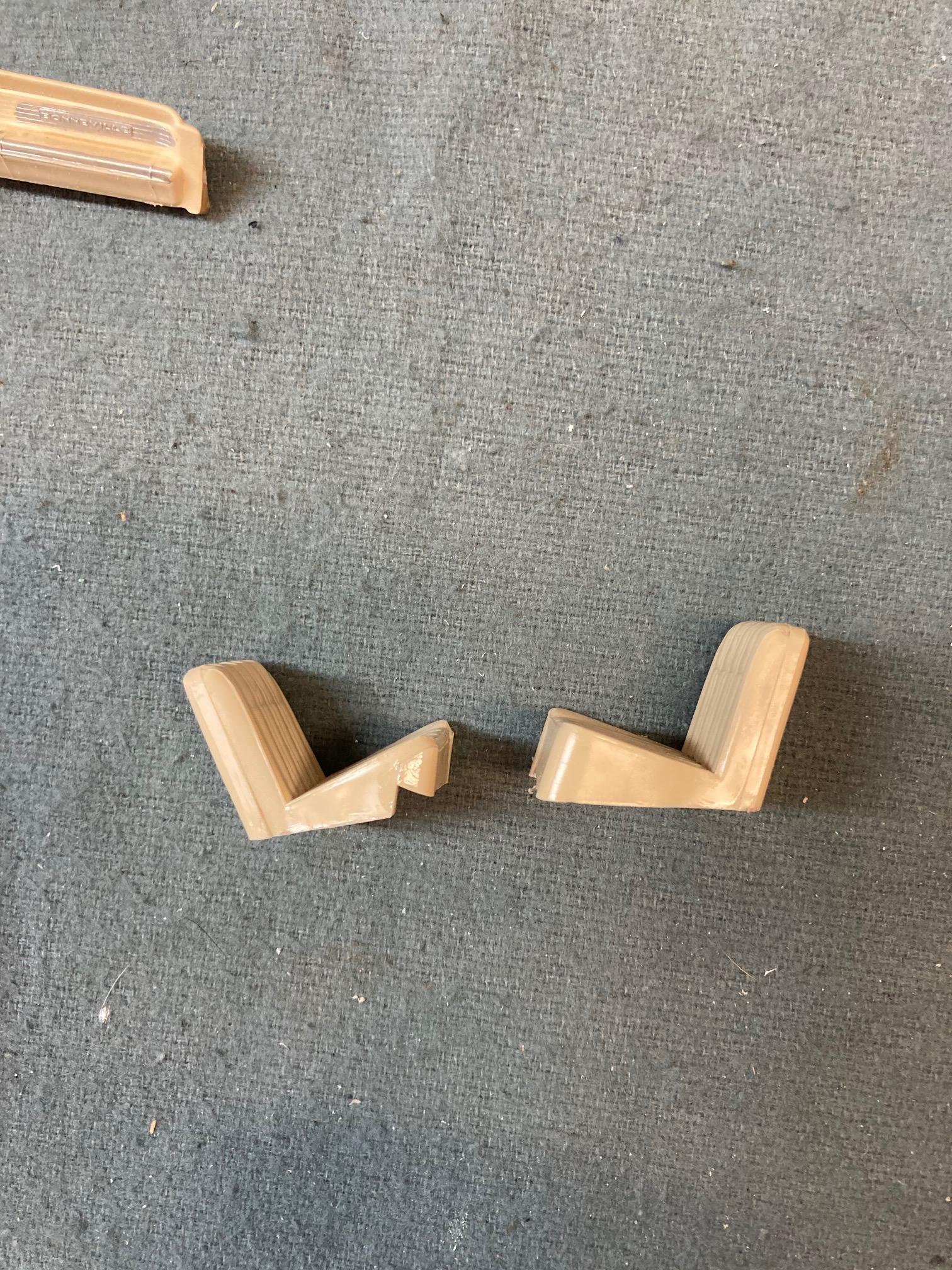
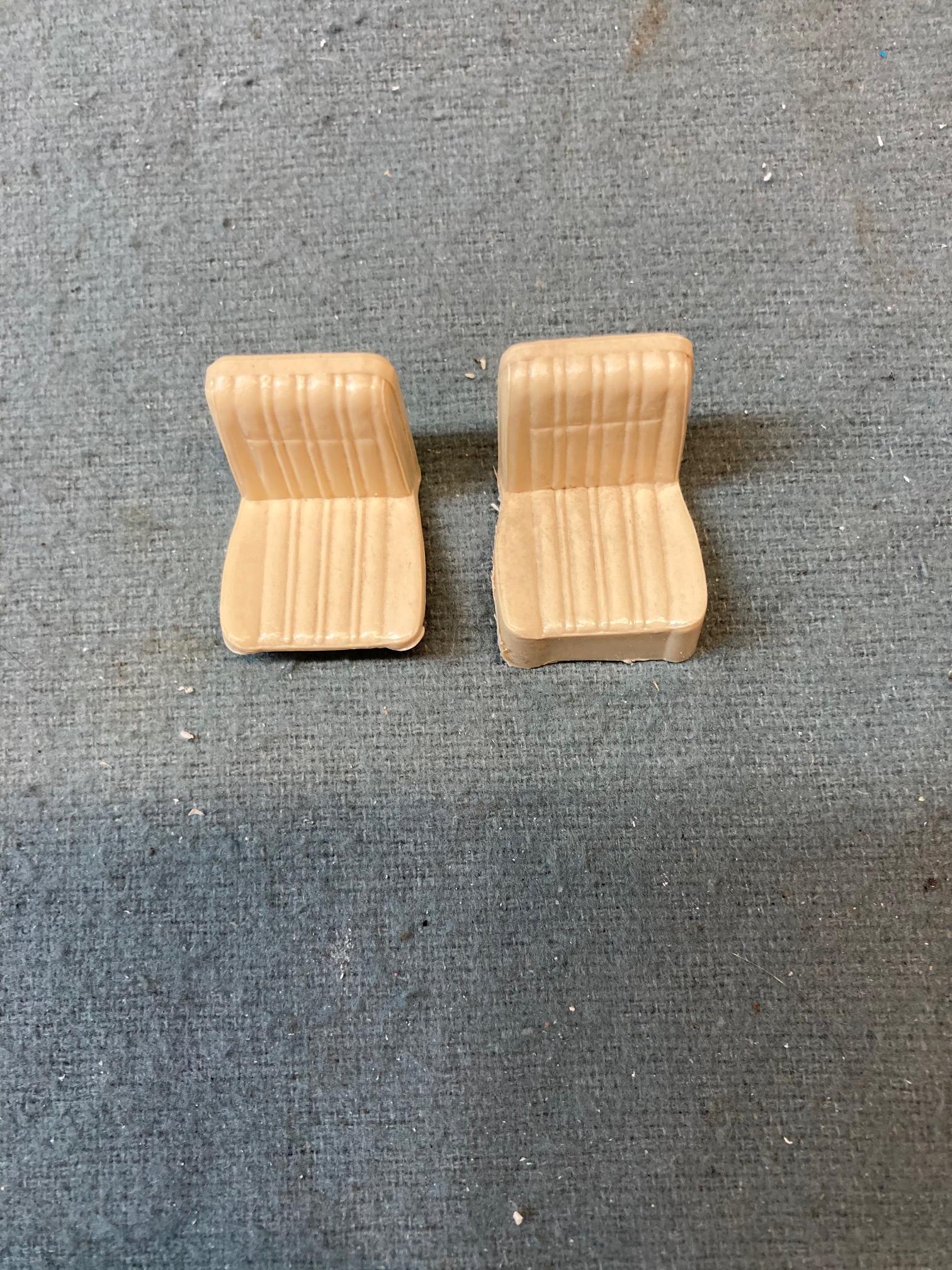
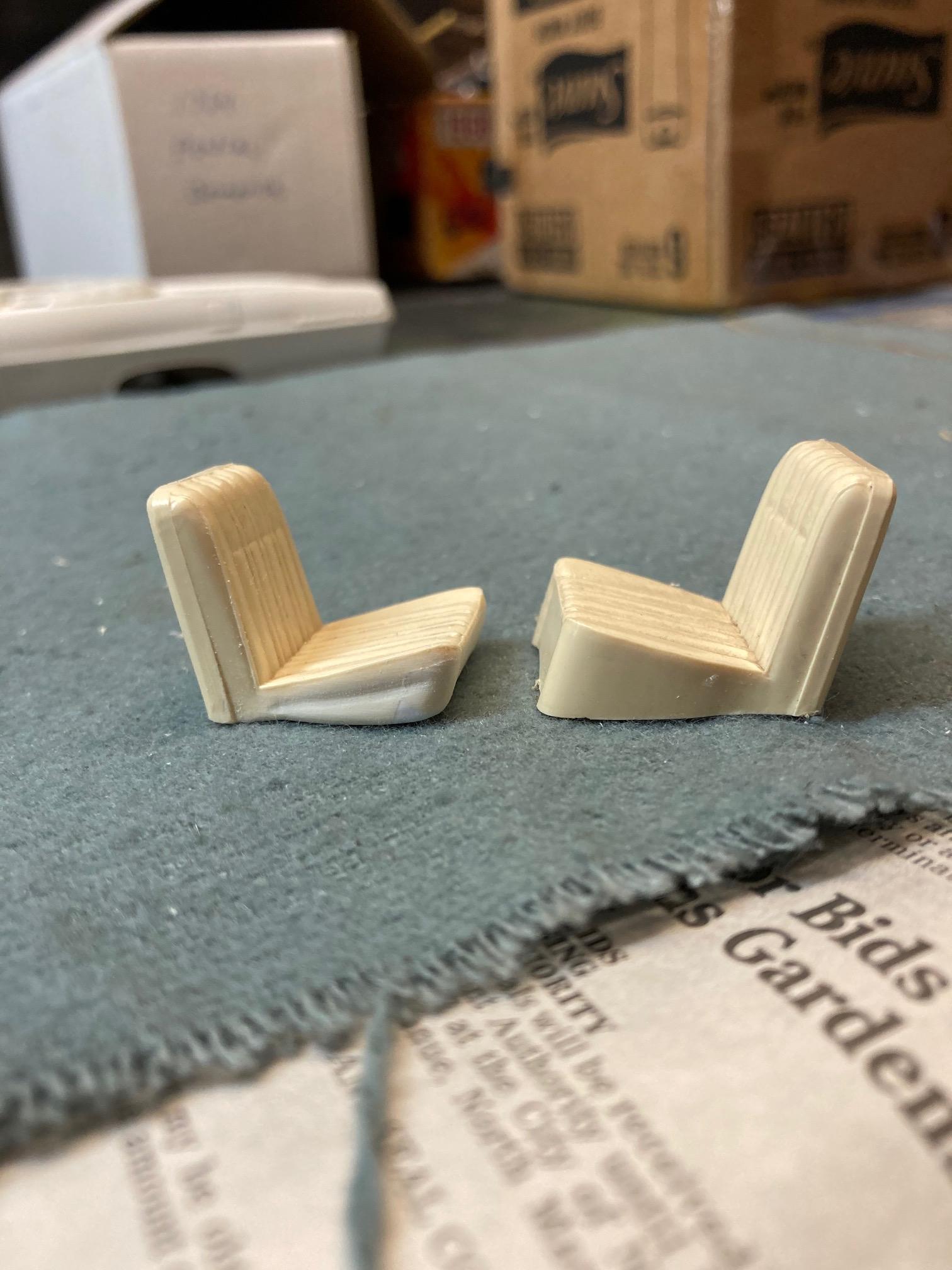
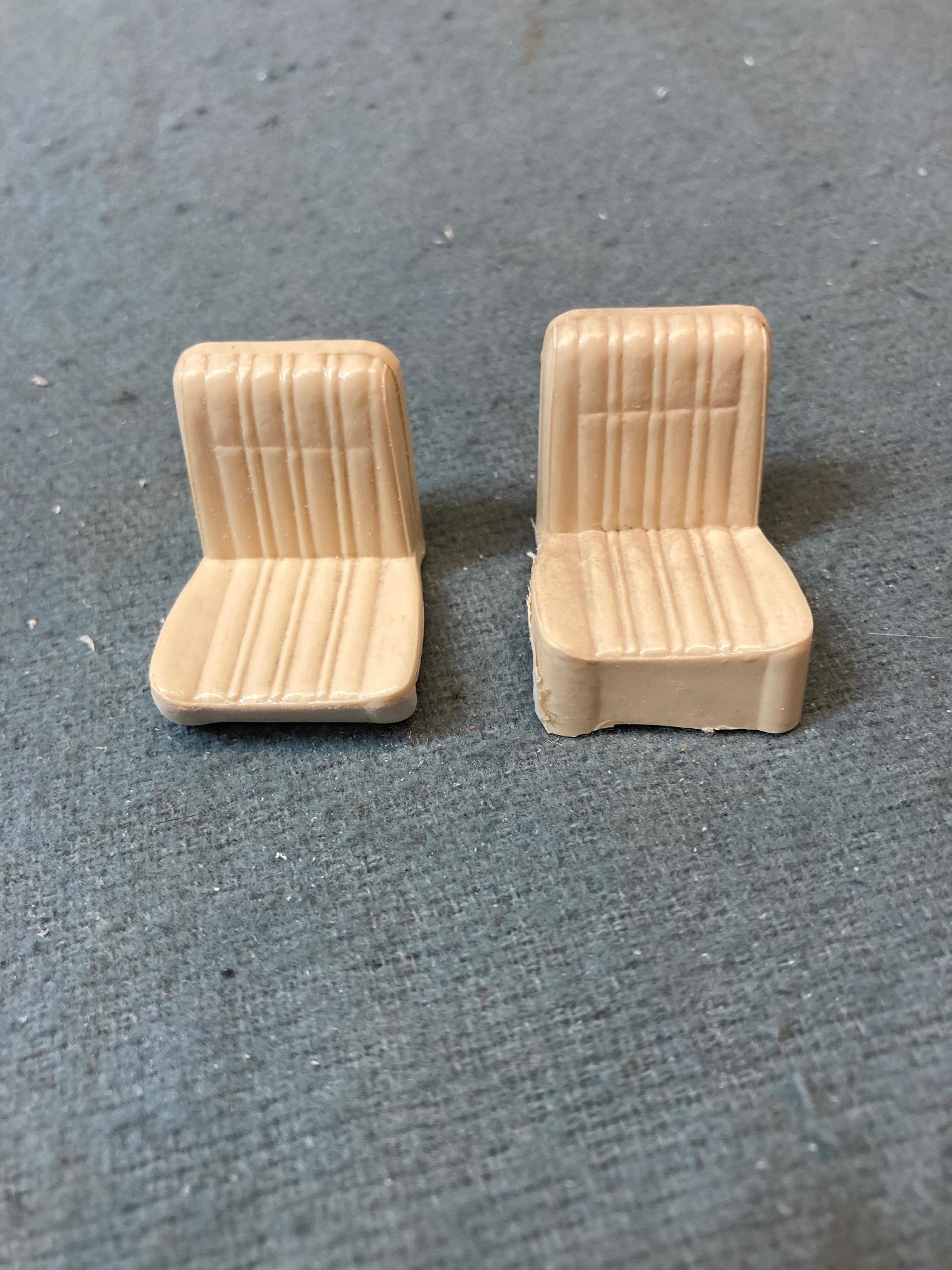
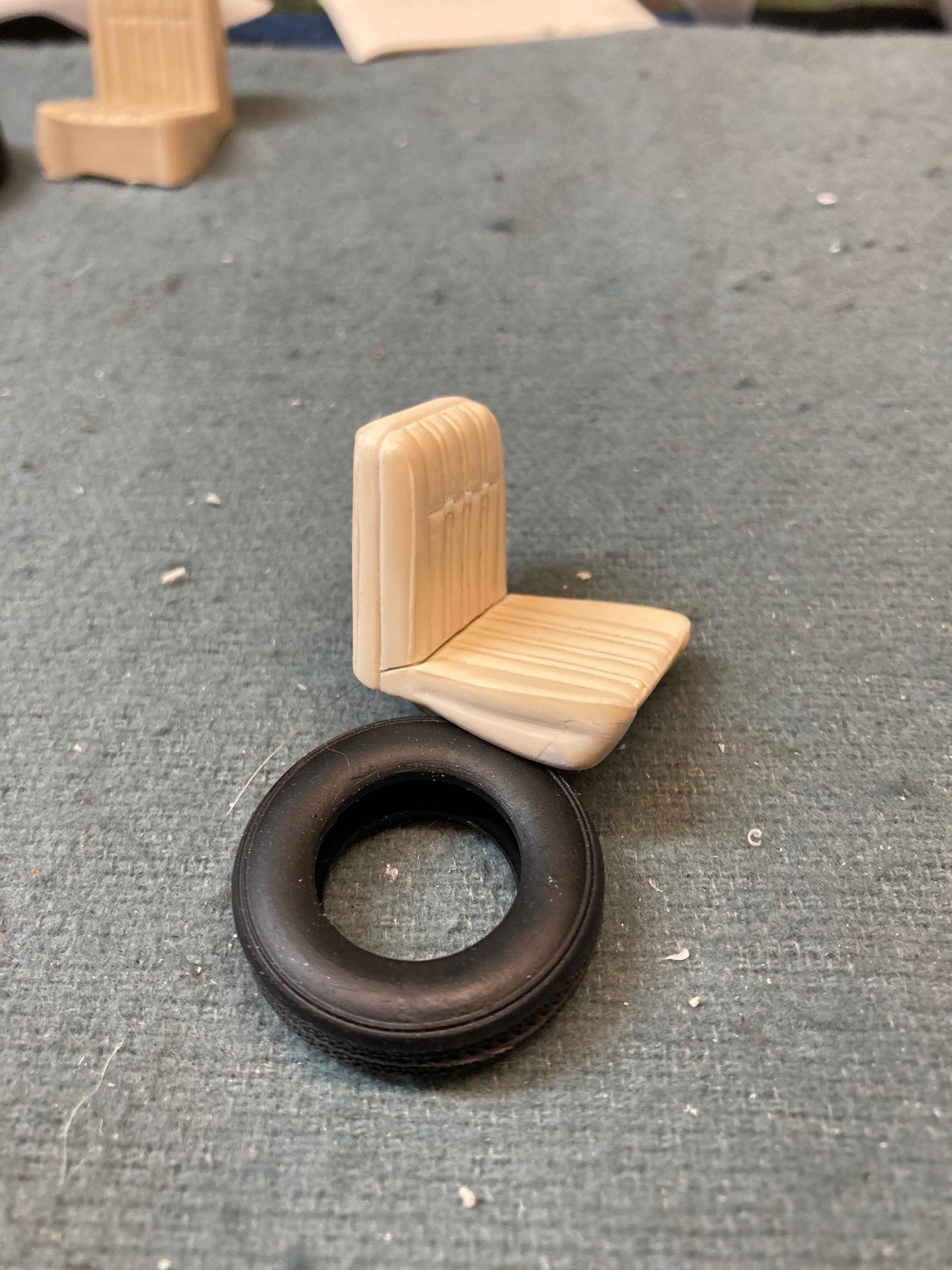
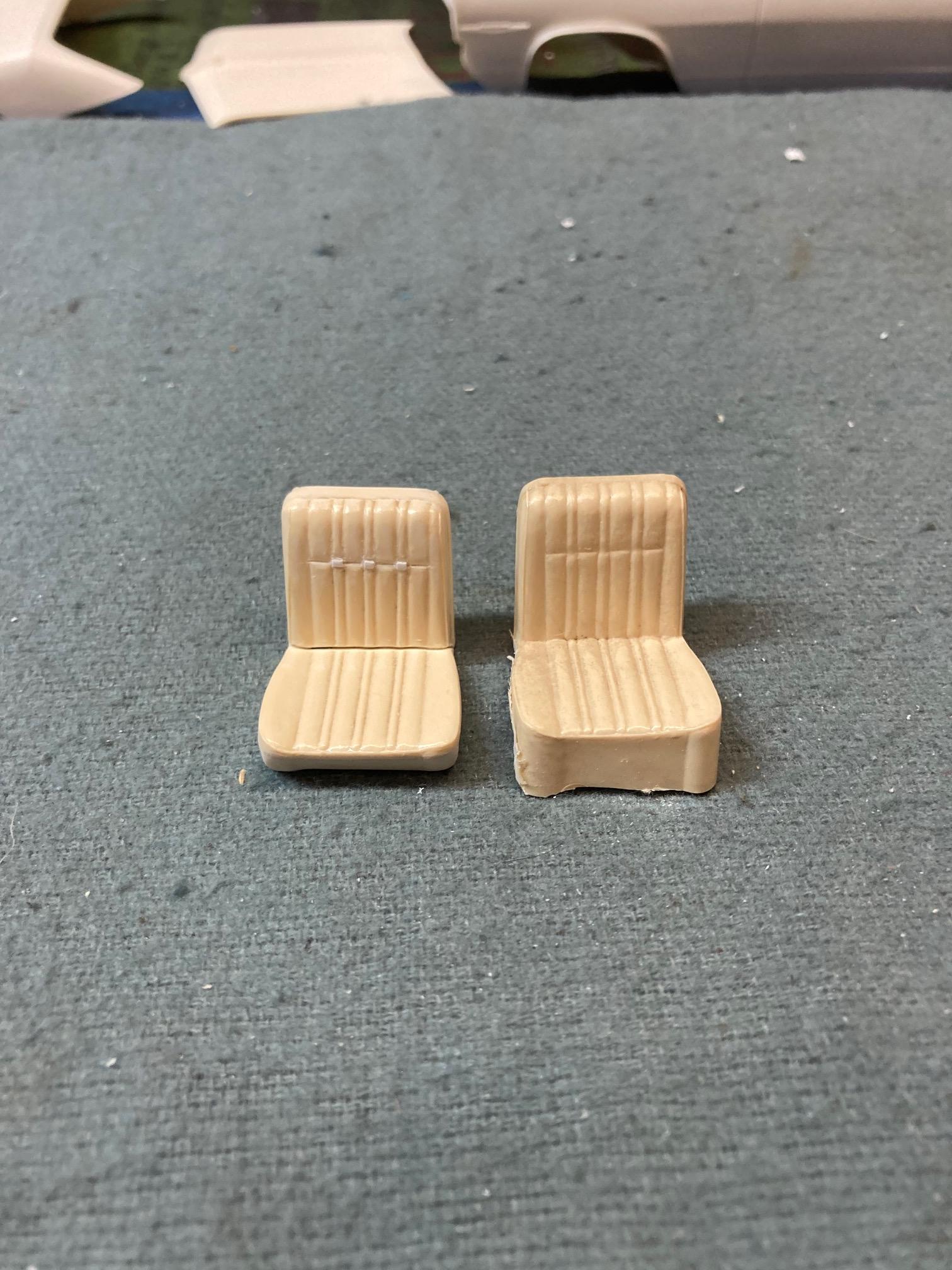
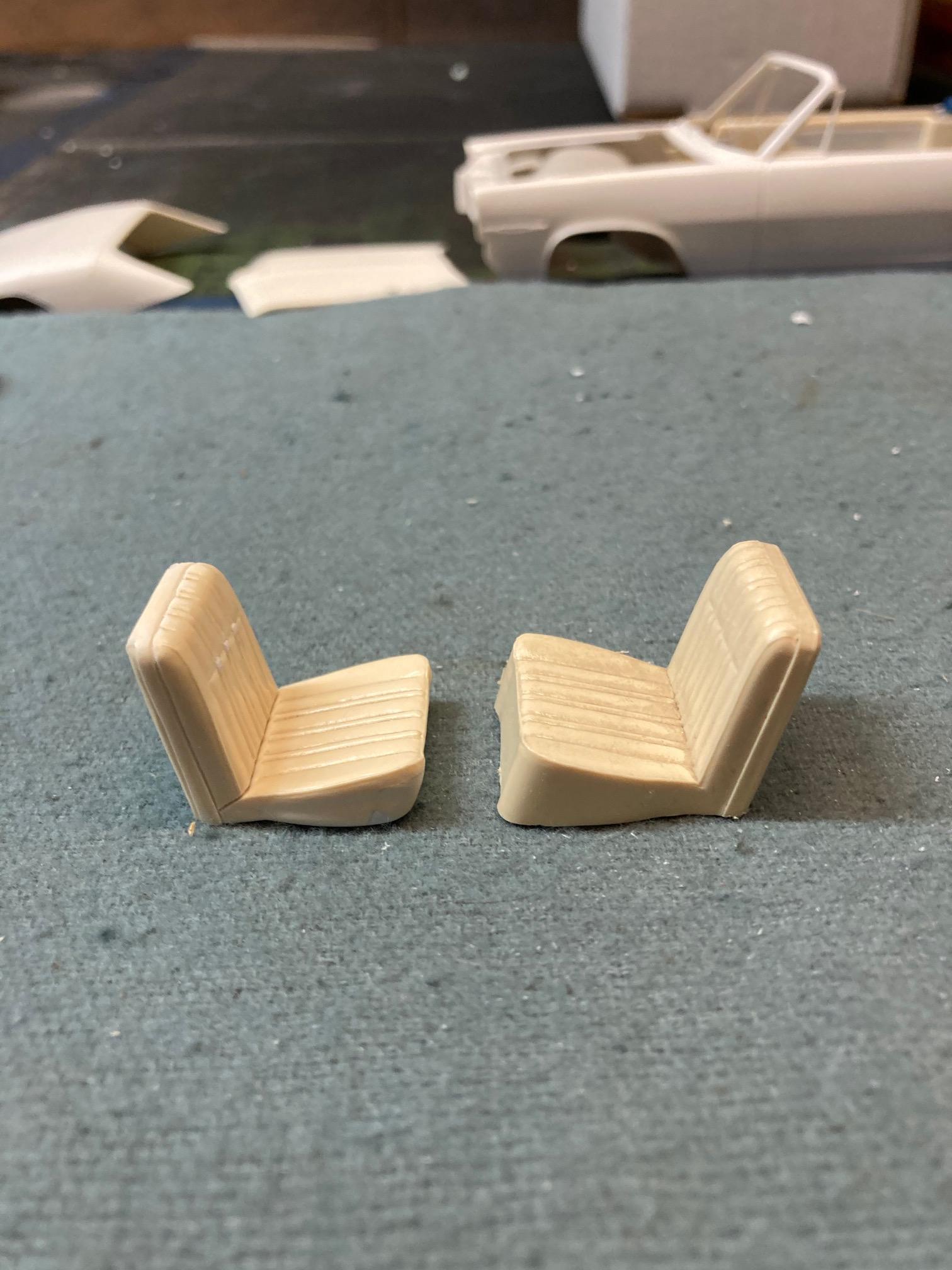
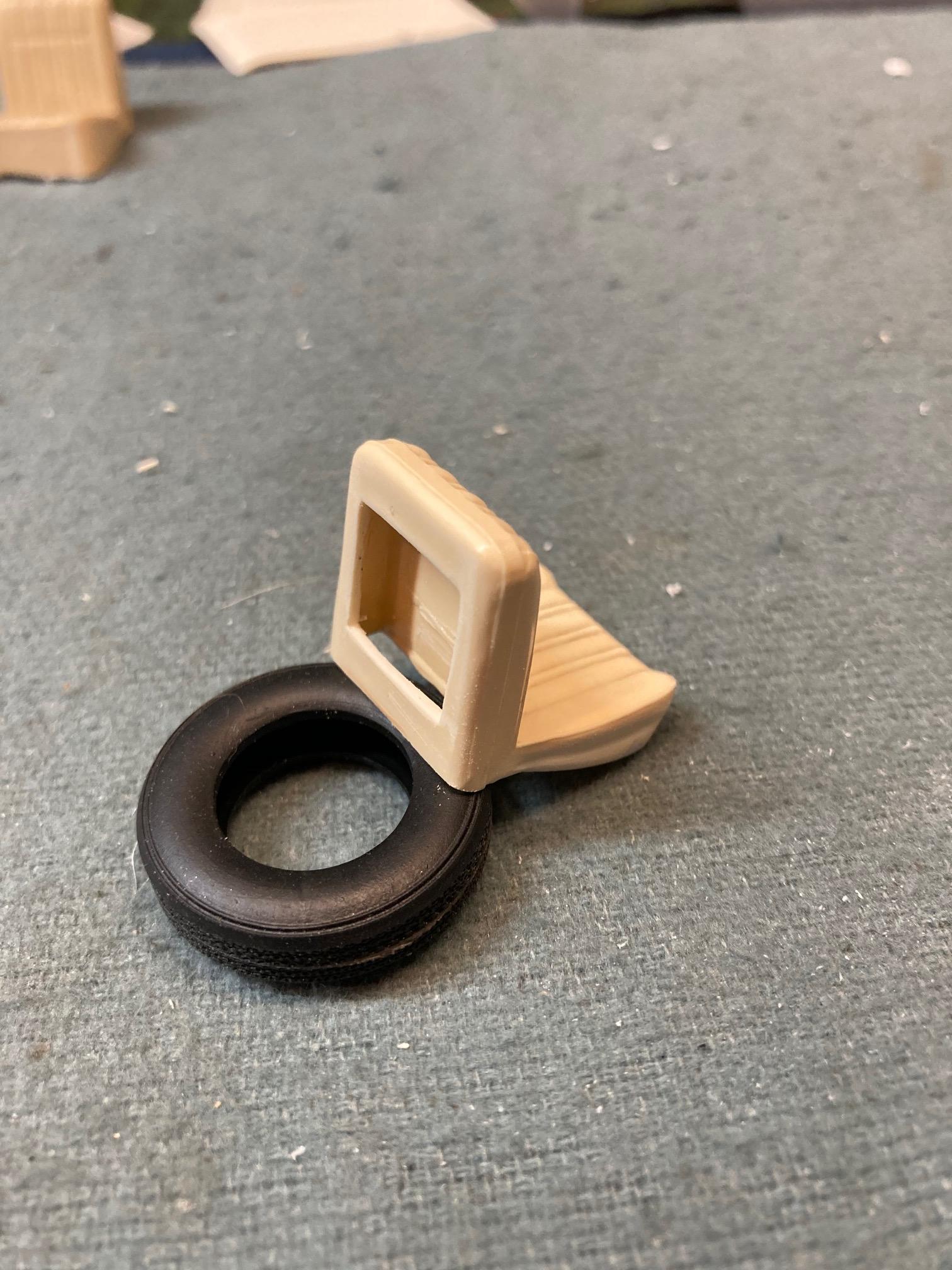
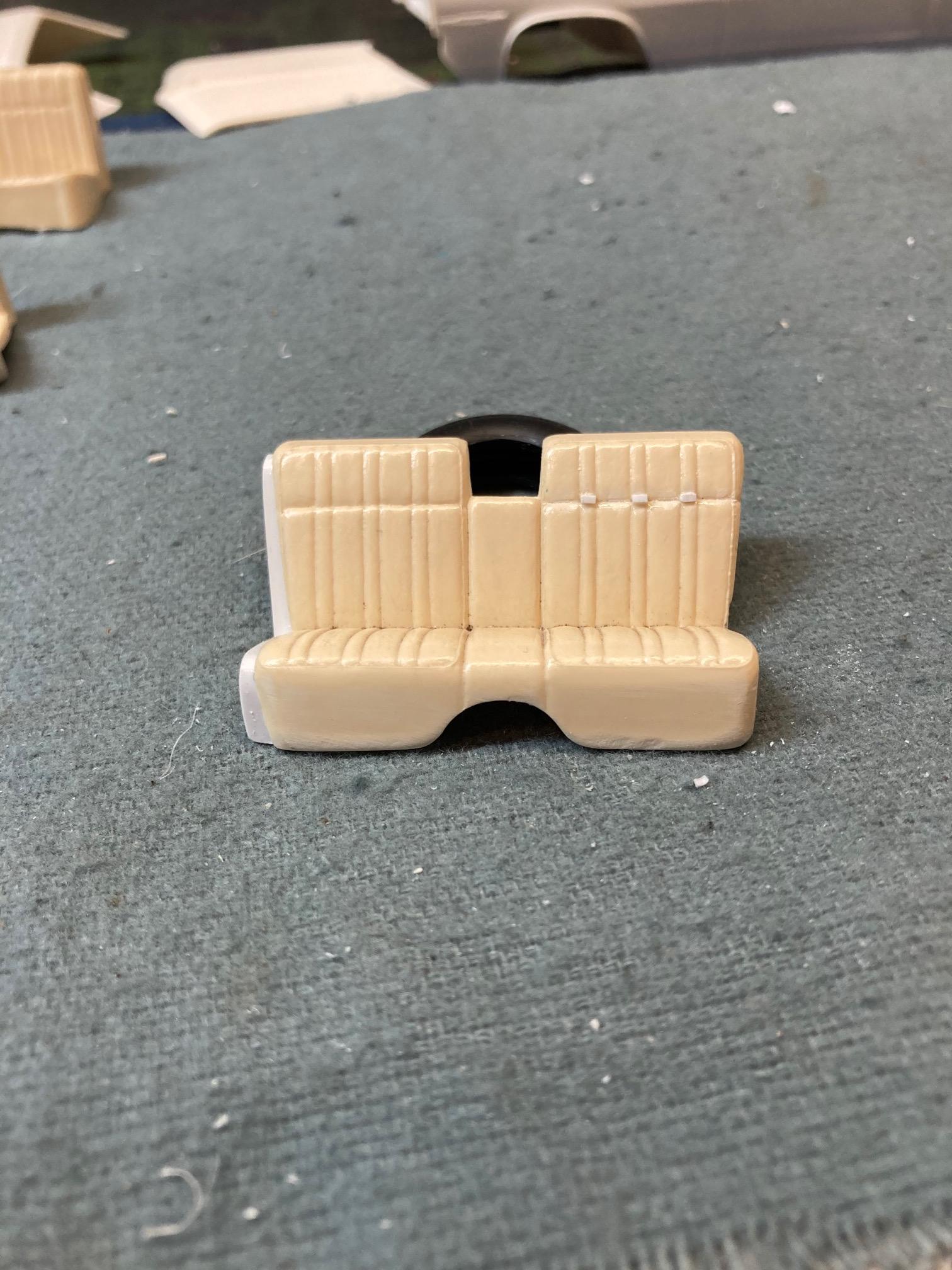
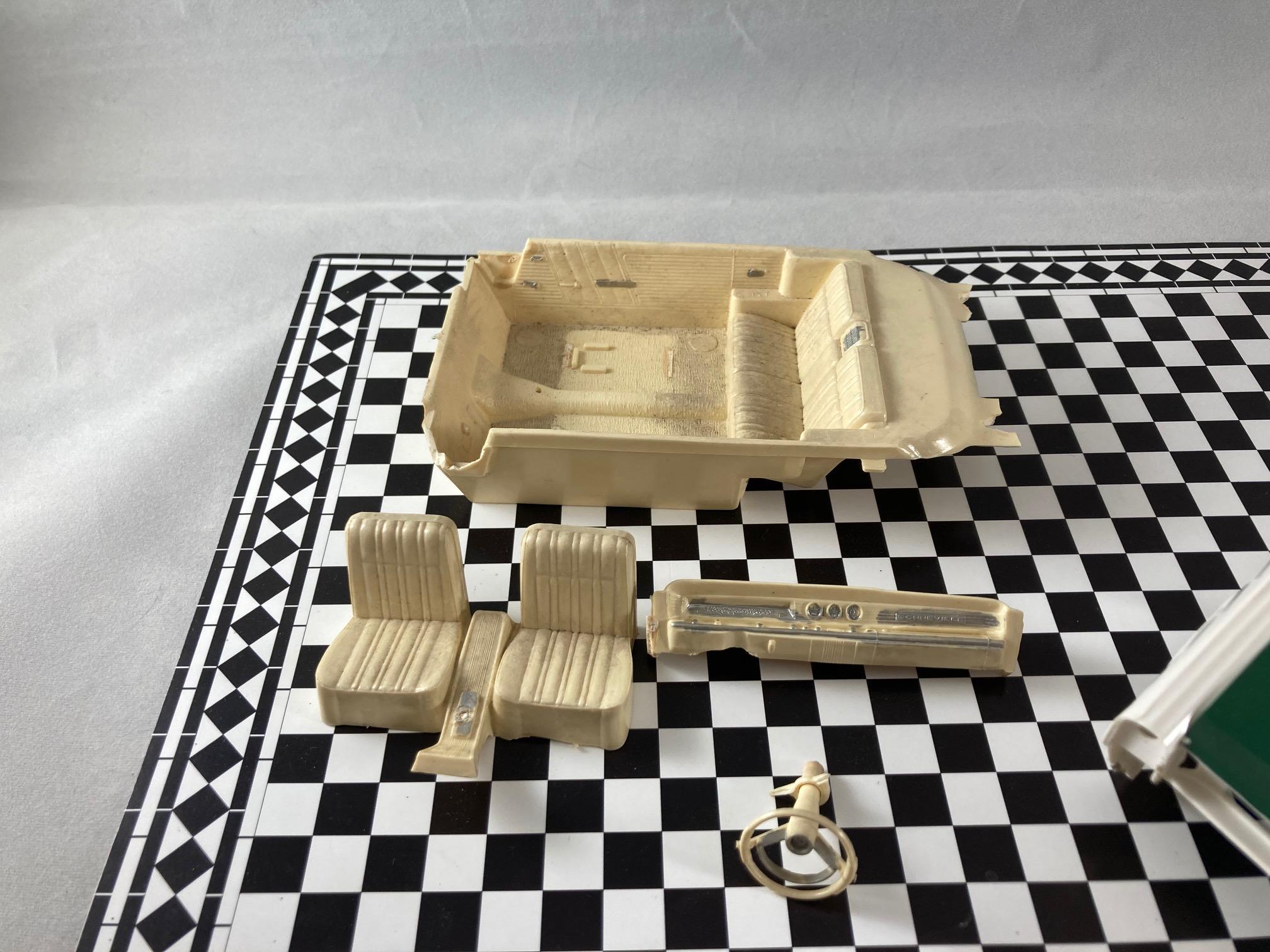
The front seats needed attention in my opinion as well, so the first task was to cut the front "skirt" from the seat, angle it back, and re-install it. Some sanding and shaping, and the ugly seat bases will look much improved. The seats were then re-scribed all over to enhance details, and seat "buttons" added. Next, the pleated portion of the backs were removed and replaced, along with some piping added. Steve
-
1964 Pontiac Bonneville Convertible.
StevenGuthmiller replied to StevenGuthmiller's topic in WIP: Model Cars
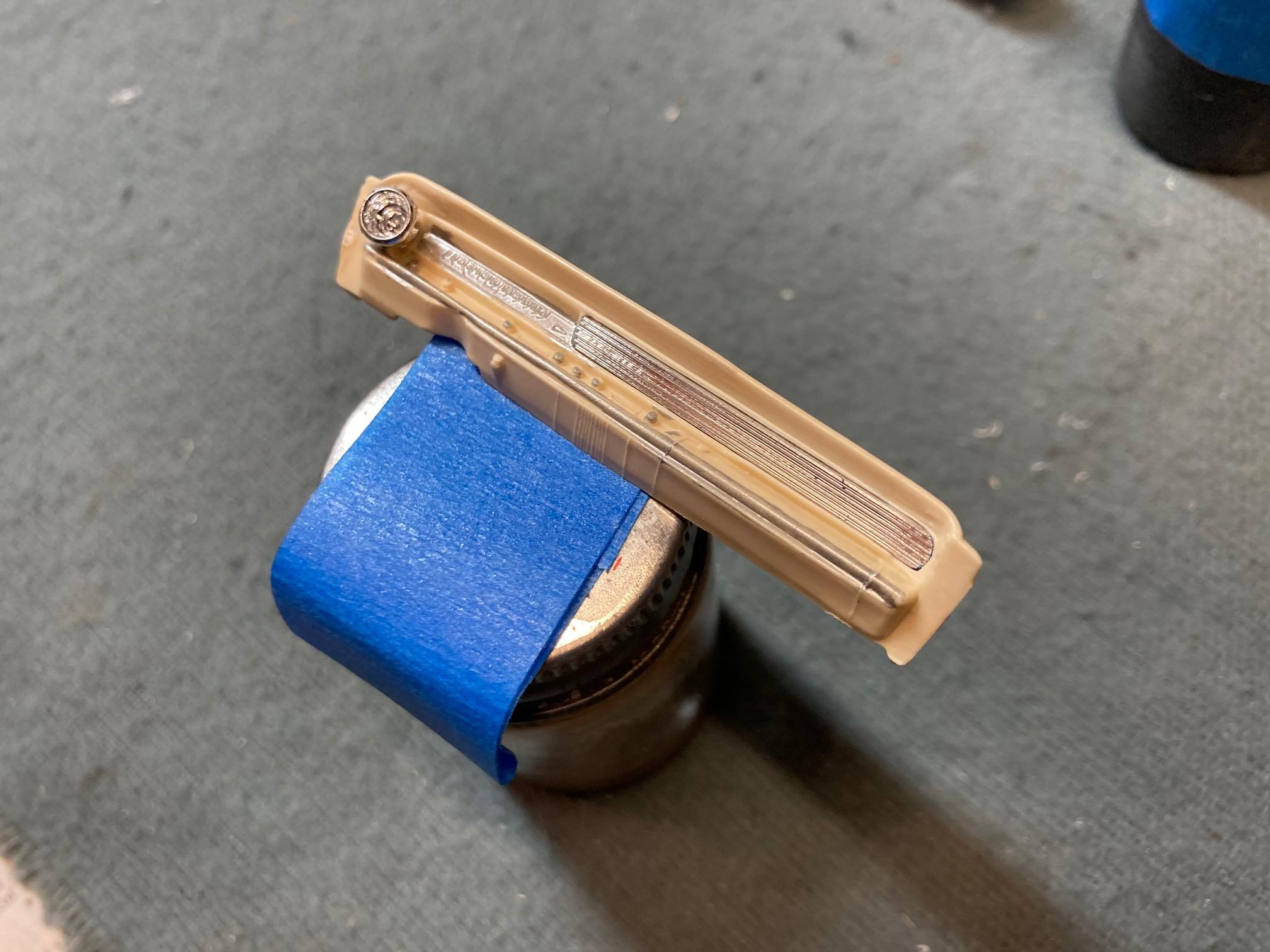
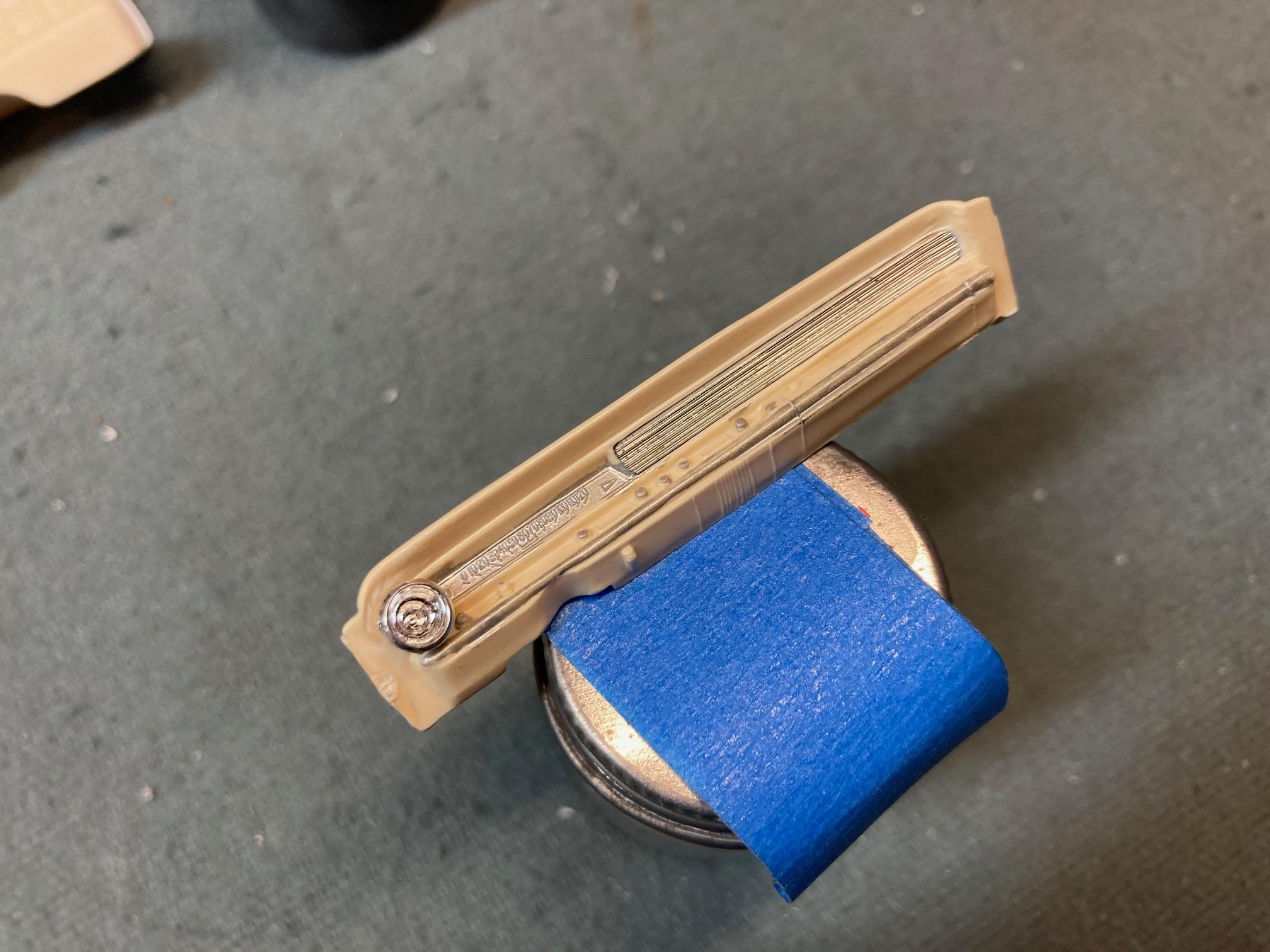
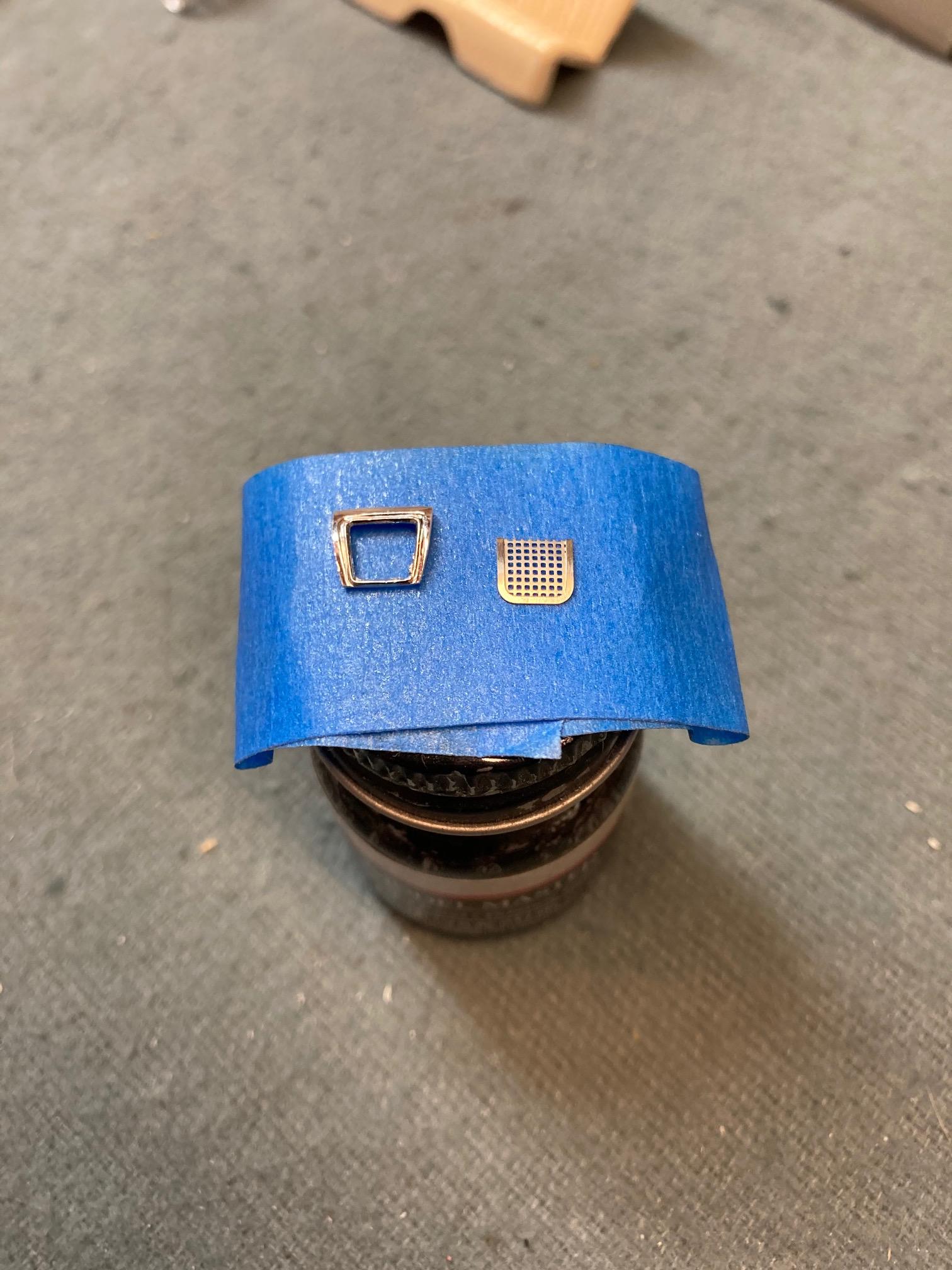
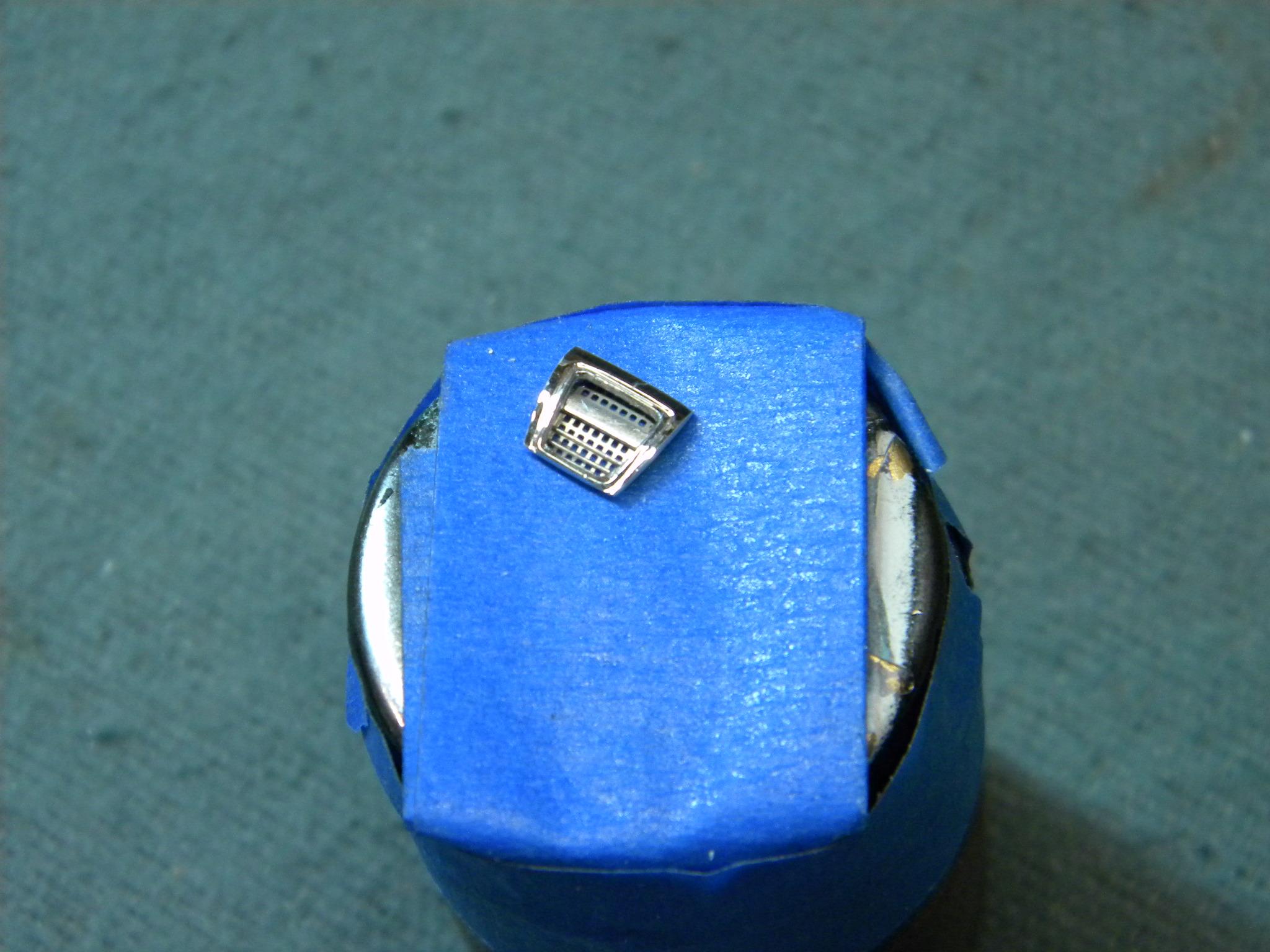
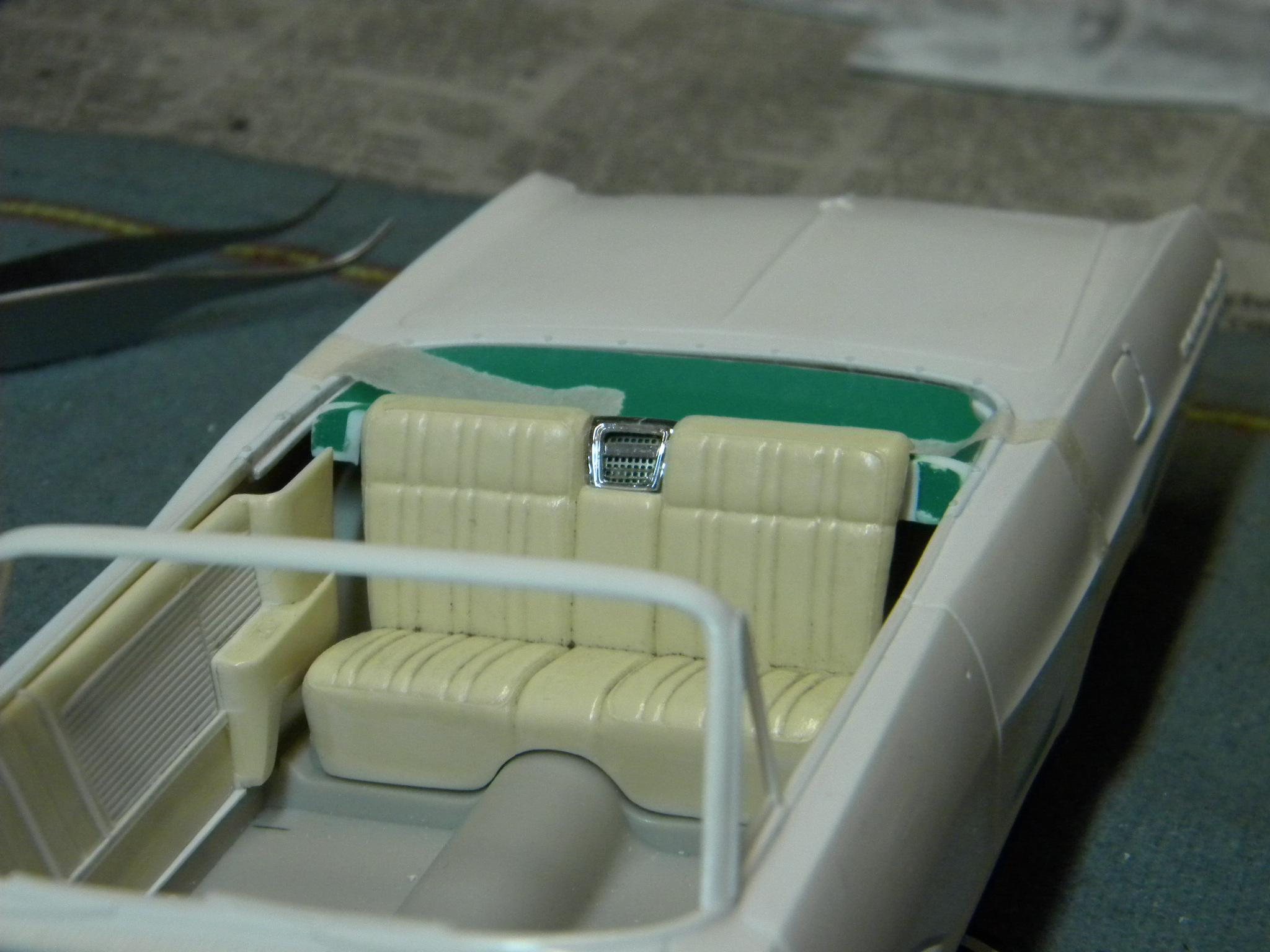
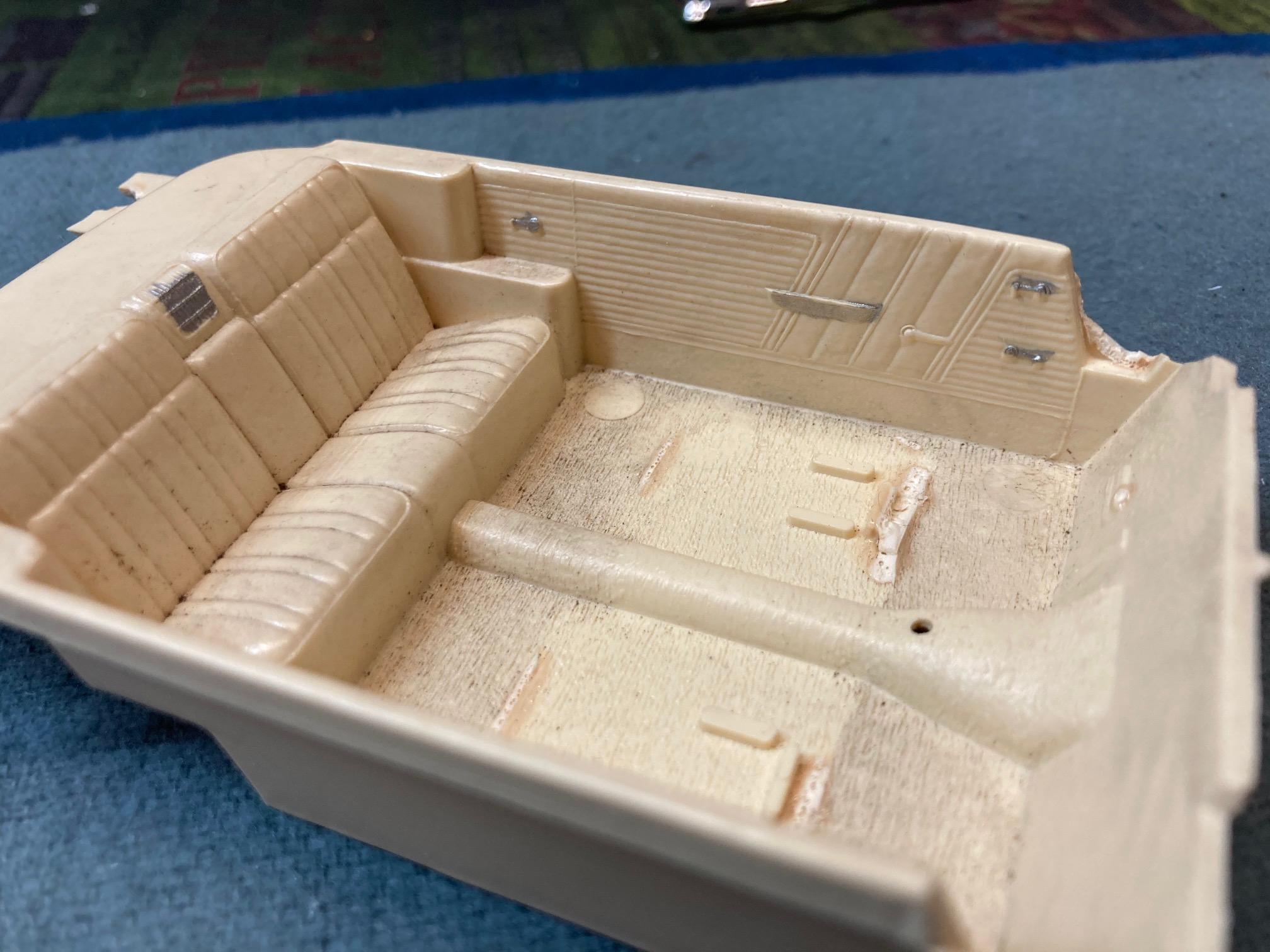
Next, I began some work on the rear seat area. A rear shelf was taken from a Monogram '59 Impala, and then the rear seat needed to be widened just slightly to fit into the newly shaped space. the "cheesy" looking rear seat speaker was also removed for replacement, and I began adding some seat "buttons". The new rear seat speaker was fashioned from a speaker taken from the Monogram '59 Impala, the center was ground out and replaced with some PE grille. A strip of aluminum and short pieces of wire were then installed to try to replicate a '64 Bonny speaker grille as closely as possible. Steve
-
1964 Pontiac Bonneville Convertible.
StevenGuthmiller replied to StevenGuthmiller's topic in WIP: Model Cars
Steve
-
1964 Pontiac Bonneville Convertible.
StevenGuthmiller replied to StevenGuthmiller's topic in WIP: Model Cars
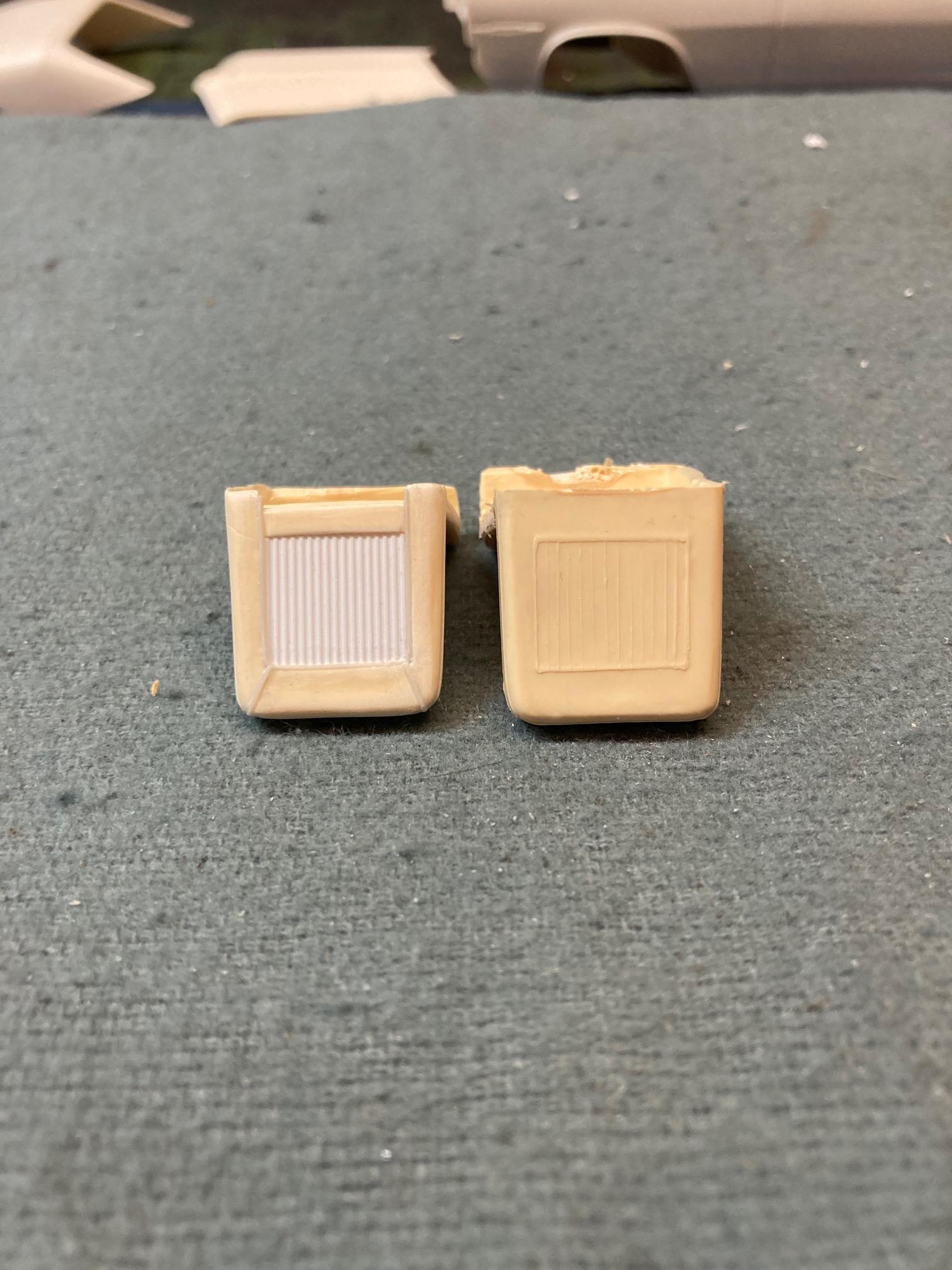
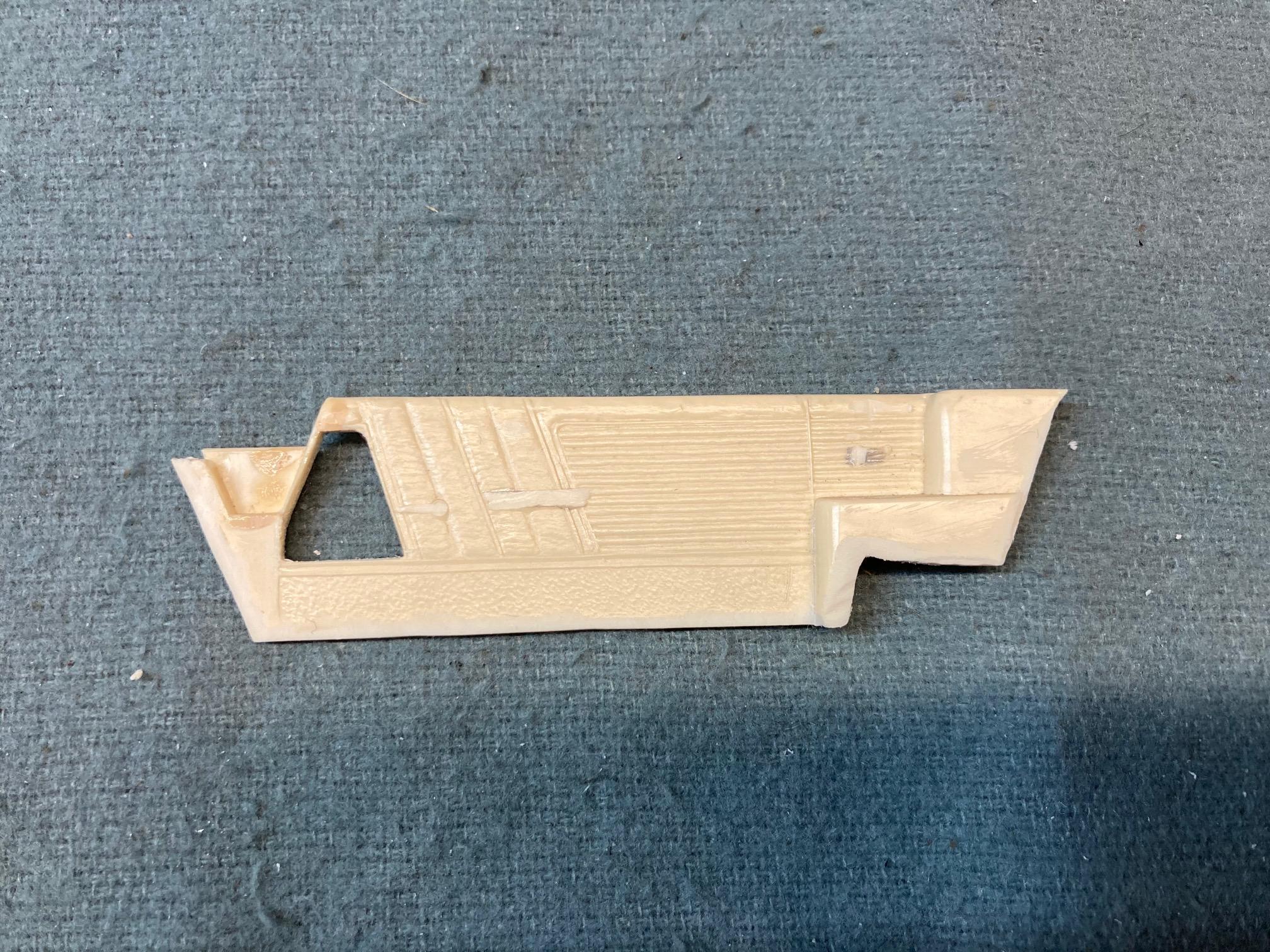
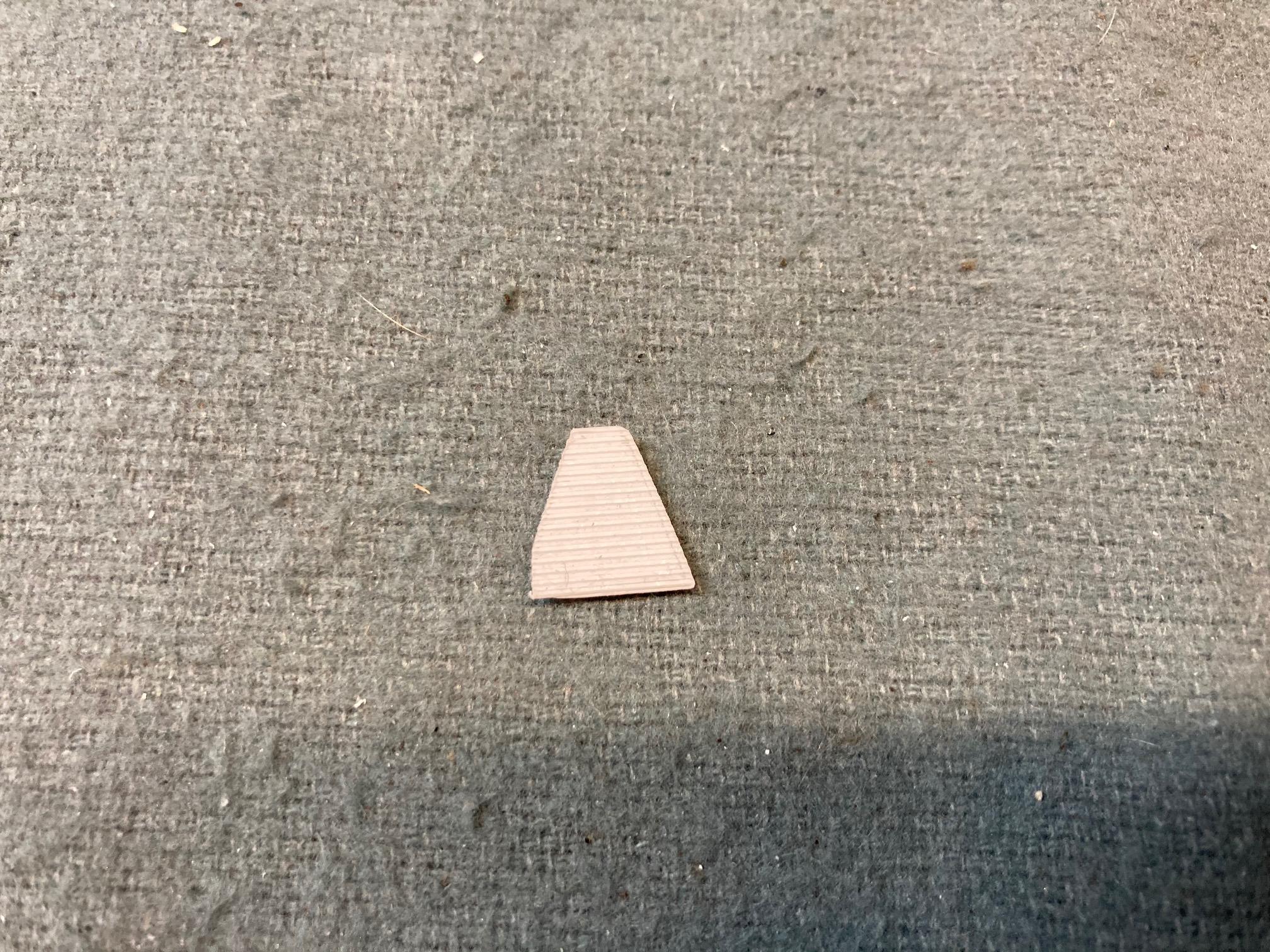
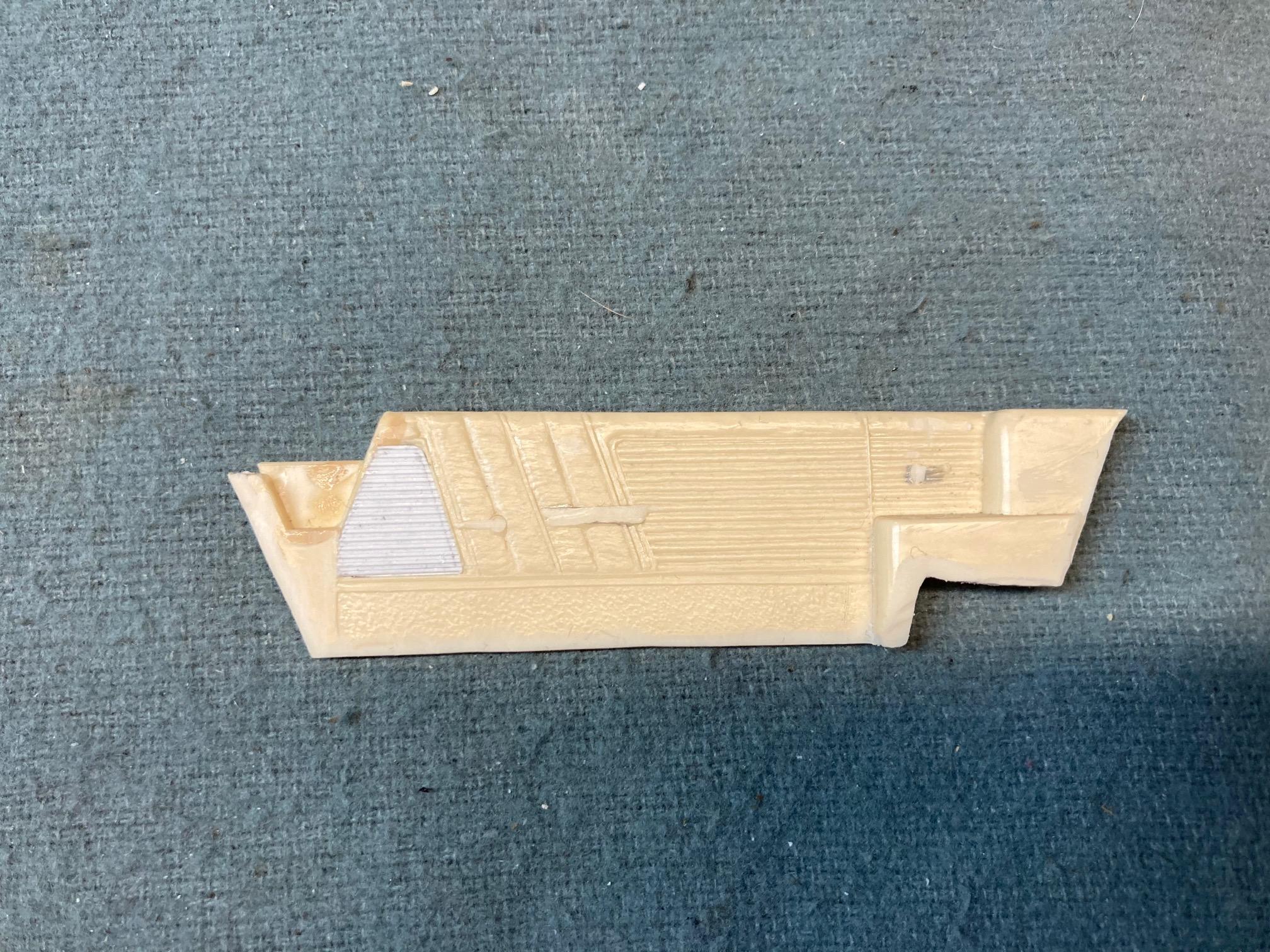
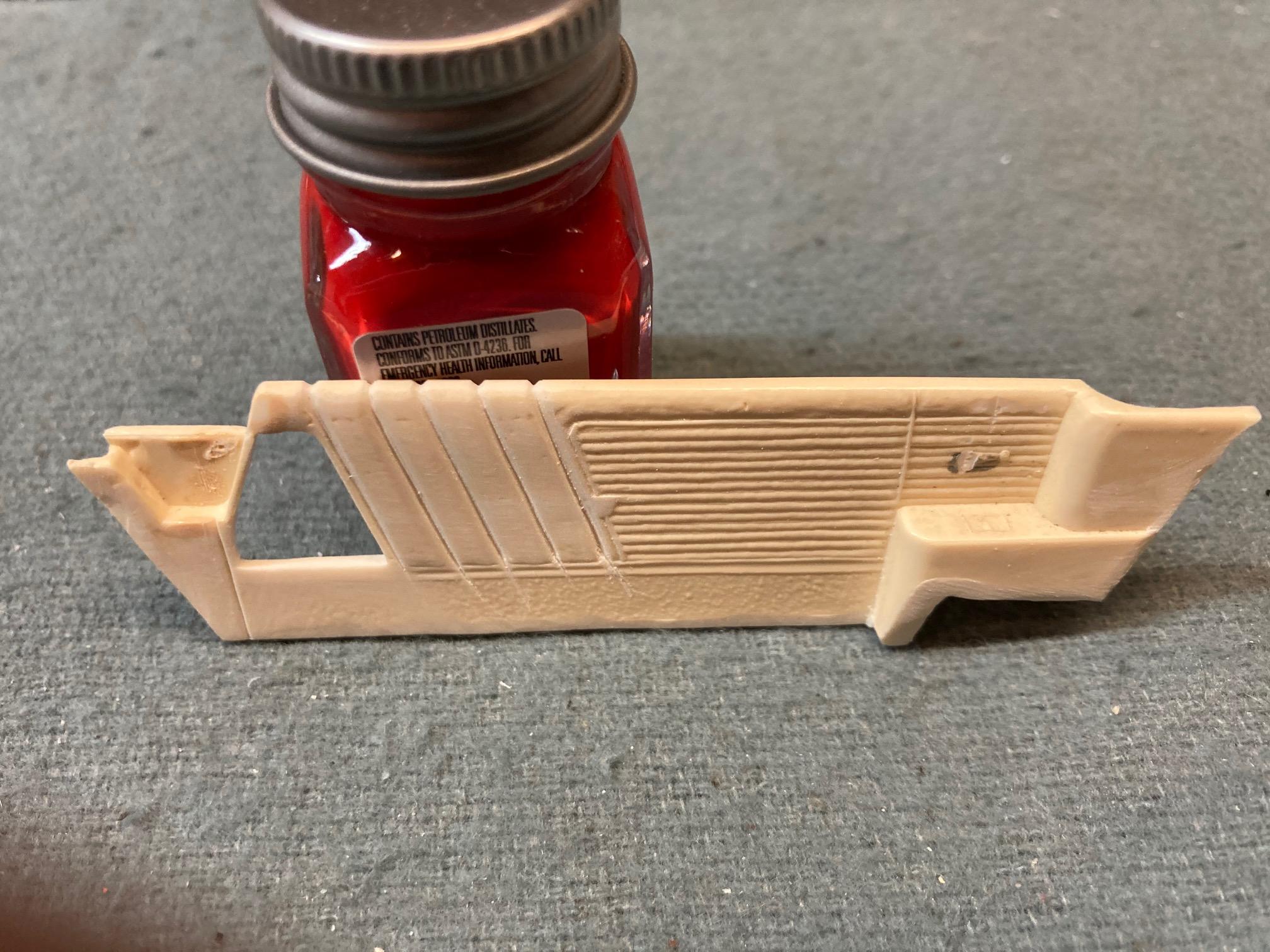
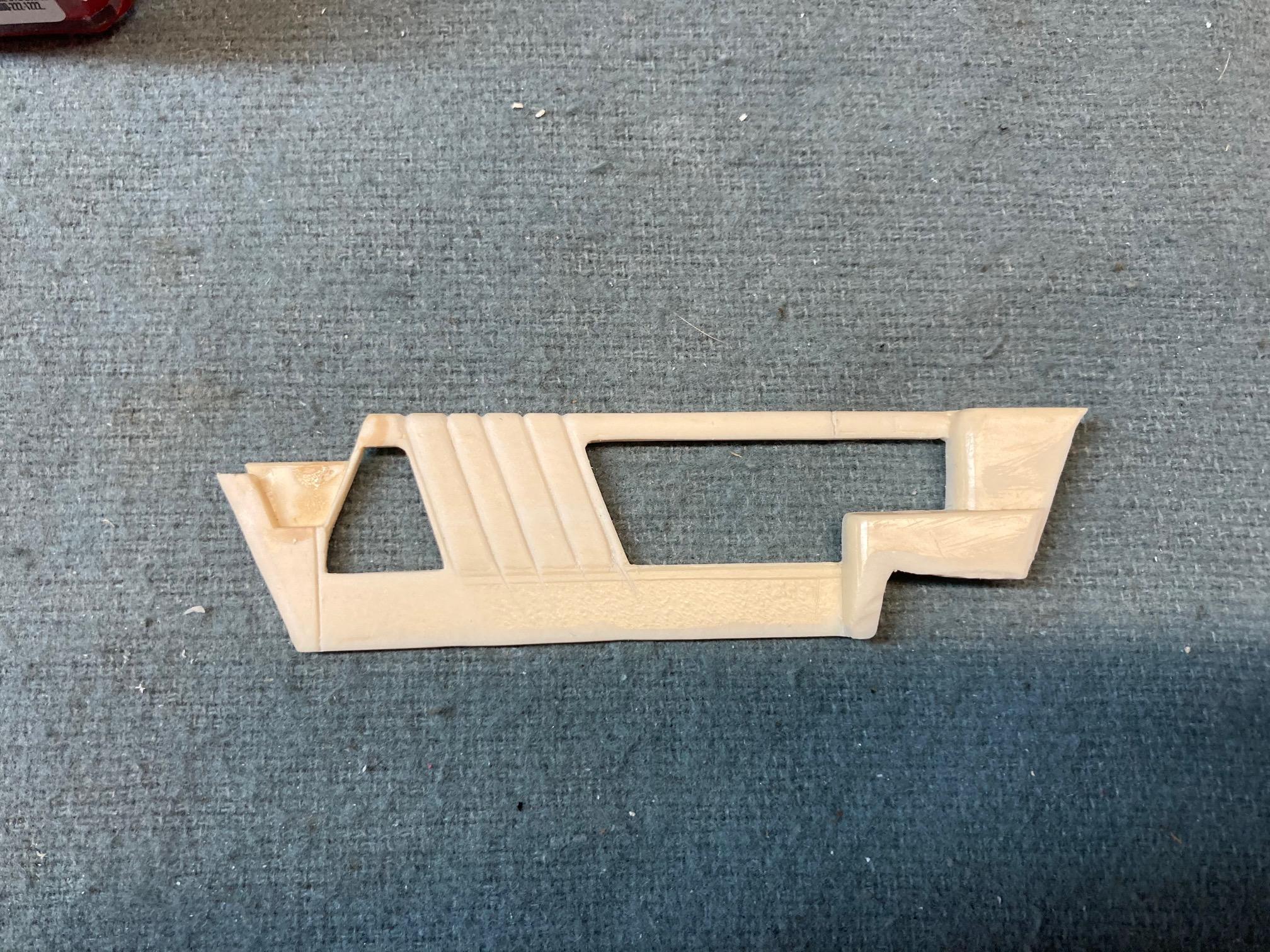
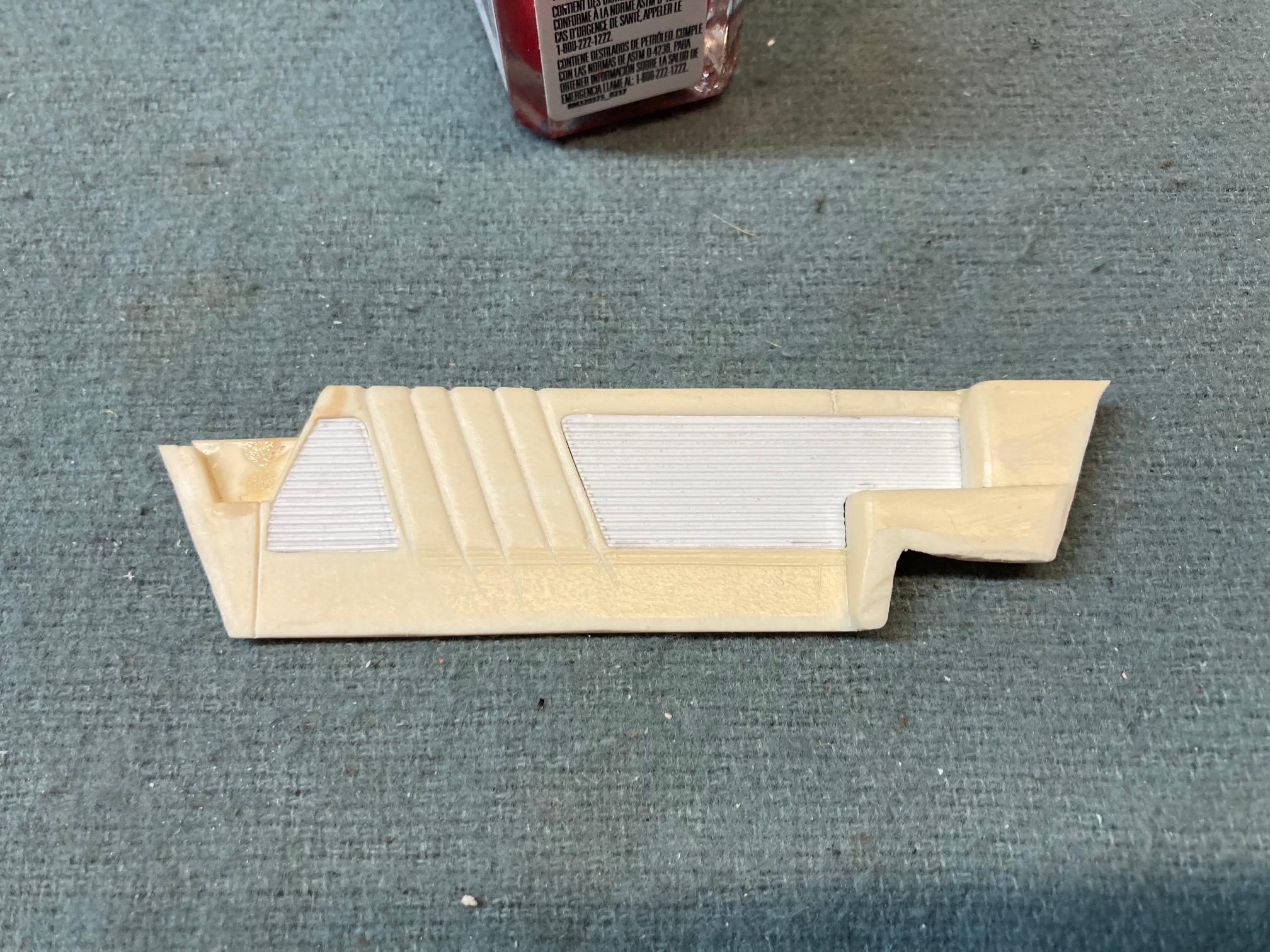
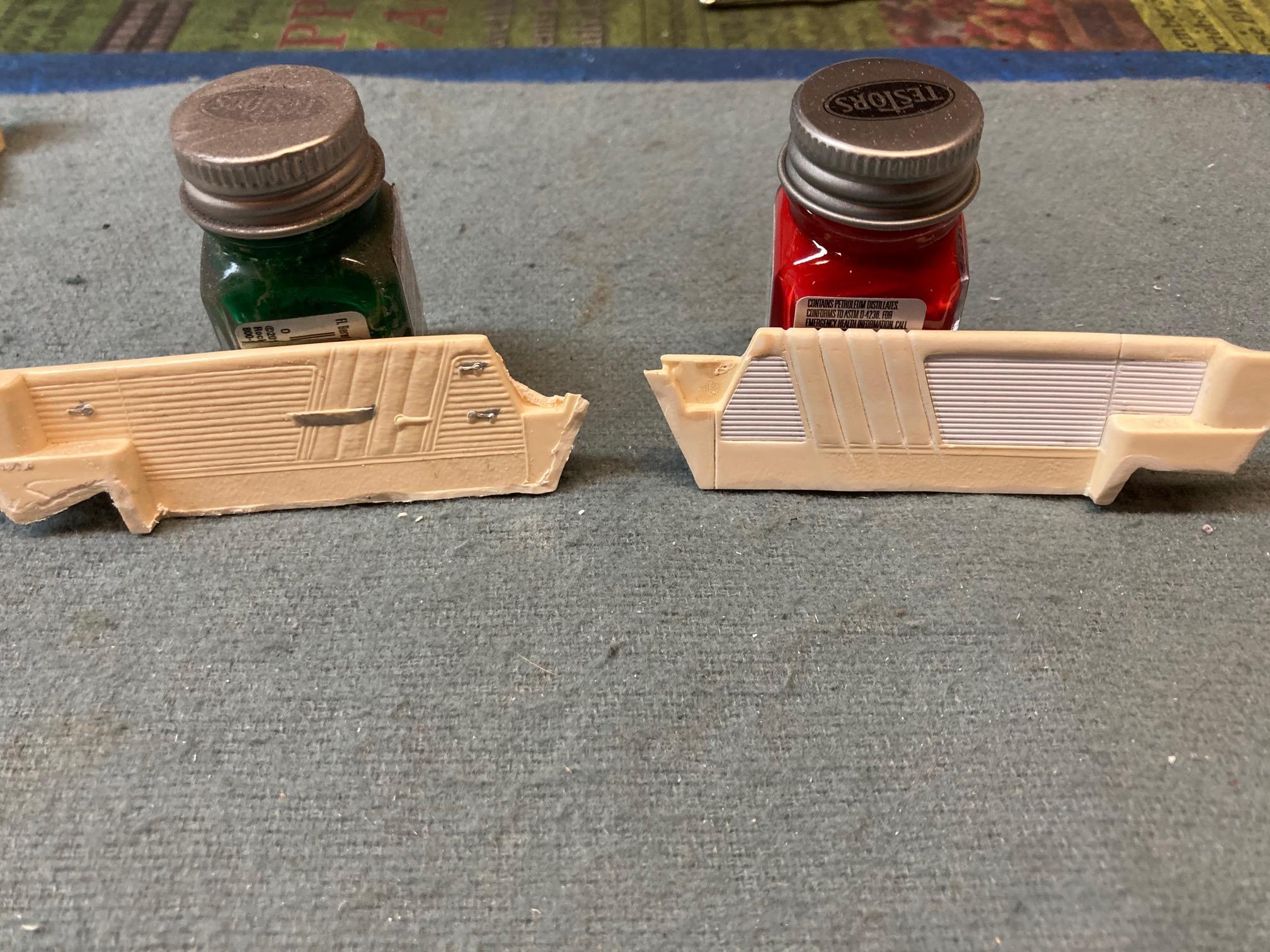
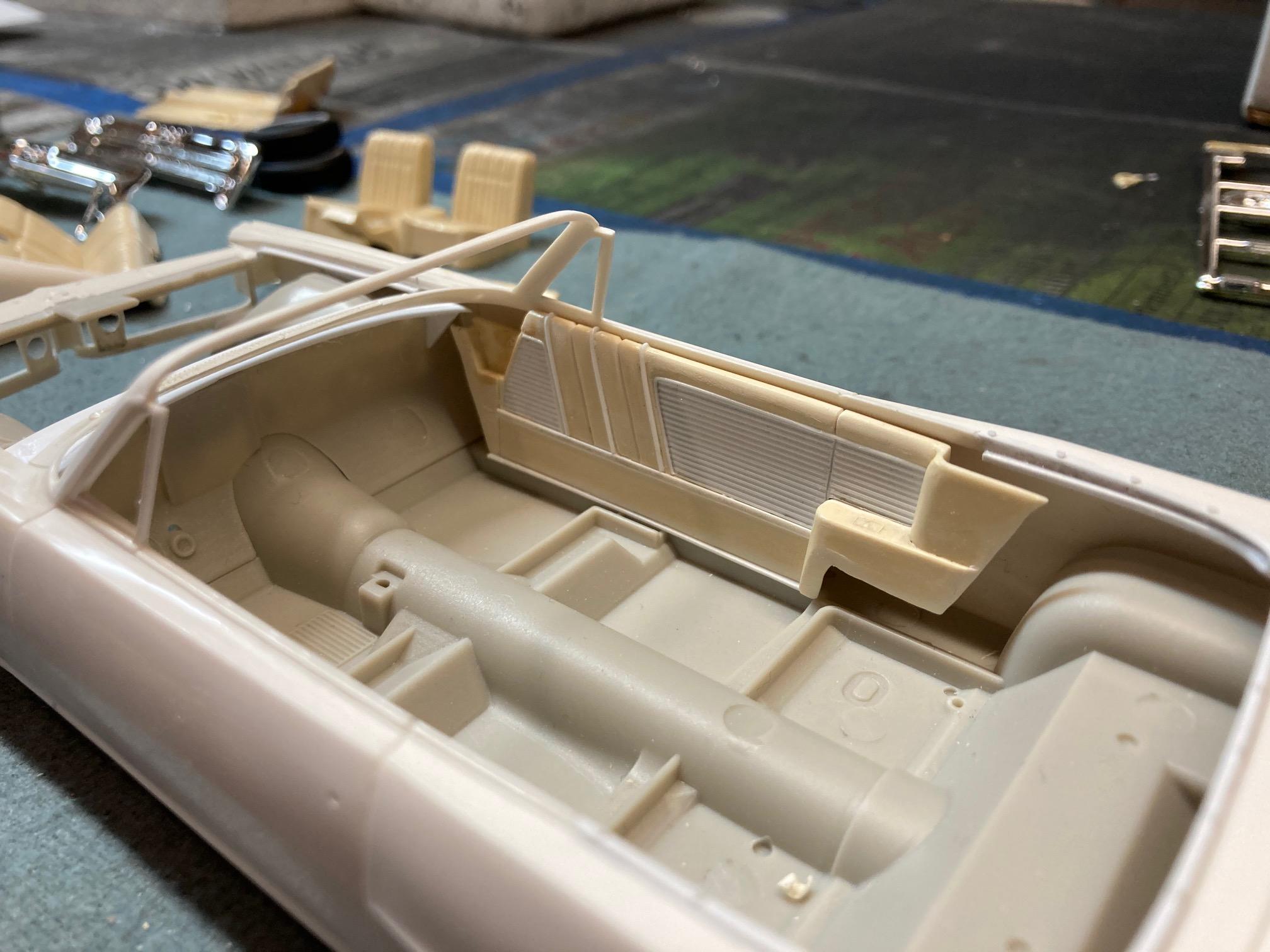
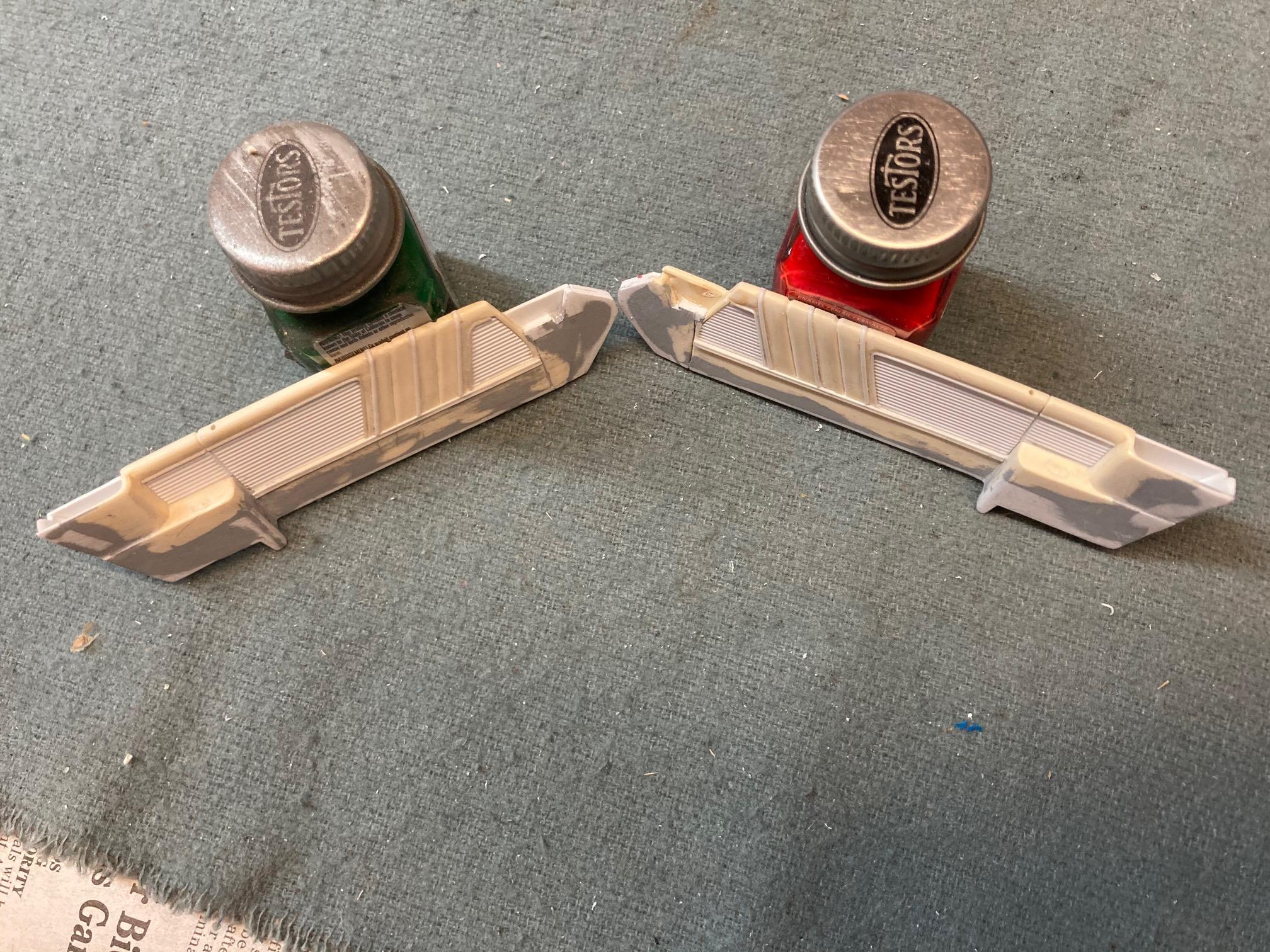
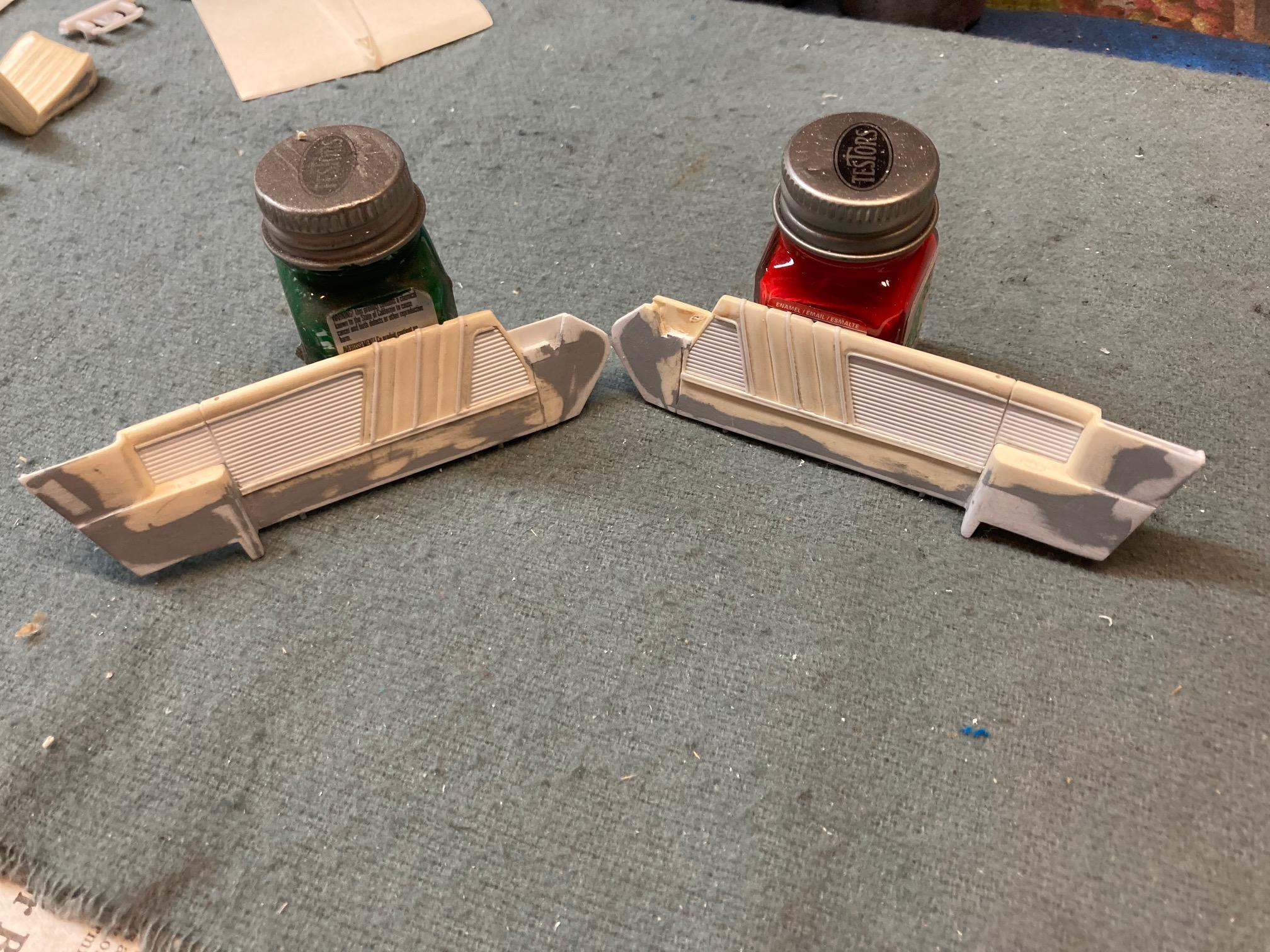
As has become "standard operating procedure" with me, I'm not able to leave a interior alone, and in this case, the interior will be readily viewable, so it's even more on my radar. The first thing on the list was to blow apart the original interior so that I can use some of the original parts on the Ventura floor plate. Then I dove into the door panels. I decided that, much like my last '68 Coronet project, I would scratch together at least a portion of the panels by grinding out and replacing the fluted portion of the panel so that it would be easier to replace items such as arm rests and window cranks. Likewise, I re-scribed and reshaped the pleated portion and replaced all of the trim and the piping around the perimeter of the fluted portion. Some added material at the front kick panel area and the rear seat area, and a little bit of top mechanism well detail, and the door panels are nearly done. Steve
-
1964 Pontiac Bonneville Convertible.
StevenGuthmiller replied to StevenGuthmiller's topic in WIP: Model Cars
Nothing like this on the GP, but I’m unsure of the hardtop. My guess is that the hard top might be the same, but we would need verification from someone who has one. I had a hard top at one point, but have since traded it. Steve -
1964 Pontiac Bonneville Convertible.
StevenGuthmiller replied to StevenGuthmiller's topic in WIP: Model Cars
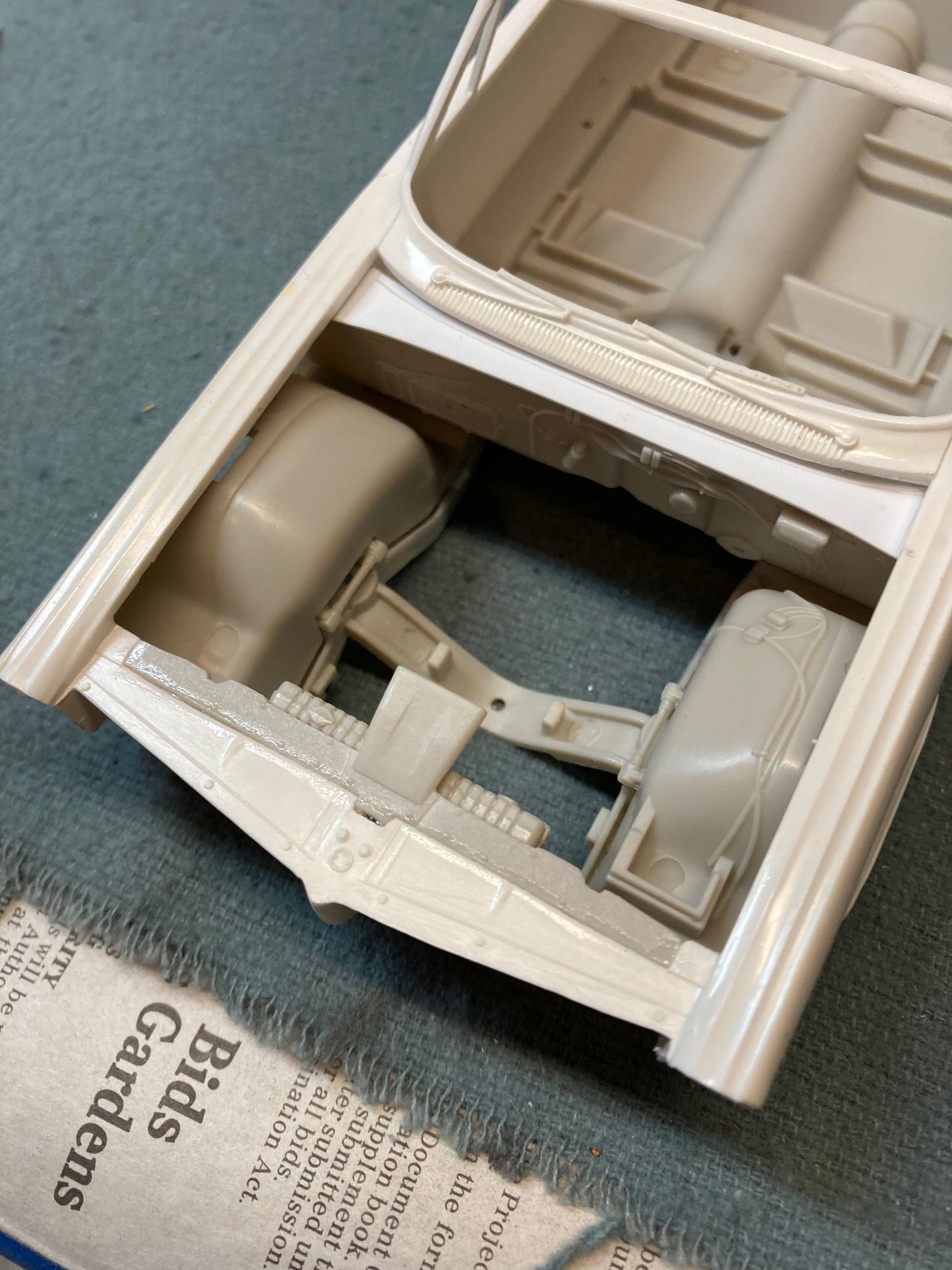
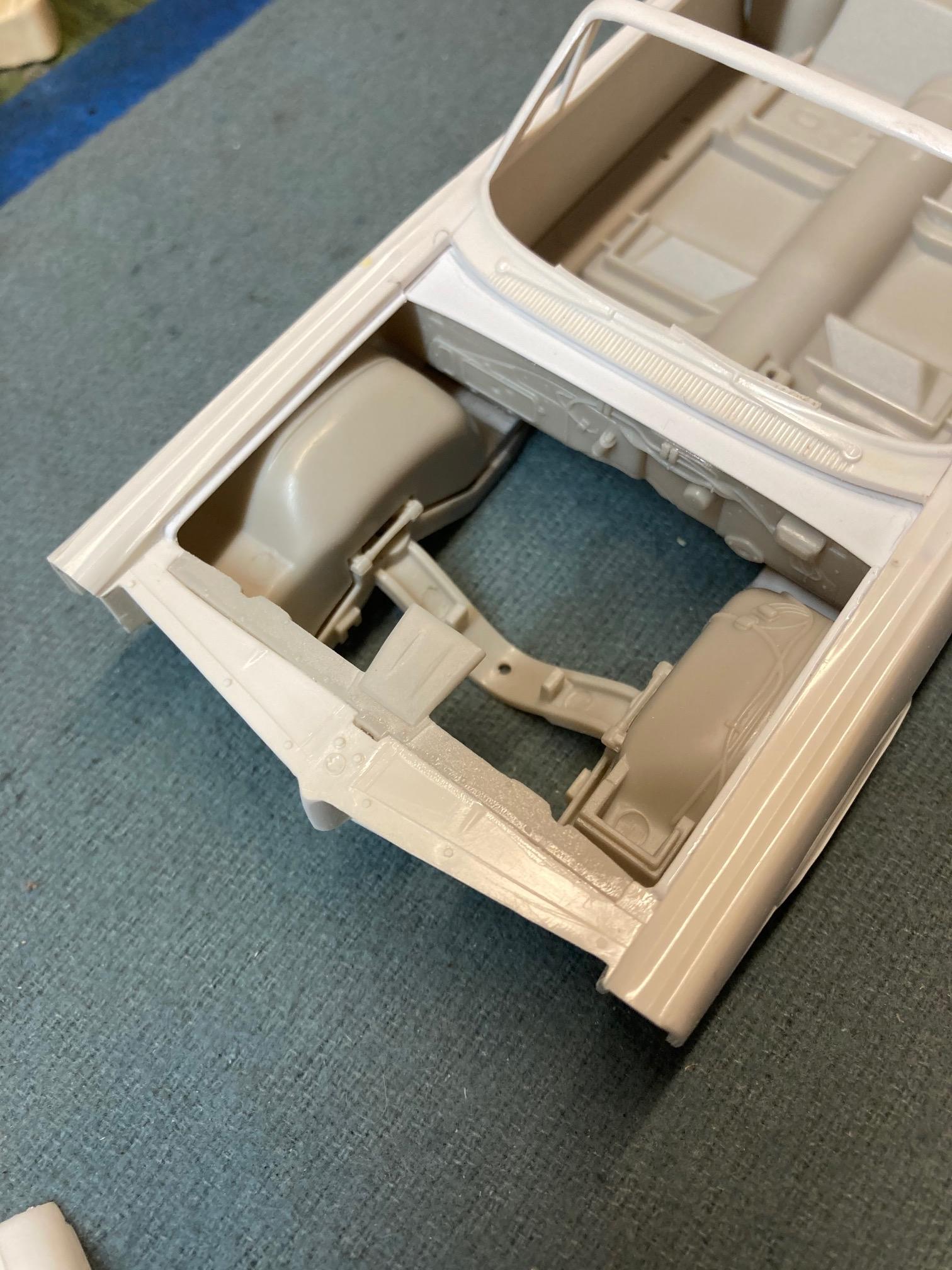
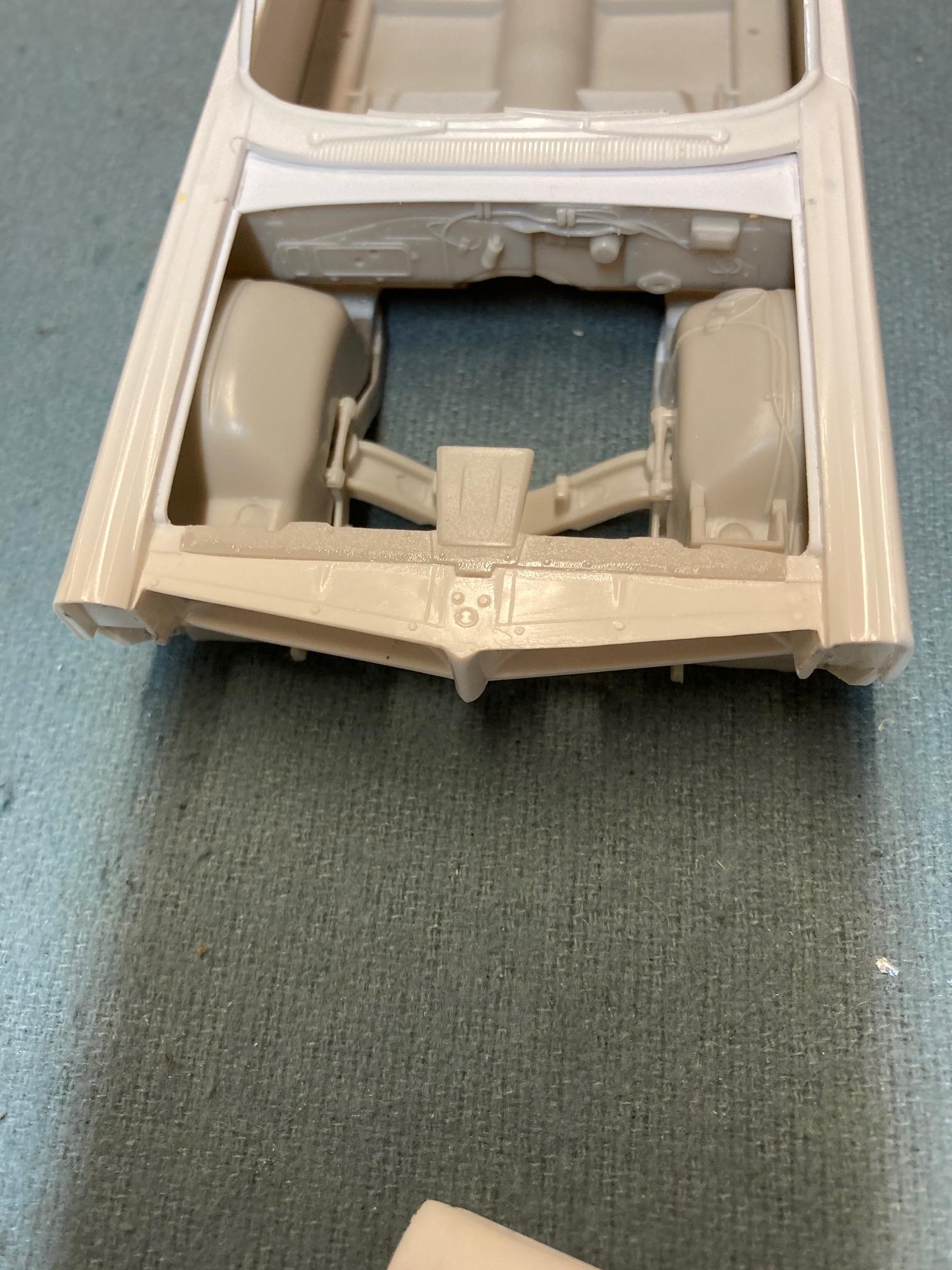
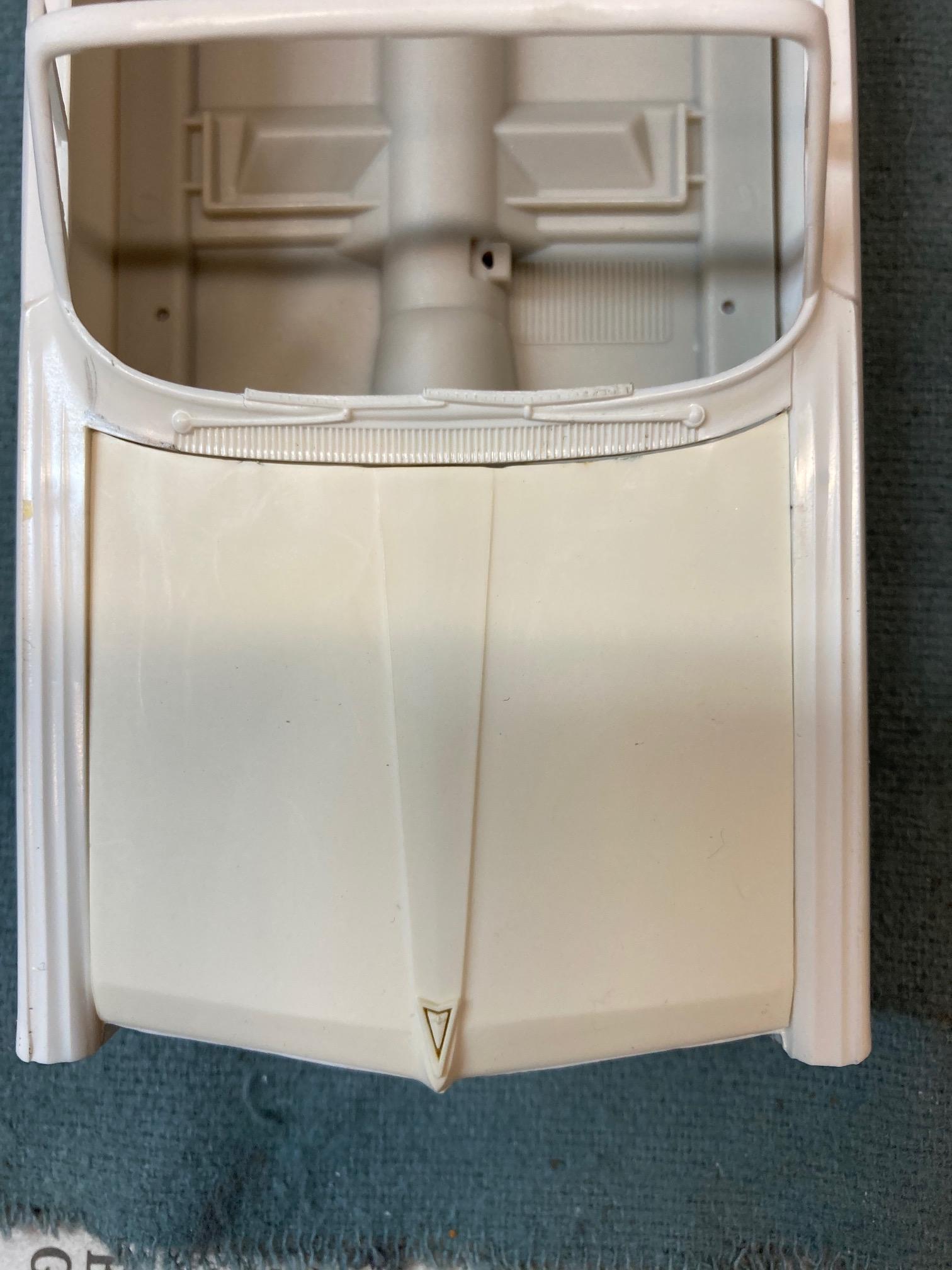
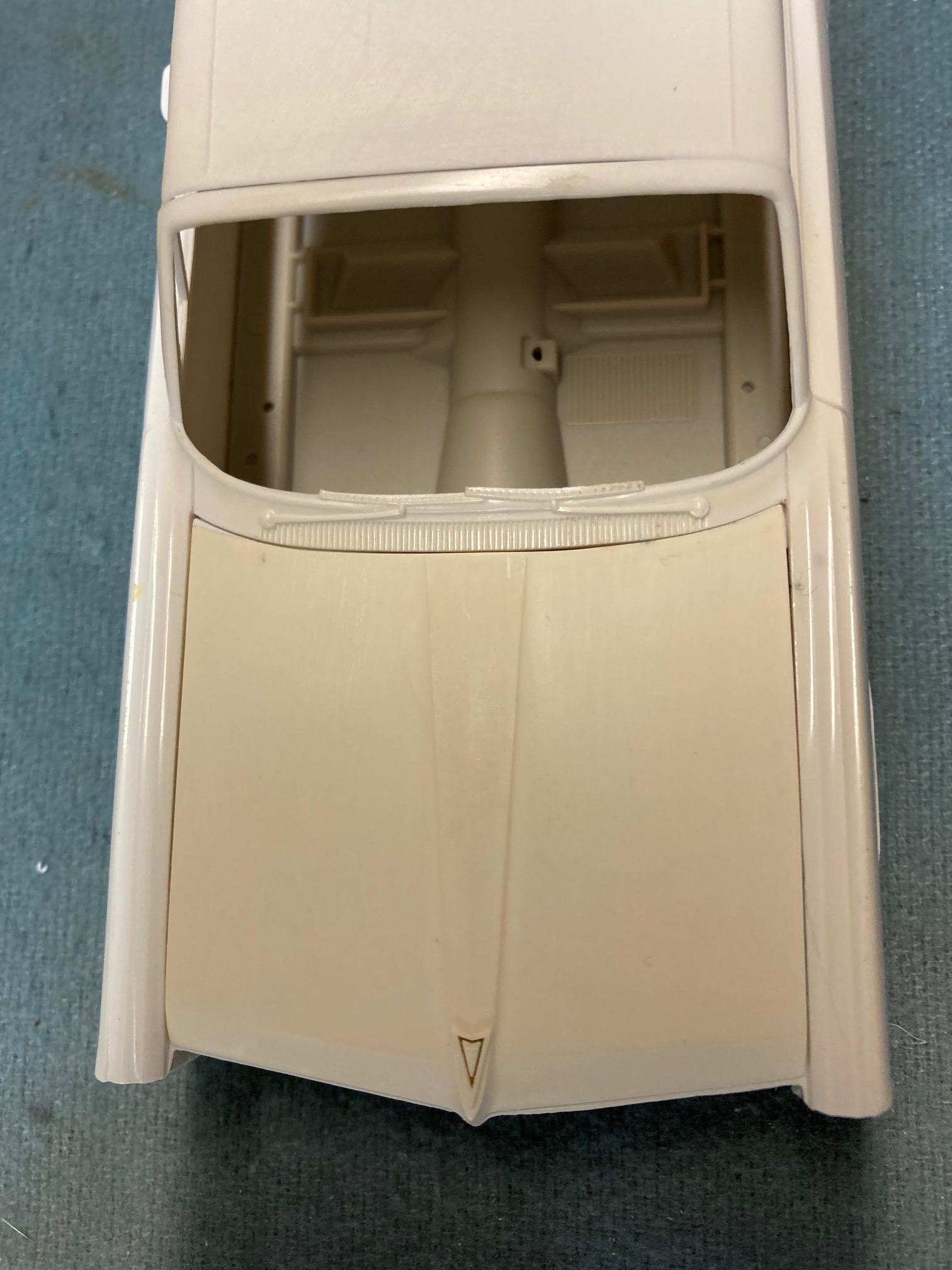
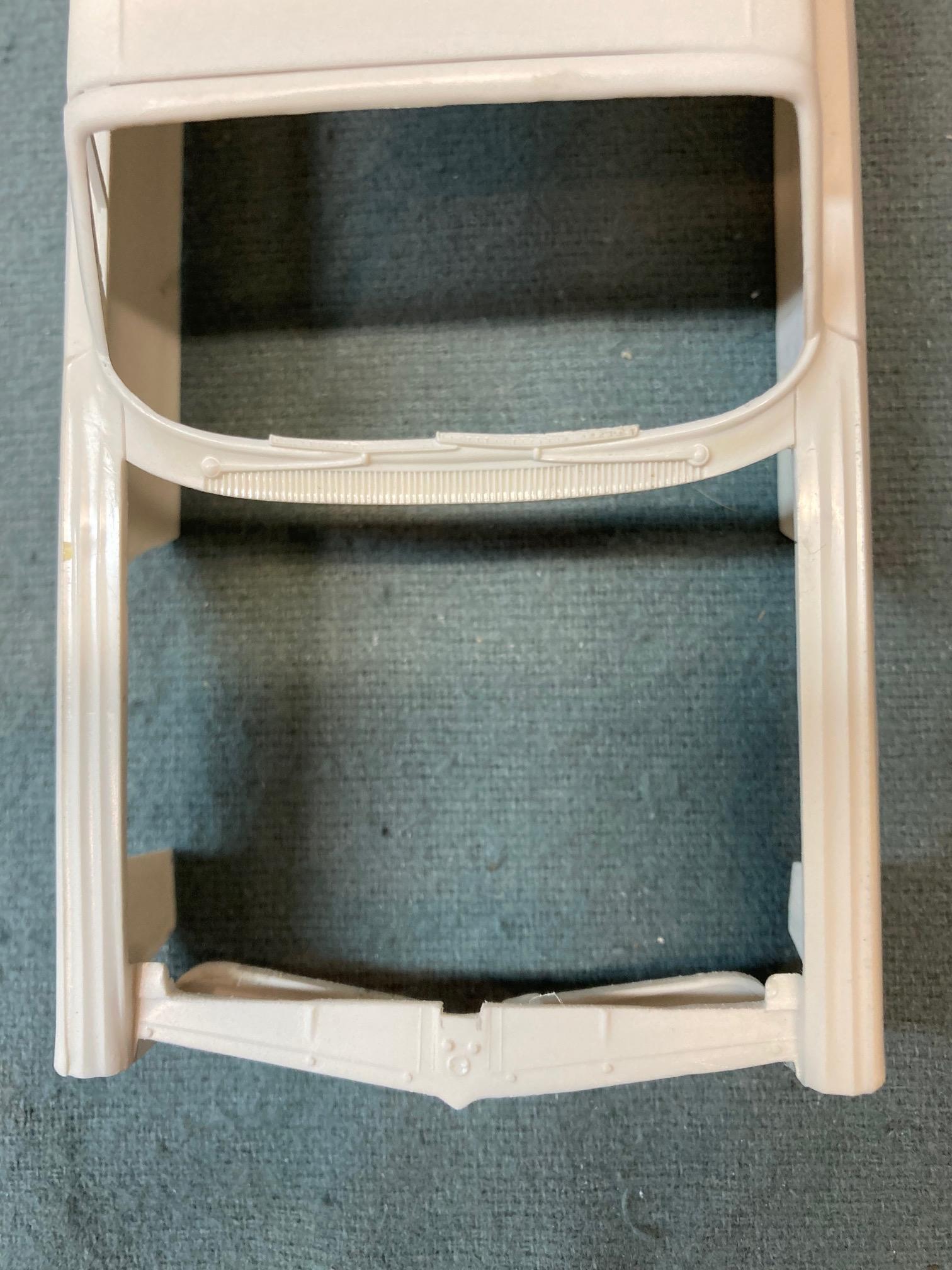
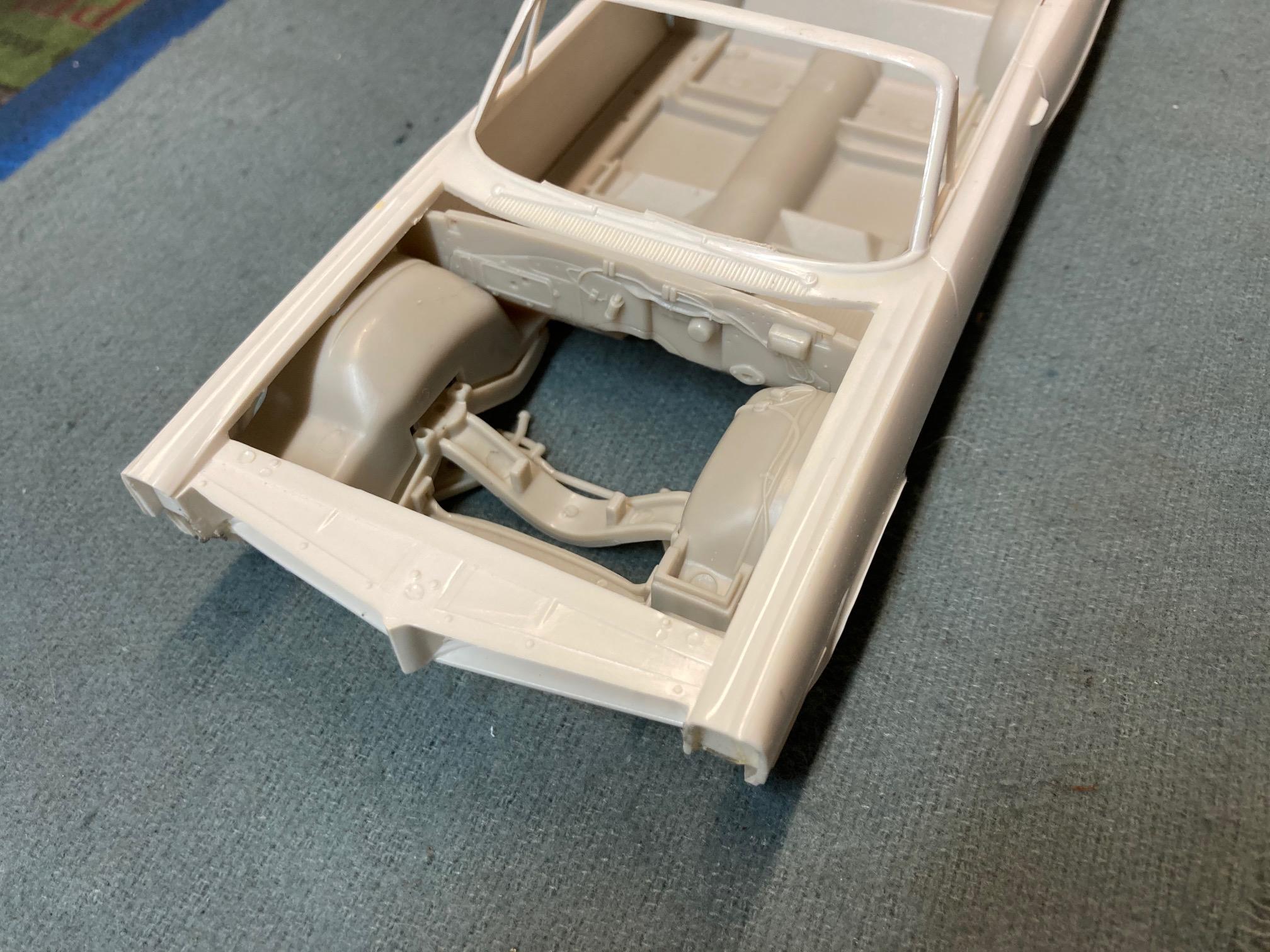
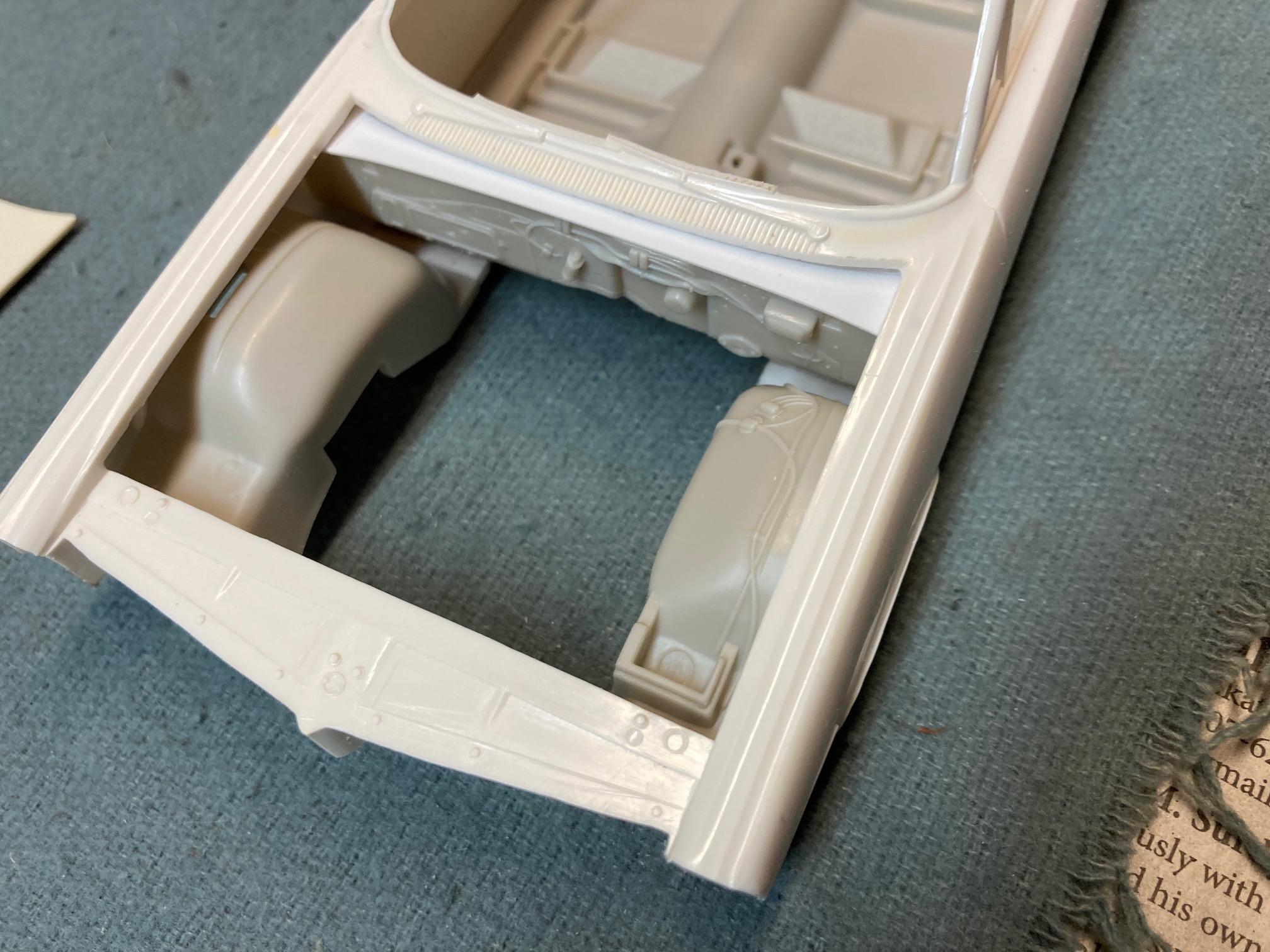
Next I began adding a few extra bits under the hood, which included the top portion of the firewall as well as the inner fender "lip" for the hood to rest on. I also began the engineering required to get the radiator bulkhead and radiator to sit where they needed to be, by grafting in the top of the bulkhead to the body. Steve
-
1964 Pontiac Bonneville Convertible.
StevenGuthmiller replied to StevenGuthmiller's topic in WIP: Model Cars
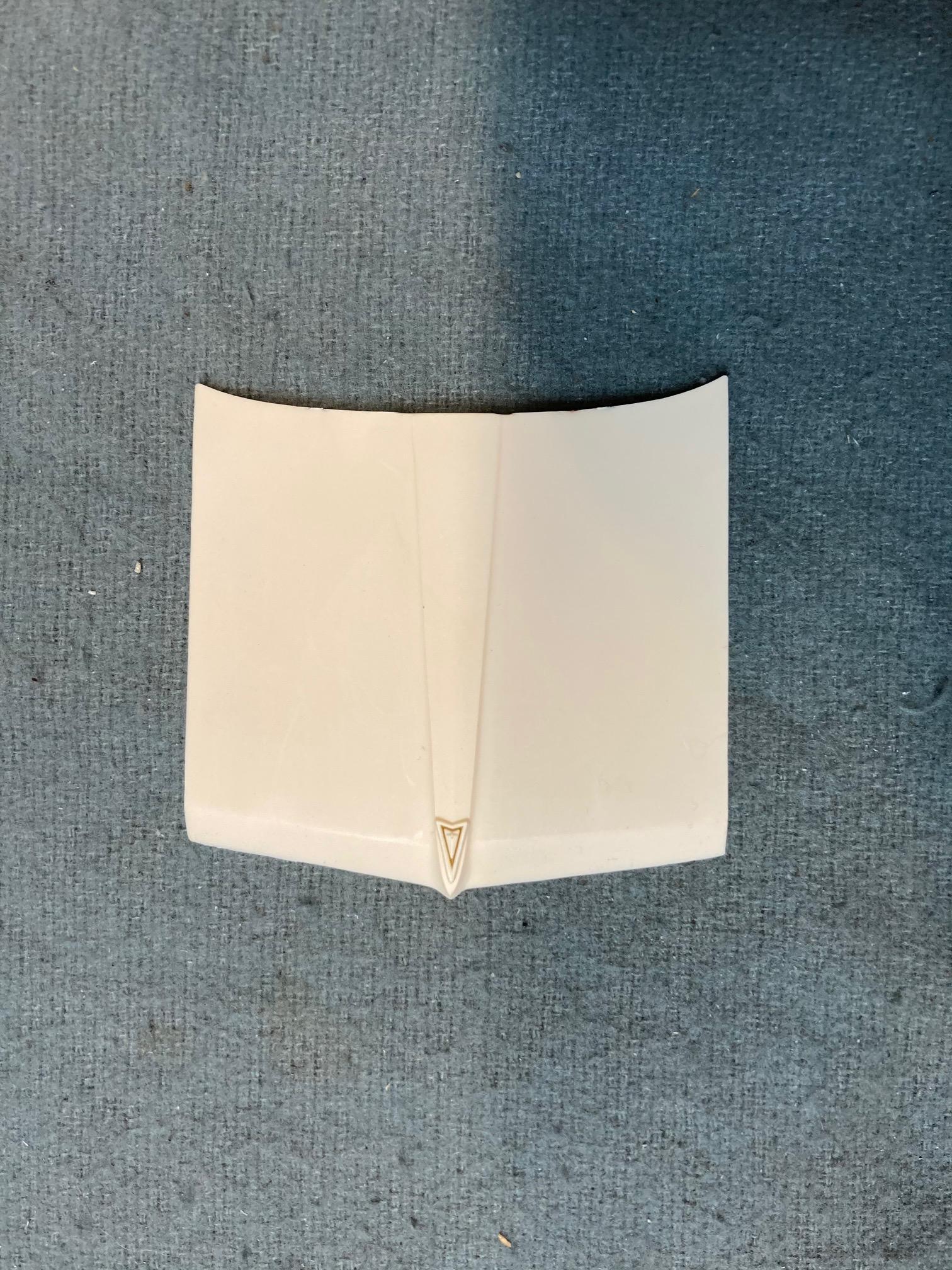
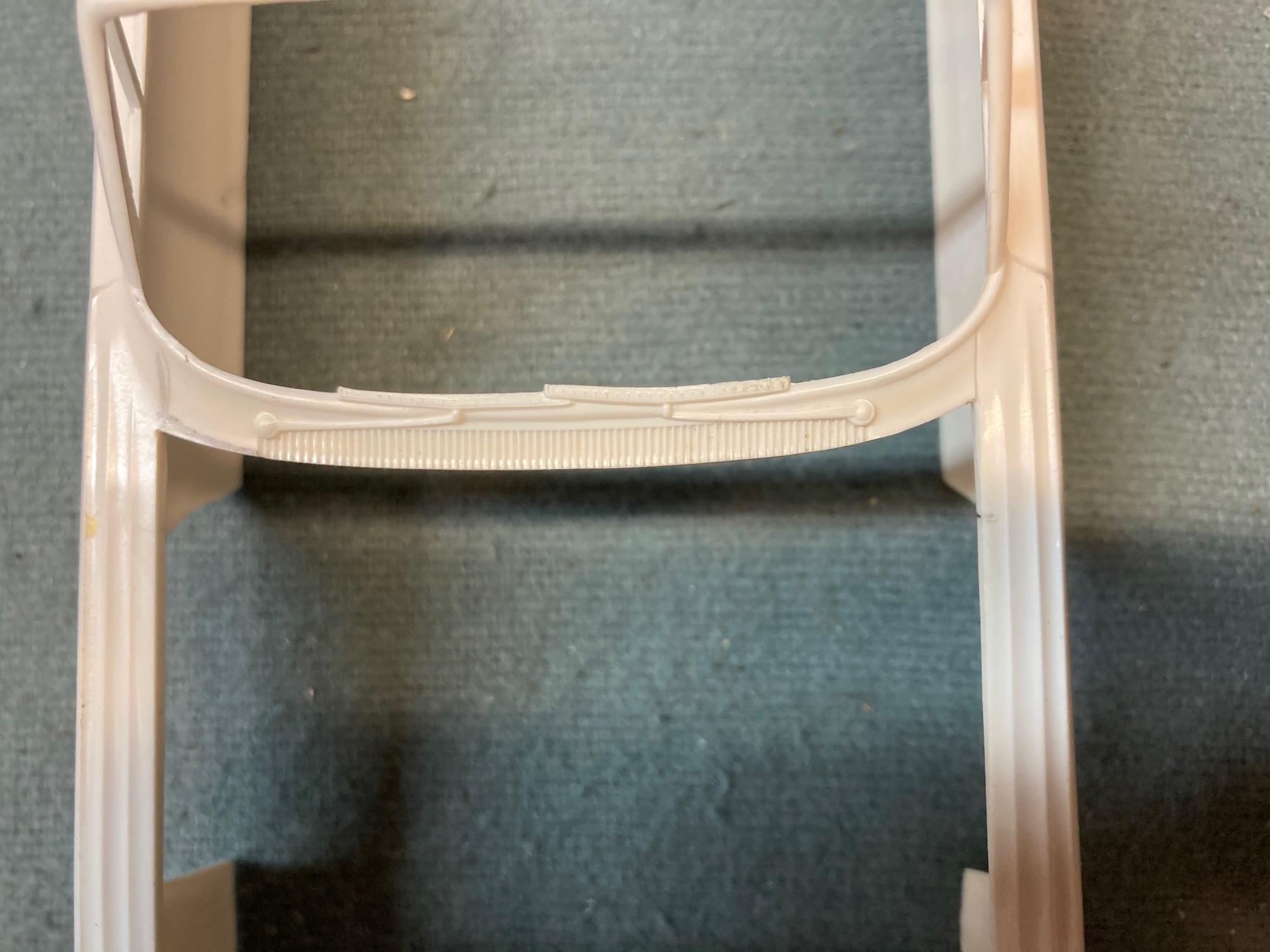
It became apparent to me at some point while looking over the body, that AMT made a goof on the '64 Bonneville kits. At least that's my assumption, although I don't have anything to compare it to. But on my example at least, it had become obvious that the hood corners were not symmetrical, and neither was the cowl The hood is longer in the rear corner on the driver's side than on the passenger's side, and as a consequence, the cowl thicker on the passenger's side as well. This anomaly might have been missed if it were not for the fact that I began adding some panel lines throughout the body, and it became obvious very quickly that there was a variation in the thickness of the cowl in said corner. So I went to work trimming back the cowl and adding material to the back of the hood to try to even it out. It's looking better, but I may try a little refinement at a later date. Steve
-
1964 Pontiac Bonneville Convertible.
StevenGuthmiller replied to StevenGuthmiller's topic in WIP: Model Cars
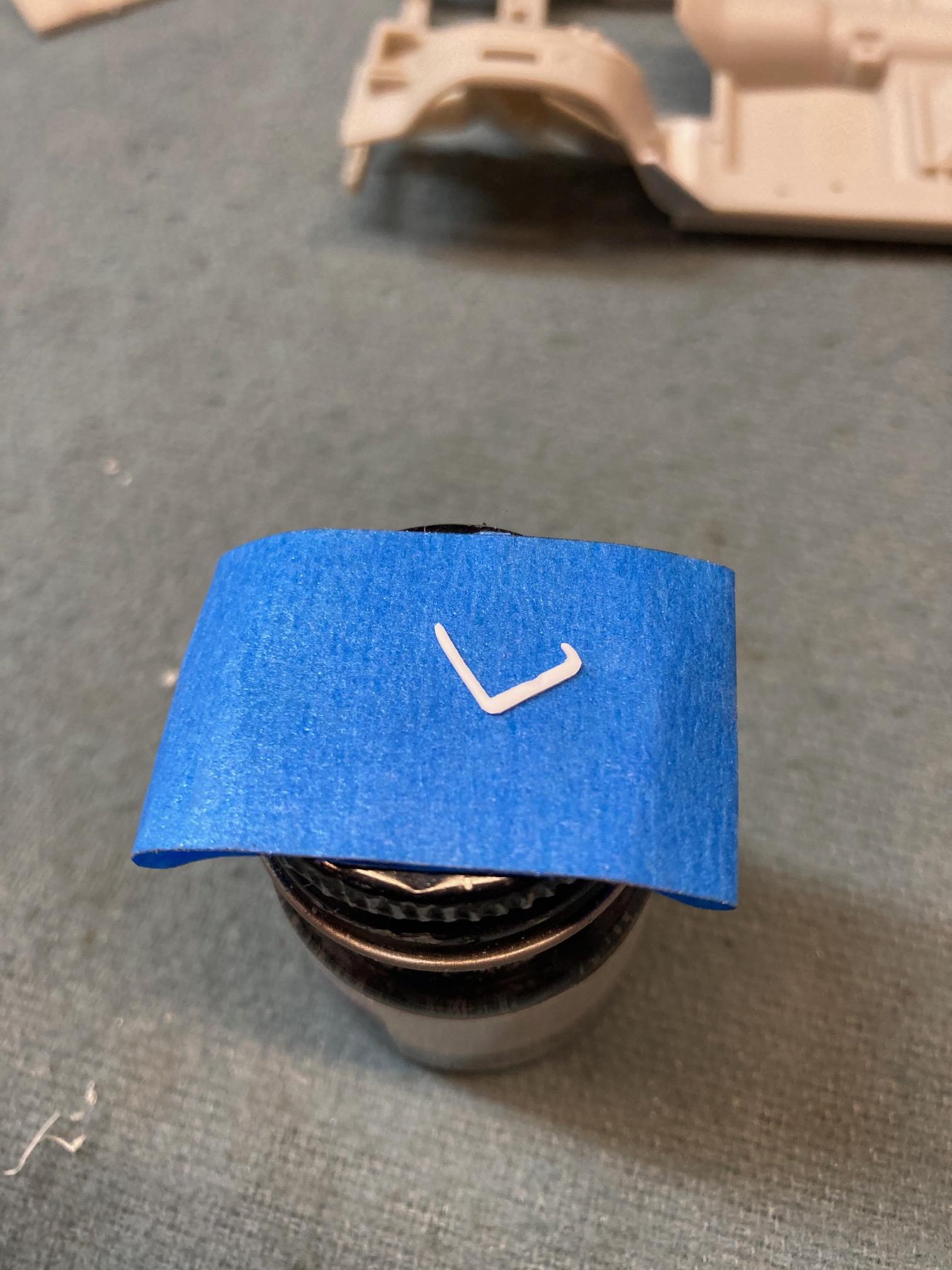
Next, some refining and fitting of the up top, as well as the addition of the boot snap trim was required. At the same time, I decided to add a little detail that kind of grabbed me on a few 1:1 examples that I had seen online, that being a molding around the fuel door. I think it will add a little extra interest. Steve
-
1964 Pontiac Bonneville Convertible.
StevenGuthmiller replied to StevenGuthmiller's topic in WIP: Model Cars
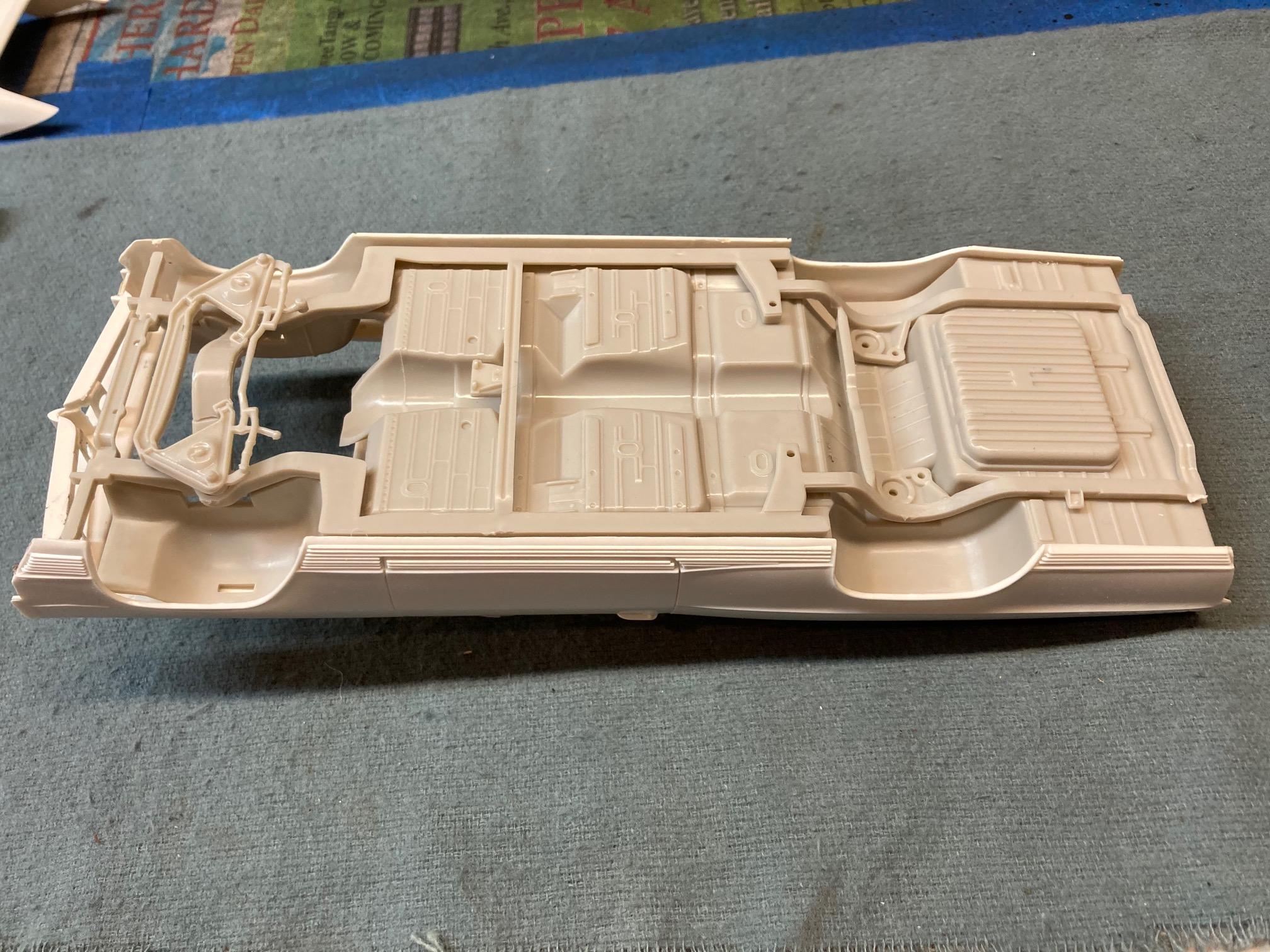
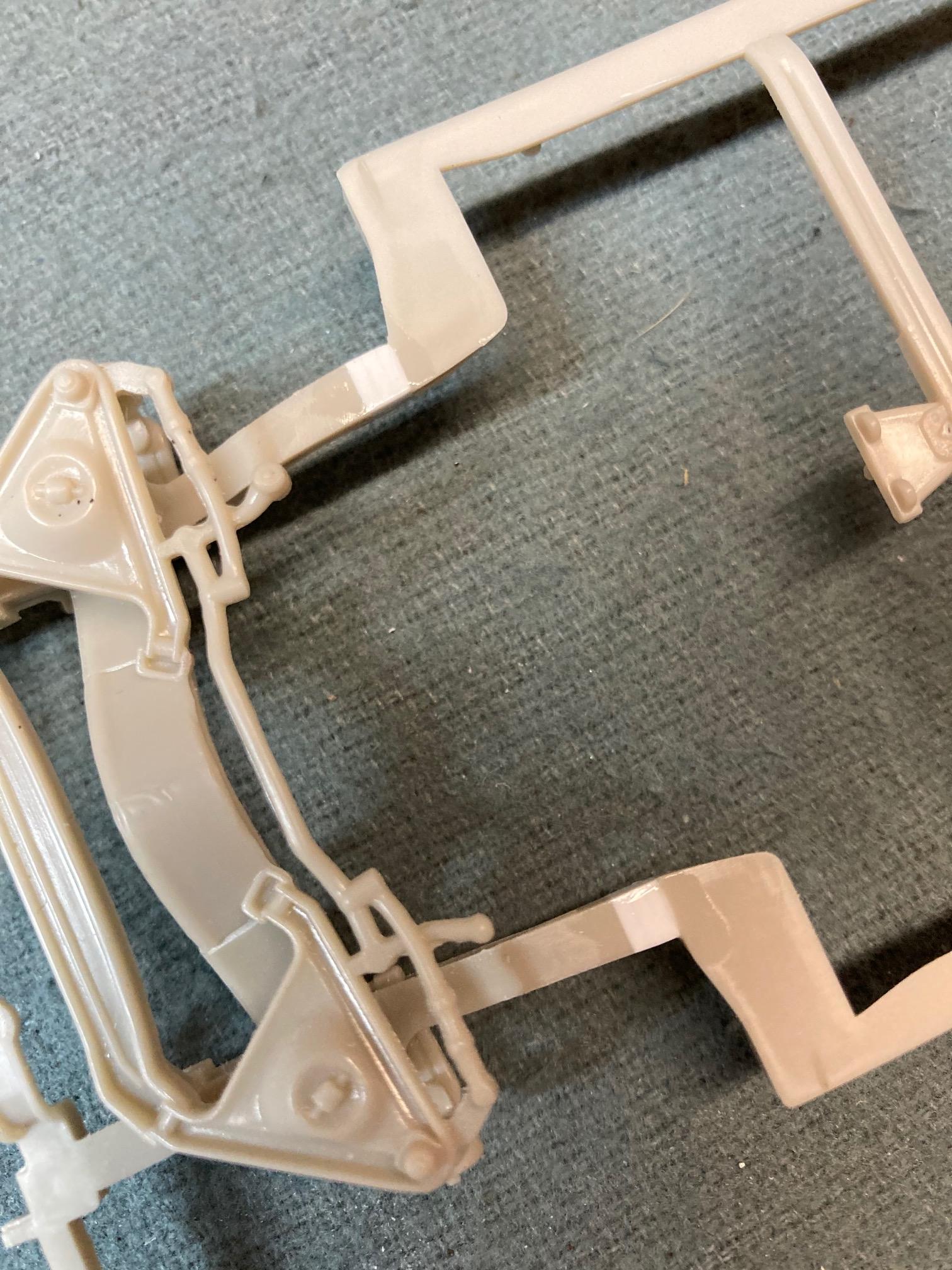
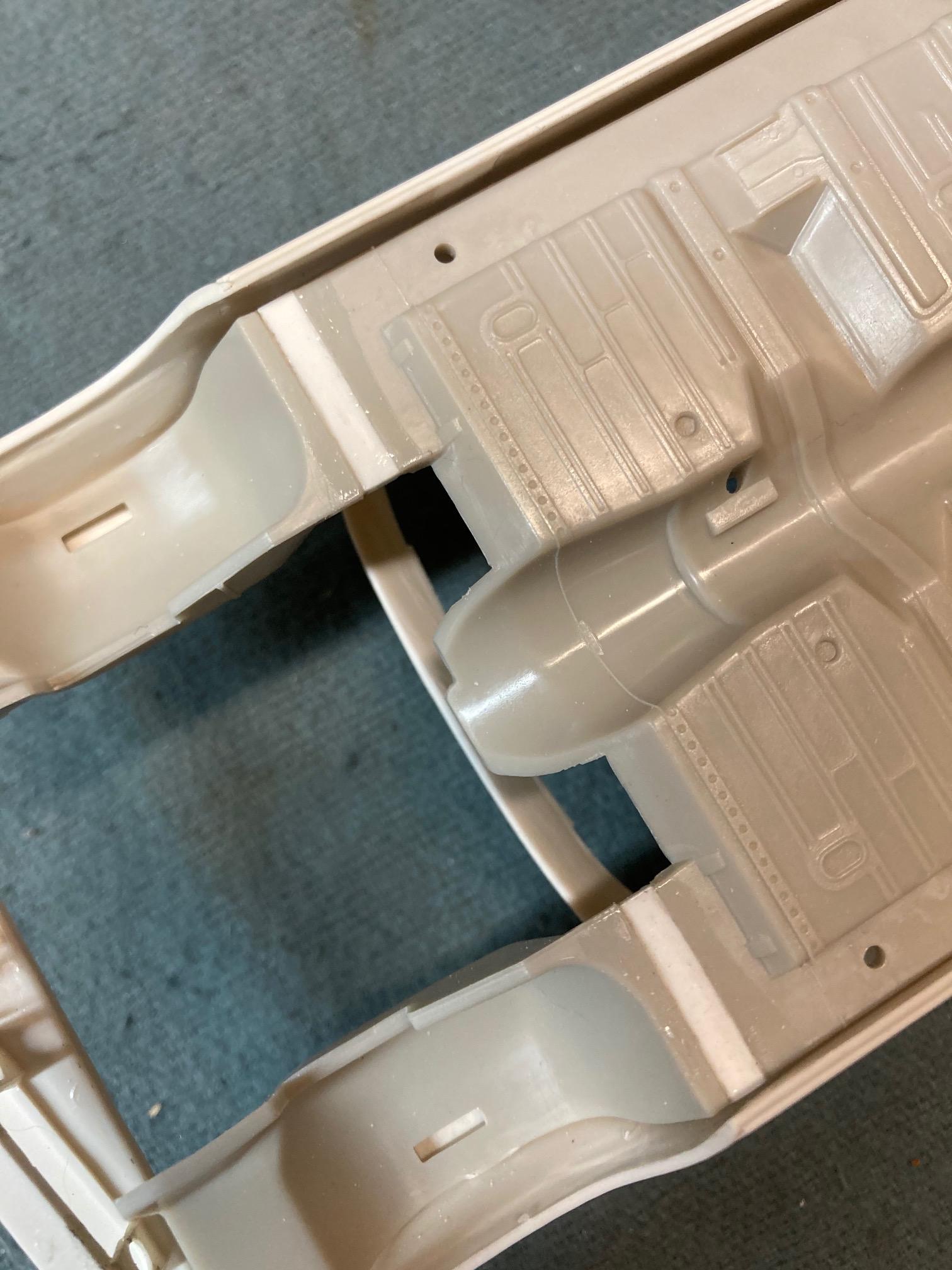
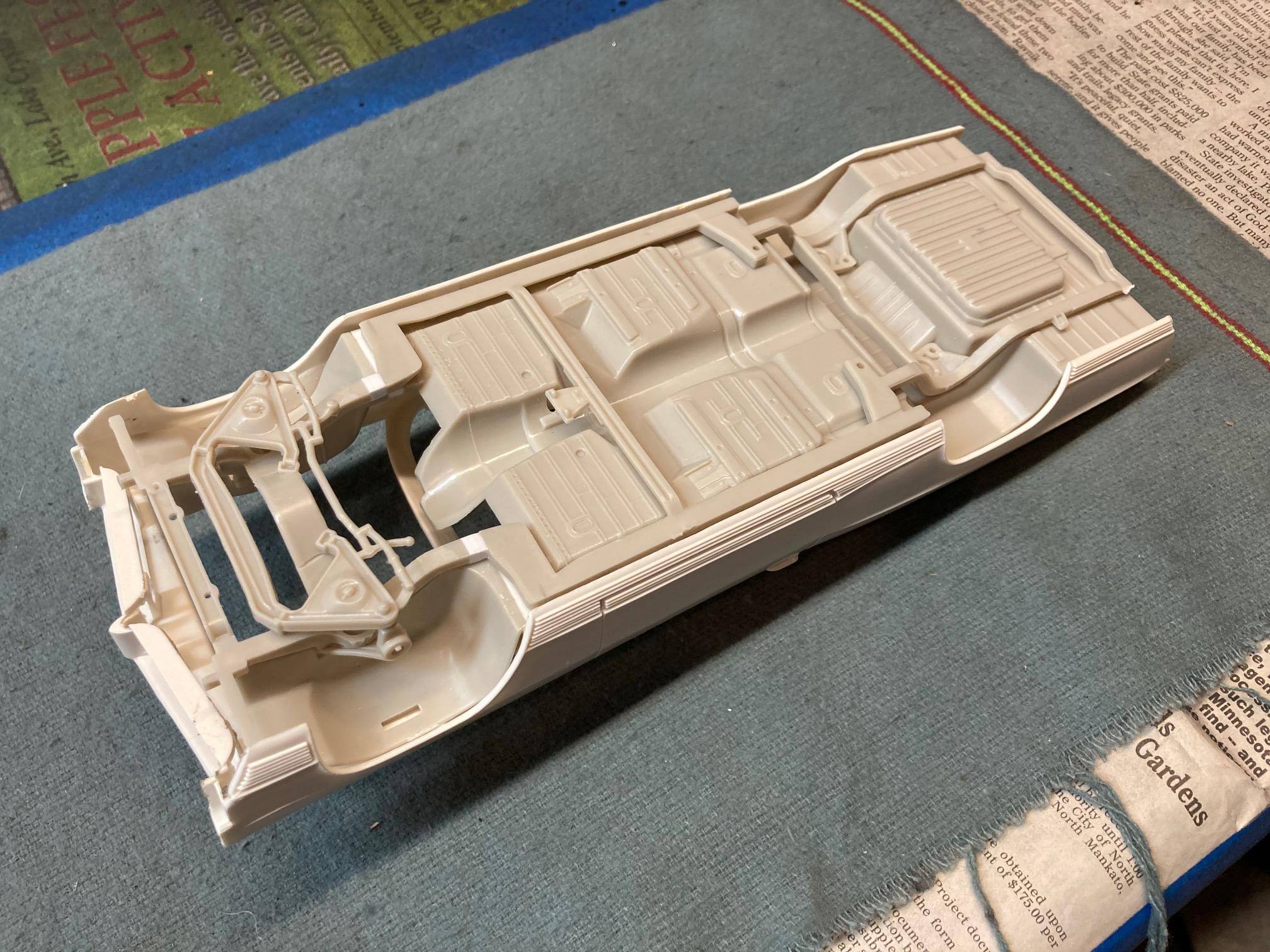
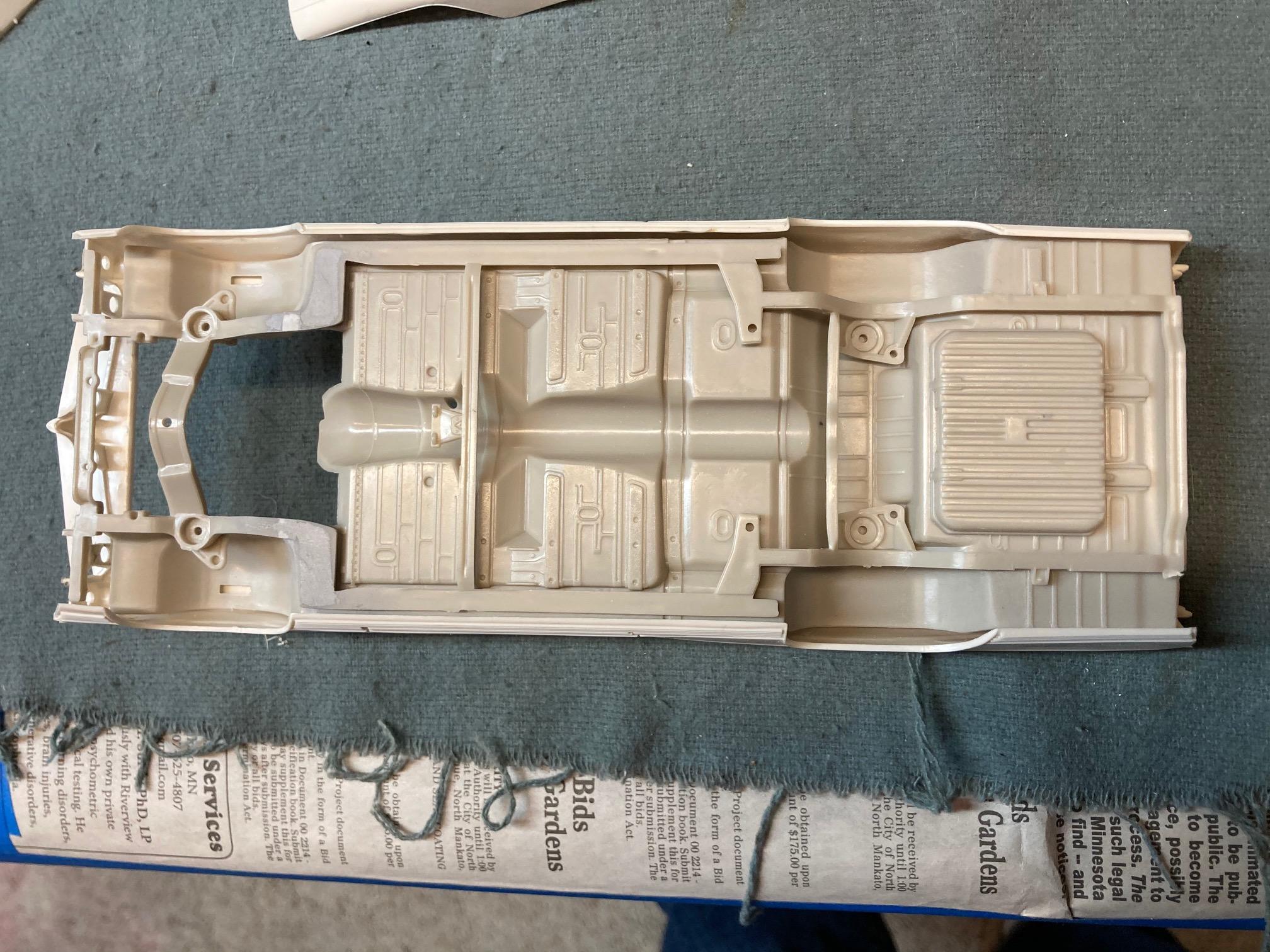
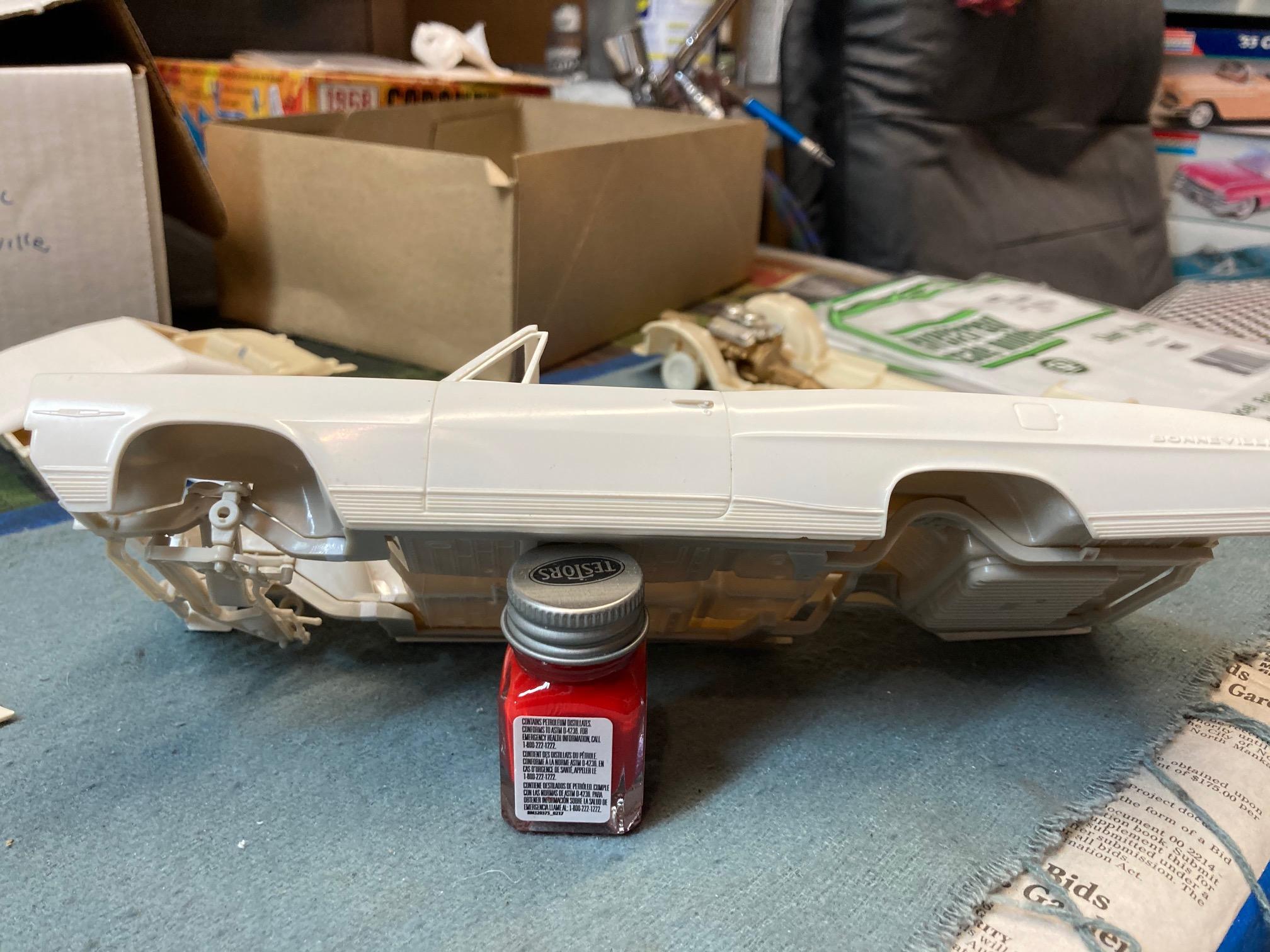
My first order of business was to find a suitable donor for all of the innards for this build. On my previous '64 Grand Prix project, I used the AMT '62 Catalina for most of the guts, but being as I have a couple of spare Moebius '61 Ventura kits, this time I'll give one of them a roll. The first task was to stretch the chassis slightly as the Ventura and Catalina sat on a shorter wheel base than the Bonneville. I decided to make this modification to the frame and floor plate just behind the front wheels. I wasn't sure whether to place the splices there, or somewhere in the rear of the chassis, but this seemed to make the most sense because although the bulk of the length difference appears to be in the rear quarters ahead of the rear wheels, this modification was easier, and would actually afford me a little extra room in the engine compartment between the back of the engine and the firewall, which seems to be a perpetual "bone of contention" for me. Not only that, but moving the entire front half of the frame forward would have either required moving the firewall even farther forward, (it's almost too far forward already) or making even more modifications to move it back. I think this will work the best. Steve
-
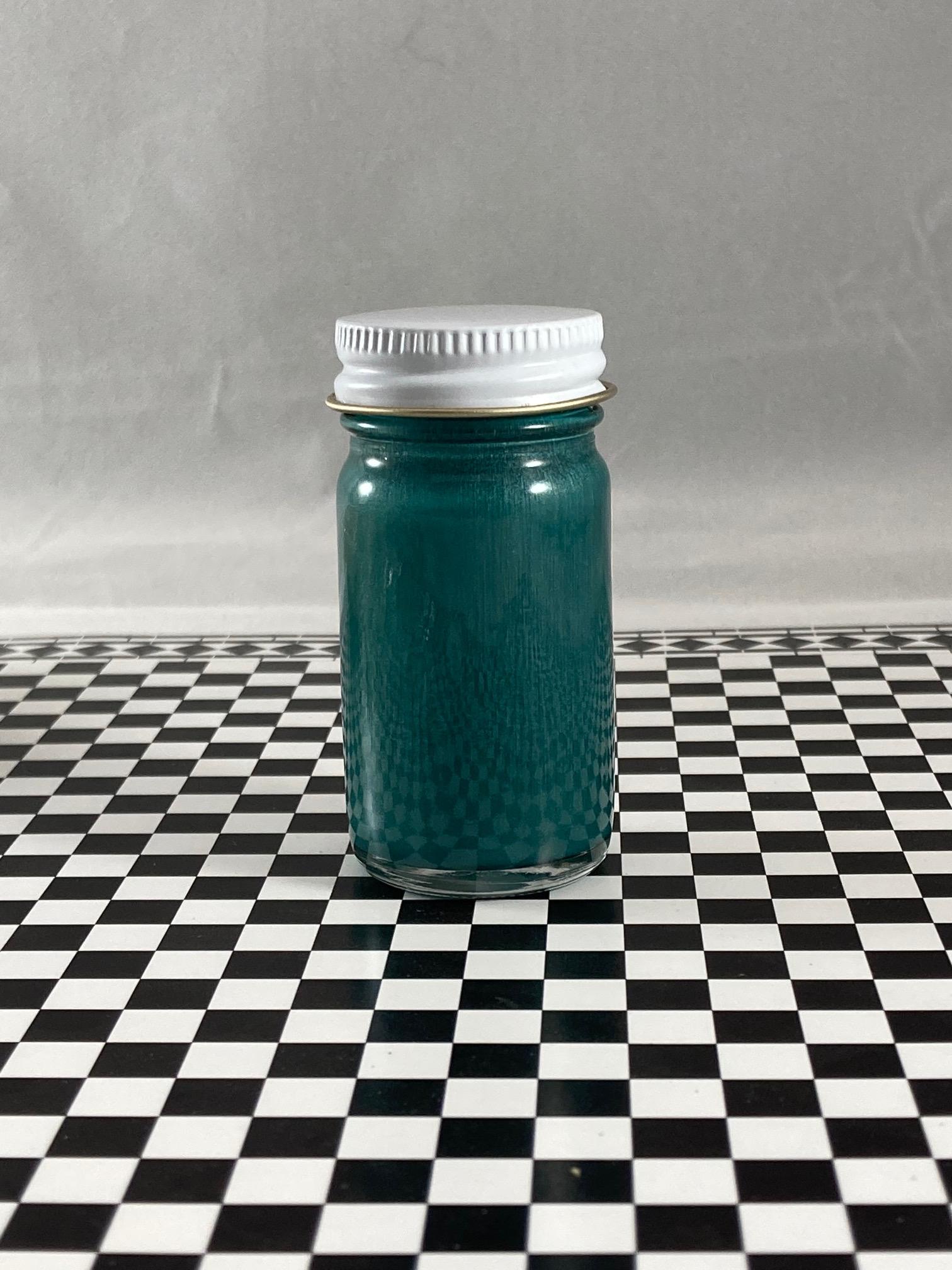
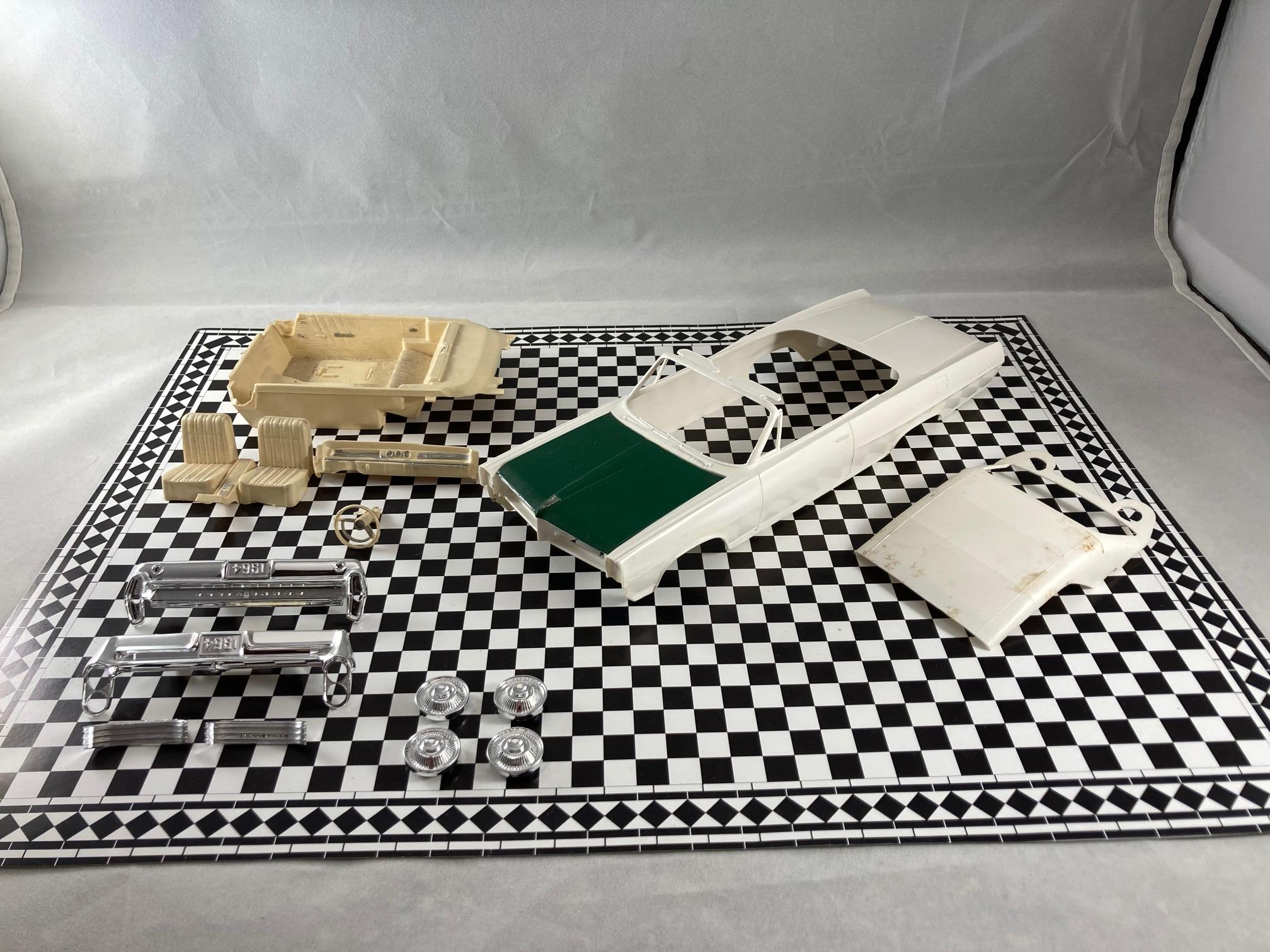
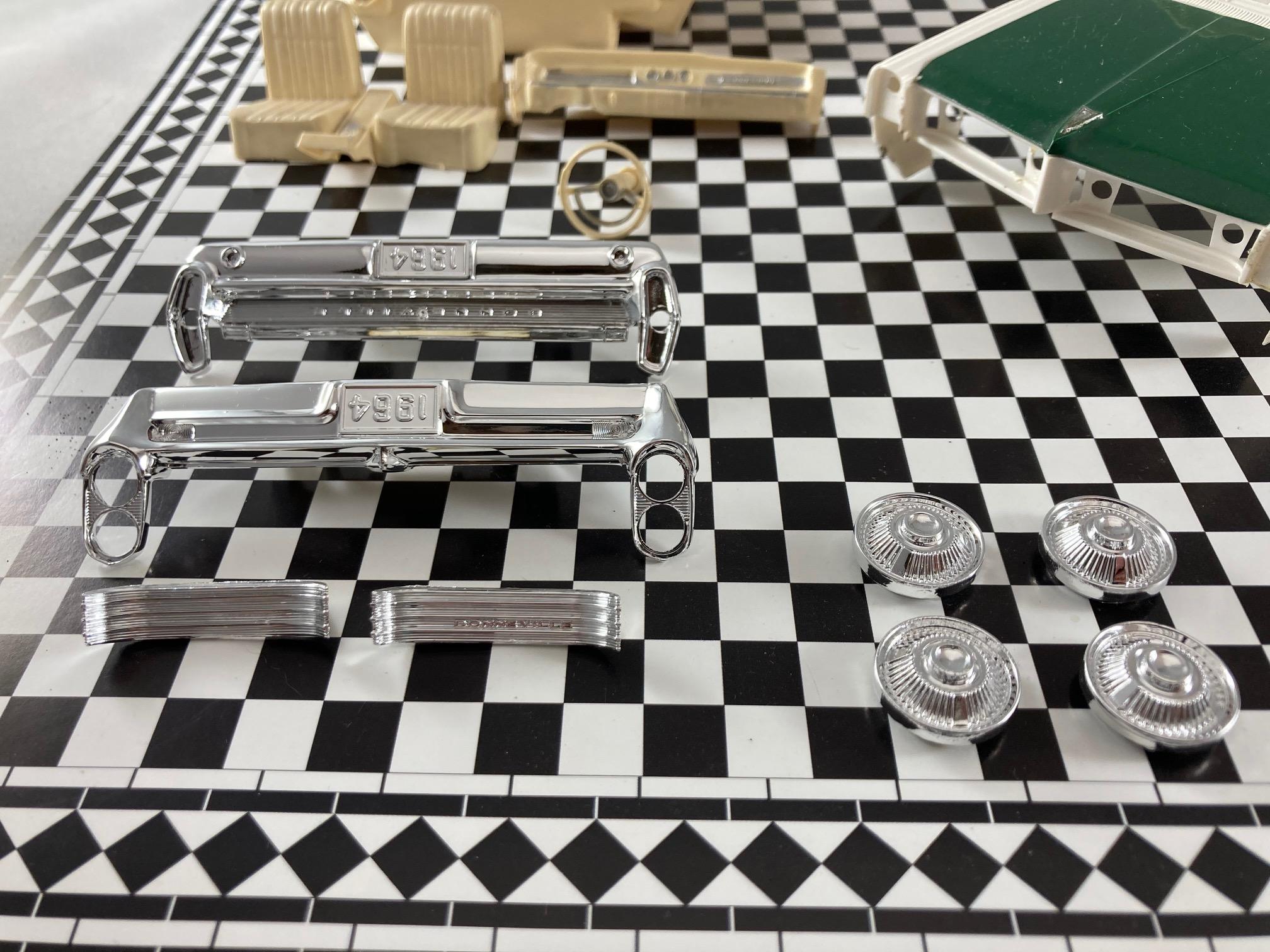
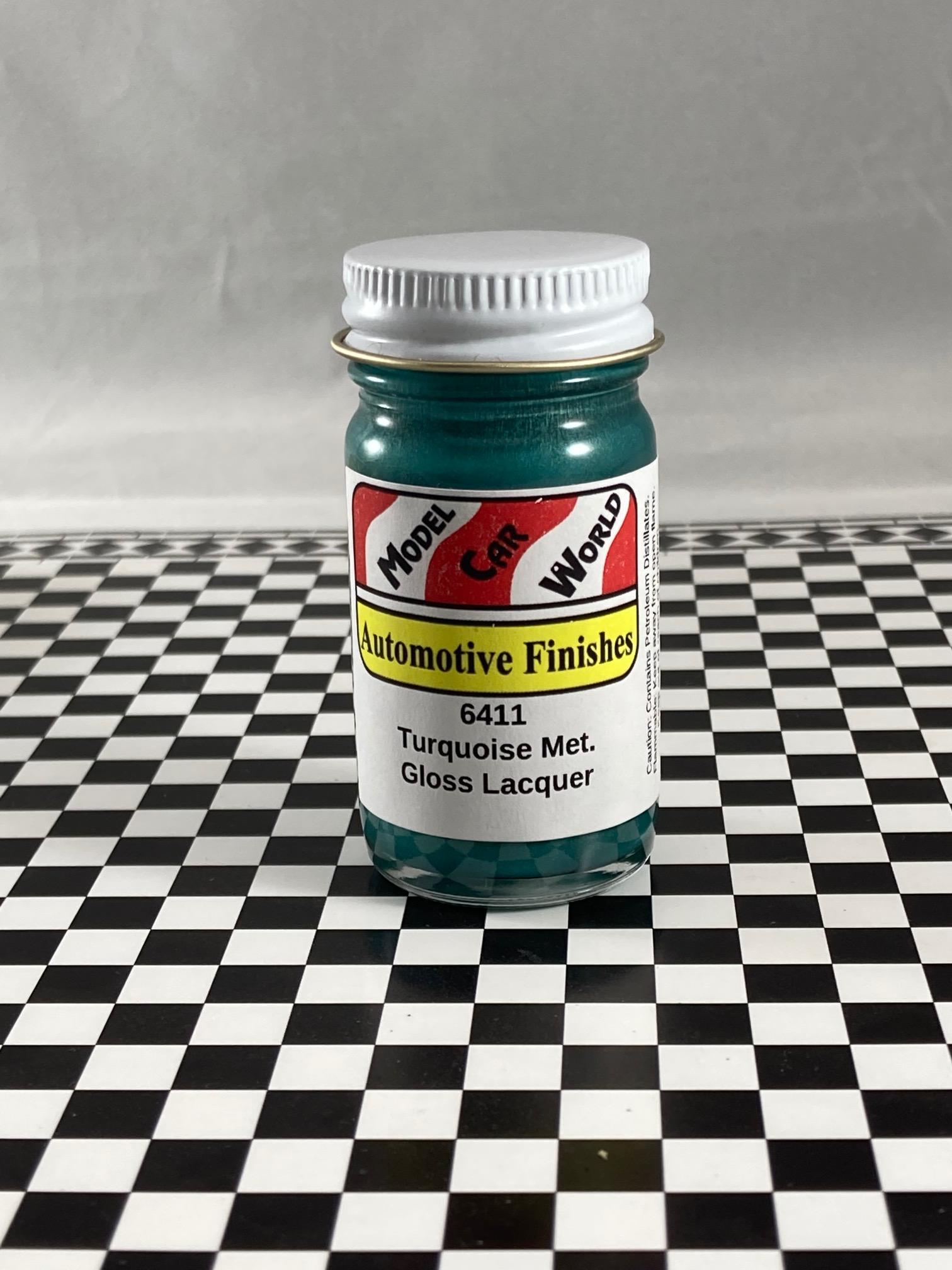
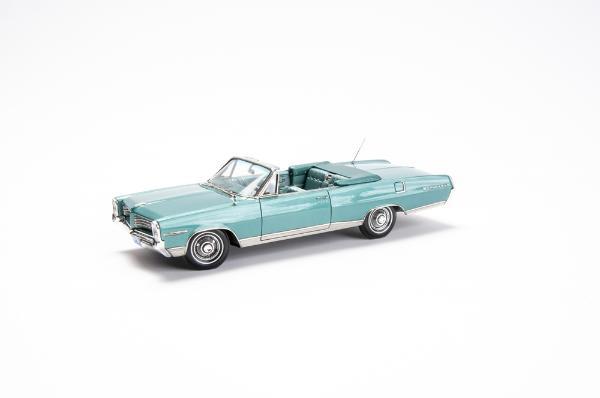
Well, I decided that it's about time to start another build thread, so for the past few months, I've been toiling on another full detail, "kit bashed" project. This time an old AMT 1964 Pontiac Bonneville convertible annual. I started a considerable time ago by removing mold lines, drilling out the molded in head lights and having the bumpers, grille halves and wheel covers re-plated. The model will have optional up top, (from a '62 Buick annual) and top boot for display options, and at this point, the color will be correct "P" code "Aquamarine" from MCW. I have already made some progress on this project, so I will post the progress in a series of posts rather than just one. Steve
-
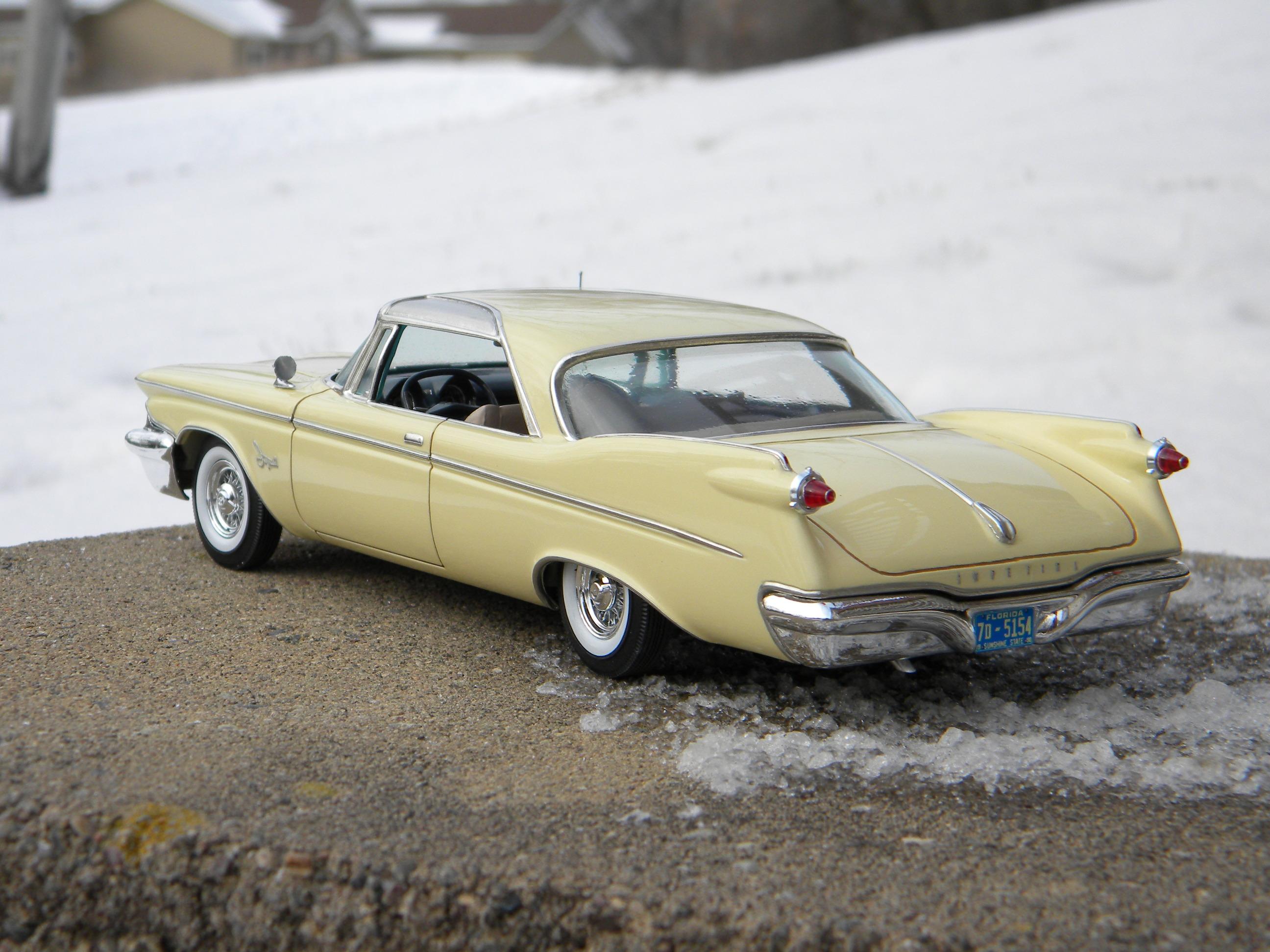
60 Imperial kit taillight question
StevenGuthmiller replied to hedotwo's topic in Model Building Questions and Answers
Yes,the kit came with a pair of chrome "rings", (bezels) that slipped over the pins at the base of the lenses. Steve
-
This is part of the reason why I really dislike working with resin. Some years ago, I stripped some paint off of an older Modelhaus resin ‘56 Cadillac with Easy Off oven cleaner. No apparent immediate damage, but some years later when I pulled it out again, it was full of cracks. In all fairness, I don’t know if this was due to the oven cleaner, or just age, but I’ve heard enough horror stories about resin and some of the strange things that it will do over time, to give me real pause about investing too much time or money into resin kits. Steve
-
I don’t know if that confirms or contradicts what is commonly seen in the vintage kit world. Very often, hard tops are much more difficult to find than convertibles. Just as examples, the AMT 1958 Ford, 1960 Mercury and 1960 Buick convertibles are much easier to come by than the hard tops. Don’t really know the dynamics of why that’s the case, but it has been the case. Steve
-
Baking Powder as Flocking?
StevenGuthmiller replied to JollySipper's topic in Model Building Questions and Answers
I understand Peter, but to me, it’s still a floor care product, and I’m just not comfortable with the prospects of it’s long term durability. I am confident however, that automotive clear lacquer is going to last at least for the remainder of my lifetime. I don’t see any advantage with using Future, other than possibly a time advantage, but I’ve never been the type to look for short cuts anyway. I can understand some of the uses like what you’ve described above, but you’re not likely to ever see me putting it over any of my paint jobs. Steve -
Baking Powder as Flocking?
StevenGuthmiller replied to JollySipper's topic in Model Building Questions and Answers
I always try to look at any materials that I use in the construction of my models from a basic common sense point of view. That’s not to say that there aren’t plenty of materials that were not designed to be used on a model that may work fine, but there are a lot of things used by modelers today that I just don’t trust, and if there are viable alternatives that work as well that don’t appear to cause issues down the road, it just makes sense to me to use them instead. Baking soda, or powder would worry me a bit. Just for the fact that it’s a “food stuff” would cause me pause, and being as there is a good alternative for carpets, (embossing powder) which is essentially a plastic, it only makes sense that from a longevity standpoint, it seems much less risky than using something that is used in baking. I have these same sort of worries about a lot of other materials used by today’s hobbyists. Masking tape for vinyl tops is one. Masking tape was never designed to be permanent, so in my view, it’s a much better, (and more realistic looking) alternative to use paint, which I know isn’t going anywhere. Floor polish versus clear lacquer or other form of clear paint is another that I have little confidence in. The most recent material that I stay away from is Molotow ink for chrome trim. Another material that was invented for graffiti art, and never really meant to be permanent, I’m much more comfortable using foil, which is metal and will theoretically last darn near forever, versus a very fragile ink which I have no reason to believe will hold up for the long haul. I believe in letting others be my guinea pigs for me, and in the mean time, I’ll stick with my tried and true “old school” approaches that I know will work without giving me any headaches down the road. Steve -
Fireball Modelworks still carries them. Steve
-
Aaah, but with an up top, it won't matter! Steve
-
I didn't know that there was never a '65 Wildcat convertible in kit form. Ya learn something new every day. Steve
-
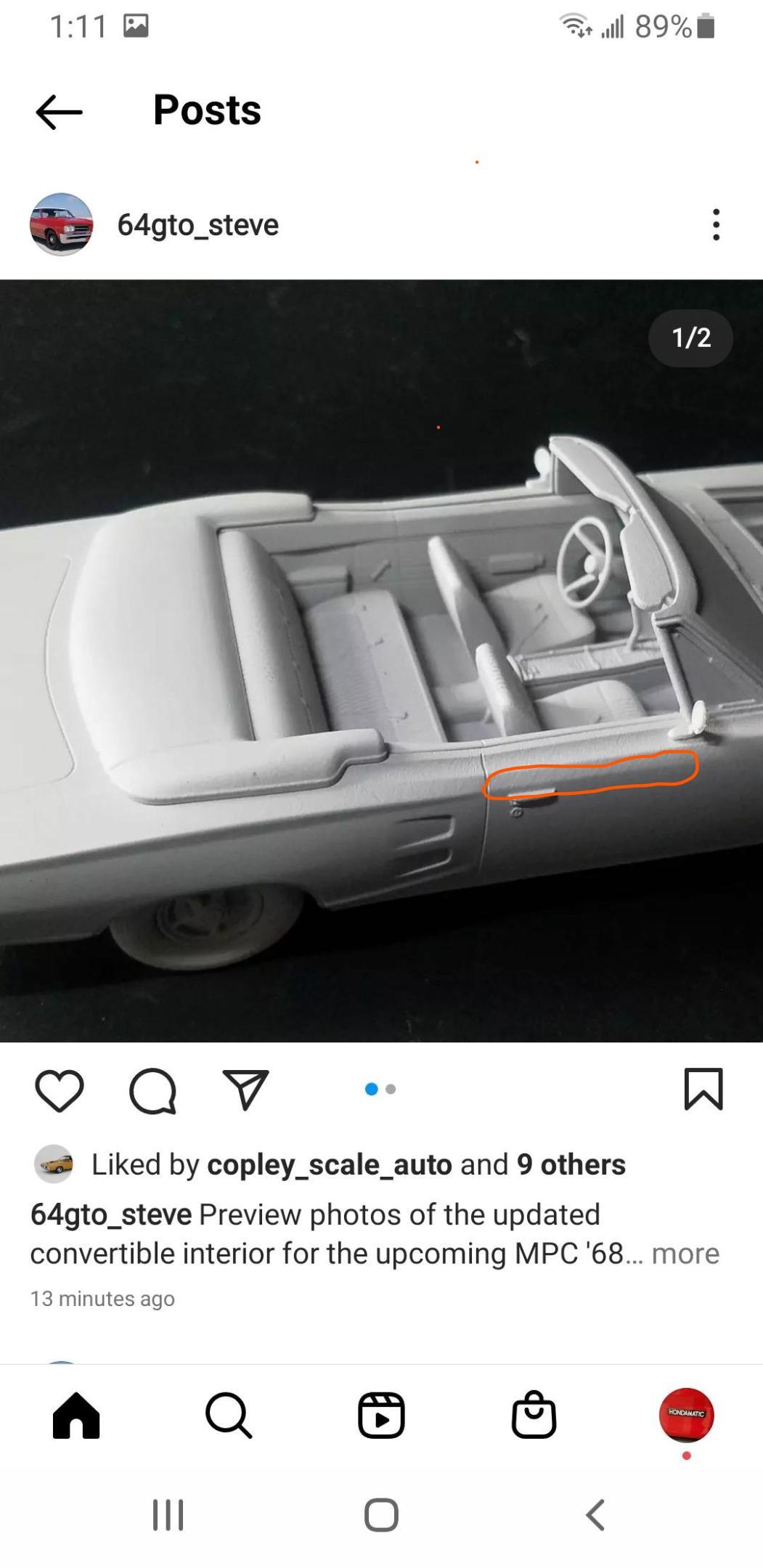
The door should be completely smooth in the area of the door handle. Steve